Gravel garden paths are popular for a reason. They’re affordable, visually flexible, and work beautifully in everything from modern landscapes to relaxed cottage gardens. But gravel has one persistent flaw: it moves. Without proper edging, stones migrate into lawns, garden beds, and walkways, slowly turning a crisp path into a messy problem.
Edging is what gives a gravel path structure. It defines the shape, keeps material contained, improves drainage, and makes the entire space feel intentional rather than improvised. Choosing the right edging material is just as important as choosing the gravel itself. The best option depends on your garden style, budget, soil conditions, and how much maintenance you’re willing to handle long-term. Below is a comprehensive guide to the best edging materials for gravel garden paths, with practical insight into how each performs in real outdoor conditions.
Why Gravel Paths Need Proper Edging
Gravel naturally spreads under foot traffic, rainfall, and slope movement. Without a physical barrier, stones shift outward, thin out in high-traffic zones, and create uneven walking surfaces. Edging prevents this by locking the gravel in place and creating a defined vertical boundary.
Edging also improves drainage by maintaining consistent depth, reduces weed intrusion from surrounding soil, and protects nearby lawn or planting beds. Visually, it elevates the entire landscape. A well-edged gravel path looks designed. An unedged one looks temporary. Proper drainage plays a role here as well. Gravel paths perform best when water can move freely through the surface and sub-base, reducing erosion and washout. This principle aligns with basic stormwater management concepts outlined by the U.S. Environmental Protection Agency, which explains how permeable surfaces reduce runoff and soil displacement.
Key Factors to Consider Before Choosing Edging
Before selecting materials, it’s important to understand the conditions your edging will face.
Path usage matters. A lightly used garden path can tolerate softer materials, while a main walkway needs rigid, durable edging that won’t shift over time. Gravel size plays a role. Pea gravel requires tighter containment than larger crushed stone, which tends to interlock better.
Soil type and drainage also influence performance. Clay soils hold moisture and can push edging upward during freeze-thaw cycles, while sandy soils may require deeper anchoring. Finally, consider your aesthetic goals. Some edging materials make a strong visual statement, while others are designed to disappear into the landscape.
Metal Edging Options
Steel Edging
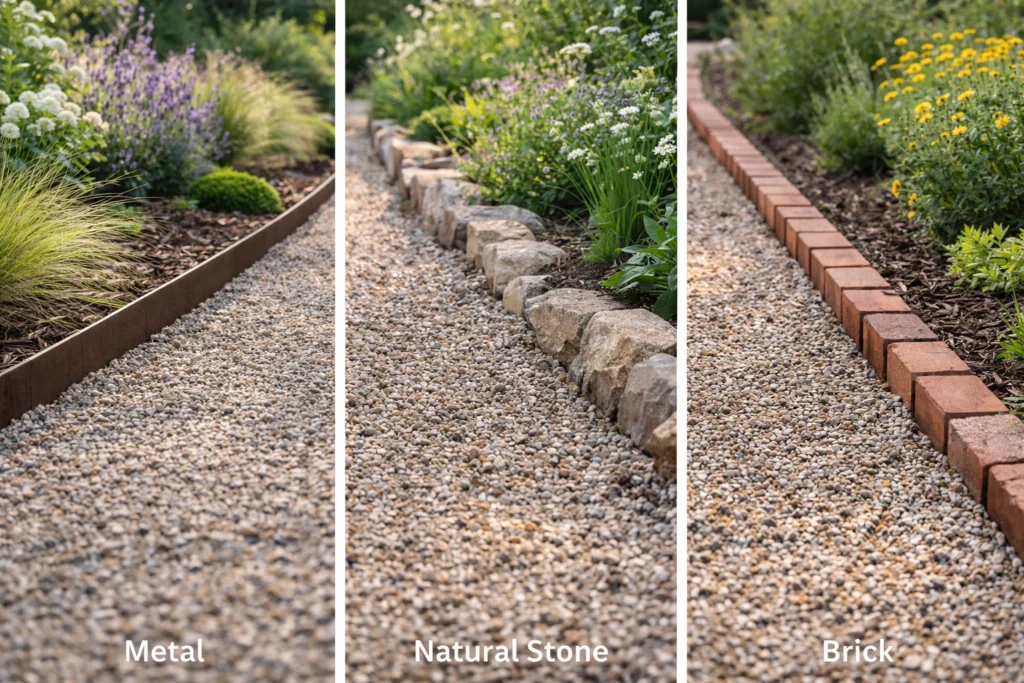
Steel edging is one of the most reliable options for gravel paths. It creates a clean, crisp line that works especially well in modern or minimalist landscapes. Steel is rigid enough to prevent gravel migration while still flexible enough to follow gentle curves.
Once installed properly, steel edging stays put. It handles foot traffic well and resists shifting over time. The main downside is cost, as steel is more expensive than plastic or wood, and installation often requires careful leveling and anchoring. Steel edging works best for straight or softly curved paths where longevity and a sharp visual edge matter most.
Aluminum Edging
Aluminum edging offers a similar appearance to steel but at a lighter weight. It resists rust naturally, making it suitable for damp or coastal environments. Aluminum is easier to cut and bend, which makes it popular for DIY installations with curved path designs. However, aluminum is less rigid than steel. In high-traffic areas or soft soils, it may flex over time if not properly staked. It’s best suited for residential garden paths with moderate use.
Corten Steel Edging
Corten steel, often called weathering steel, develops a controlled rust patina that many gardeners find appealing. It blends beautifully into natural and rustic landscapes while offering the same structural benefits as standard steel. The patina protects the metal beneath, so corrosion doesn’t compromise strength. Corten edging tends to be more expensive but delivers a high-end look with exceptional durability.
Plastic and Composite Edging
Plastic Landscape Edging
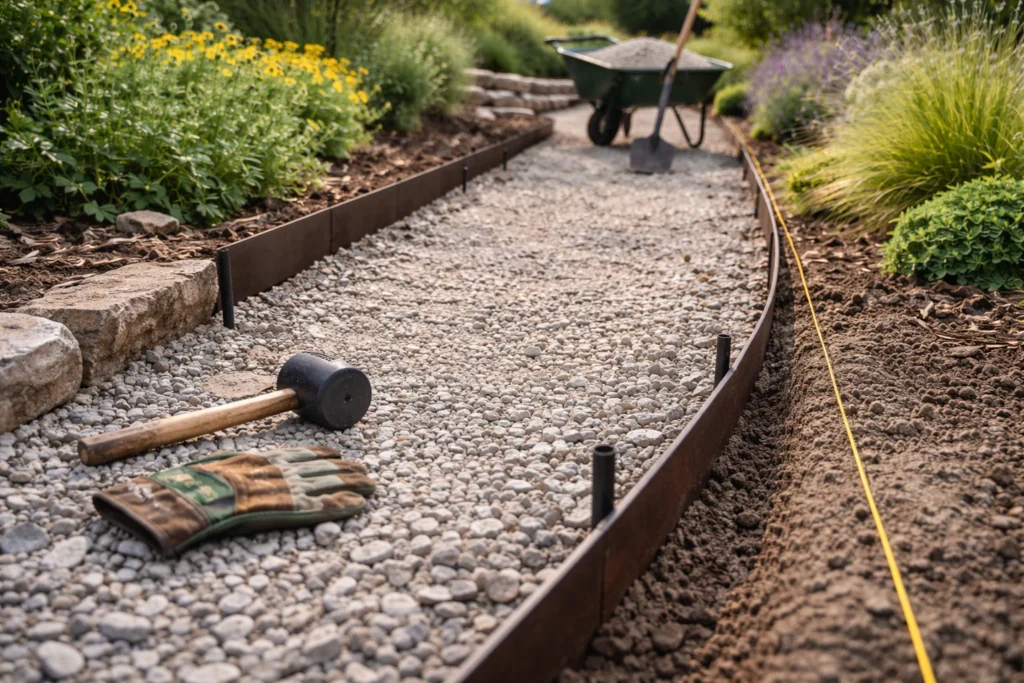
Plastic edging is widely available, inexpensive, and easy to install. It’s often sold in rolls and secured with plastic or metal stakes, making it accessible for beginners.
While plastic edging can work for temporary paths or lightly used areas, it has limitations. It tends to warp over time, especially in hot climates, and can pop out of the ground after freeze-thaw cycles. Visually, it often looks utilitarian rather than polished. Plastic edging works best for budget-friendly projects or short garden paths with minimal foot traffic.
Composite Edging
Composite edging is typically made from recycled plastic blended with stabilizing materials. It performs better than standard plastic, offering increased rigidity and resistance to UV degradation.
Composite edging strikes a balance between affordability and durability. It’s flexible enough for curves but sturdy enough to hold gravel in place long-term when installed correctly. For homeowners seeking a sustainable option without sacrificing performance, composite edging is a strong contender.
Natural Stone Edging
Natural Stone Slabs
Stone edging is one of the most timeless and durable options for gravel garden paths. Materials like limestone, granite, and flagstone provide weight, permanence, and a natural aesthetic that complements both formal and informal gardens.
Stone edging excels at gravel containment because of its mass. Once set, it rarely shifts. The trade-off is installation complexity. Stone requires proper base preparation and leveling, and labor costs can be high if installed professionally. Natural stone has been used in landscape construction for centuries, valued for both durability and aesthetics. A general overview of stone as a building and landscape materials.
Cobblestones and Stone Setts
Cobblestones create a traditional look often associated with European garden design. They can be set upright or flat, forming a strong edge that holds gravel securely. Because cobblestones are small and modular, they allow for curved designs but require careful installation. Once set into a compacted base, they perform exceptionally well and add significant character to the landscape.
Brick Edging
Traditional Brick Edging
Brick edging offers classic charm and works beautifully in cottage gardens and traditional landscapes. Bricks can be installed flat, angled, or upright to create visual interest. Brick provides moderate gravel containment but may require periodic realignment, especially in freeze-prone climates. Proper base preparation is essential to prevent movement.
Reclaimed Brick
Reclaimed brick adds texture and a sense of history to garden paths. While aesthetically appealing, reclaimed bricks can vary in size and durability, which requires careful selection during installation. For gardeners prioritizing sustainability and character over uniformity, reclaimed brick can be an excellent choice.
Concrete Edging Solutions
Poured Concrete Edging
Poured concrete edging allows for complete customization in shape and curve. It’s extremely durable and provides excellent gravel containment when installed correctly. The downside is permanence. Once poured, changes are difficult and costly. Installation also requires skill to ensure clean lines and proper curing.
Precast Concrete Edging
Precast concrete edging offers the strength of concrete with easier installation. These units come in standardized shapes and sizes and can be installed relatively quickly. While less flexible than poured concrete, precast options are durable and well suited for straight or gently curved paths.
Wood Edging
Pressure-Treated Timber
Wood edging creates a warm, natural look that blends well into informal gardens. Pressure-treated lumber resists rot better than untreated wood and is widely available. However, wood will eventually degrade, especially in constant contact with soil and moisture. Expect periodic replacement over time.
Hardwood and Natural Logs
Hardwoods and natural logs provide rustic charm but are less predictable in performance. They’re best suited for decorative paths rather than high-traffic walkways.
Living and Low-Profile Edging Alternatives
Some gardeners prefer a softer transition between gravel and surrounding areas. Low-growing plants, ornamental grasses, or dense ground covers can act as visual edging. While attractive, living edging does little to contain gravel mechanically. It works best when paired with a hidden structural edge beneath the surface.
Comparing Edging Materials at a Glance
Metal edging offers the best balance of durability and minimal visual intrusion. Stone and concrete provide unmatched longevity but require more investment. Plastic and composite options work for budget projects, while wood prioritizes aesthetics over lifespan. No single material is universally best. The ideal choice depends on how the path will be used and the style you’re trying to achieve.
Installation Tips That Improve Performance
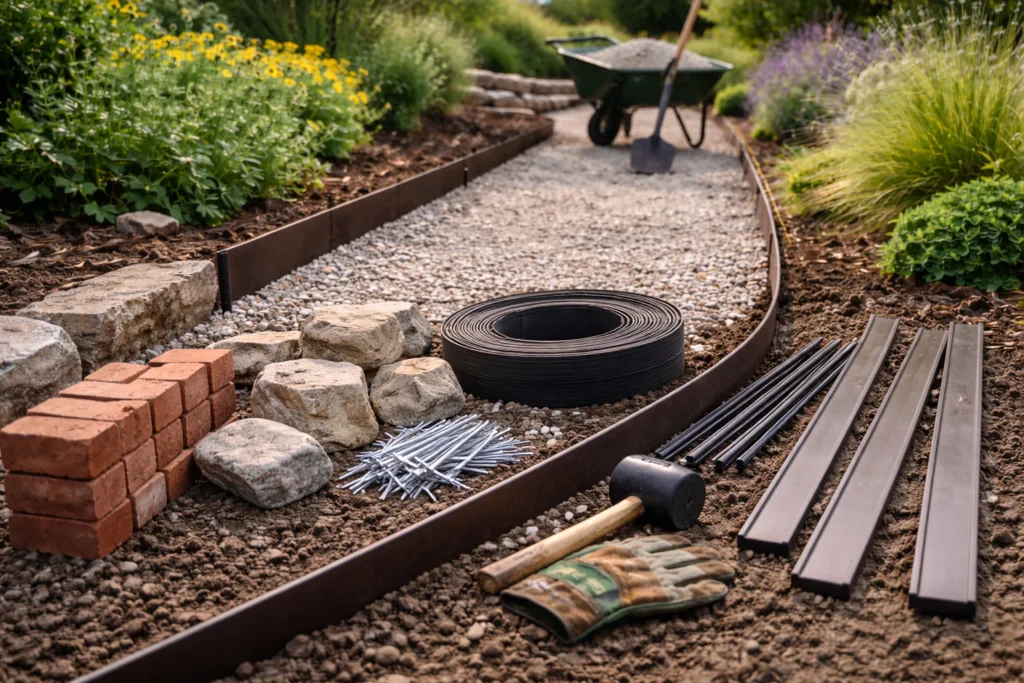
Always excavate deep enough to anchor edging below the gravel base. Most edging should sit at least one inch below finished gravel height to prevent spillage. Compact the base thoroughly before installing edging. Loose soil leads to movement and uneven lines. Secure edging with stakes or concrete footings where appropriate, especially in curved or high-traffic areas. Avoid shallow installation. Edging that looks fine initially often fails within a year if not properly set.
Long-Term Maintenance Considerations
Even the best edging requires occasional inspection. Seasonal temperature changes, soil movement, and foot traffic can cause minor shifts over time. Metal and stone edging require the least maintenance. Plastic and wood may need periodic adjustment or replacement. Refreshing gravel periodically helps maintain depth and appearance, especially in areas where stones compact or migrate.
Choosing the Right Edging for Your Garden
The best edging material is one that matches your landscape style, holds gravel effectively, and aligns with your maintenance expectations. A well-chosen edge doesn’t just solve a functional problem. It elevates the entire garden path, making it feel intentional, durable, and welcoming. Gravel paths reward thoughtful planning. When paired with the right edging, they become one of the most versatile and enduring features in any garden design.
FAQs
Metal edging is often the best choice because it provides strong gravel containment, long-term durability, and a clean, defined edge.
Yes, metal edging is generally more durable and stable than plastic, especially for high-traffic or permanent gravel paths.
Edging should typically be installed so it extends at least 3–4 inches below ground to prevent gravel from spreading and edging from shifting.
Wood can be used, but it has a shorter lifespan and requires more maintenance compared to metal, stone, or concrete edging.
Yes, stone edging is very effective due to its weight and rigidity, making it ideal for long-term gravel containment.
Flexible metal edging, aluminum edging, or composite edging works best for curved gravel garden paths.
Concrete edging is highly durable and effective, but it is more permanent and costly than other edging materials.
Gravel paths can exist without edging, but they will spread over time and require significantly more maintenance.
Plastic or basic composite edging is usually the most affordable option, though it may not last as long as other materials.
Metal, stone, and concrete edging can last decades, while plastic and wood edging may need replacement within several years.