Introduction
Sustainable living is no longer a trend. It is becoming a way of life. Around the world, people are rethinking how they use energy. They’re choosing cleaner options and looking for a smarter lifestyle. This is where solar-powered communities come in.
Communities that use solar power aren’t just saving energy. They’re building a better future, reducing pollution, and creating safer and healthier places to live. With technologies such as solar street lights keeping communities illuminated, these communities are clean and reliable—and becoming more affordable each year.
Solar-Powered Community
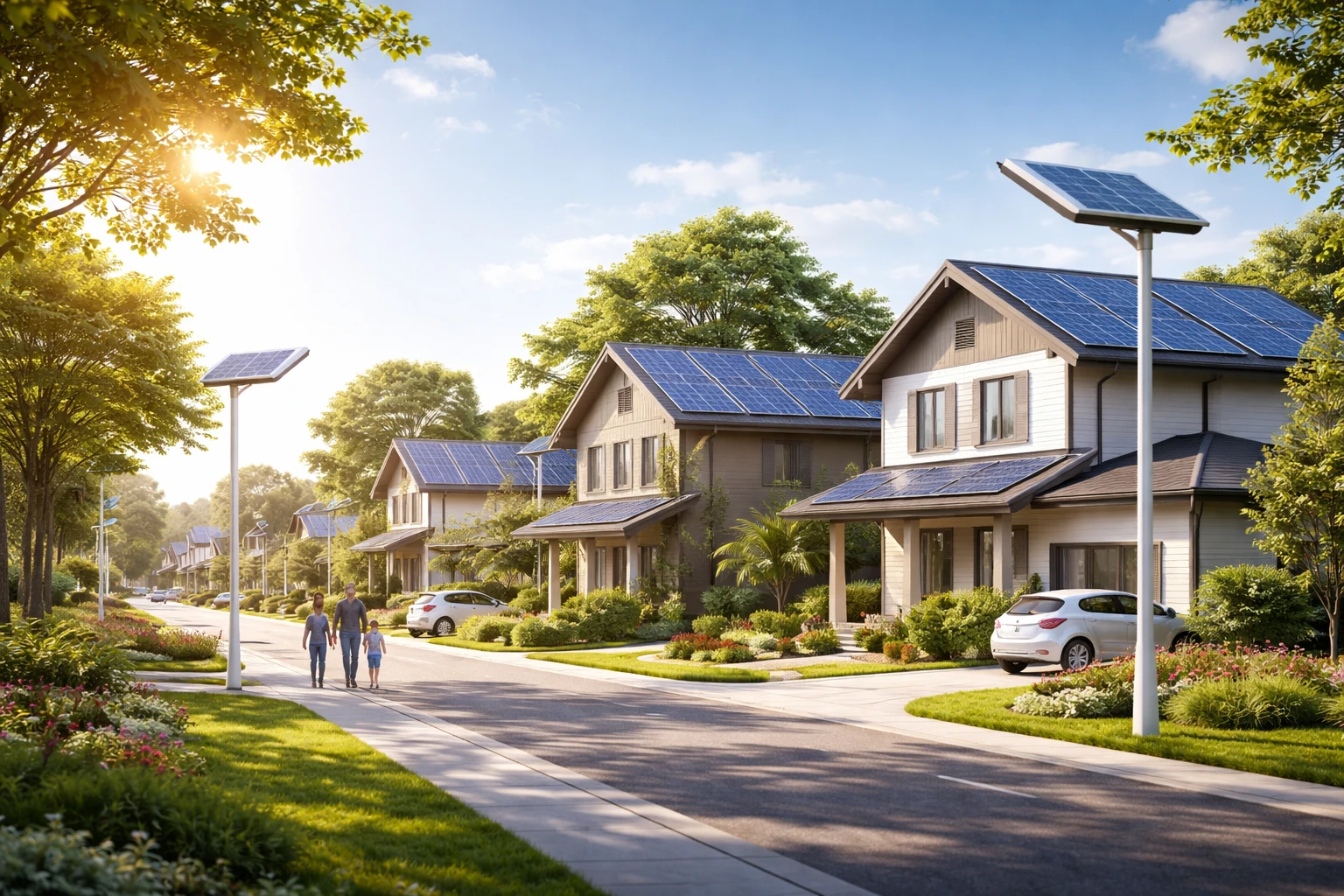
A solar-powered community is a neighborhood that uses solar energy as a main power source. Solar panels are installed on homes, shared buildings, and open areas. The energy collected from the sun is then used to power homes, street lighting, and community facilities. Some communities use individual rooftop solar systems, while others use shared solar farms. In both cases, residents benefit from clean and renewable energy.
These communities are usually planned with efficiency in mind. Homes are designed to use less energy, streets are laid out to maximize sunlight exposure, and everything works together as a single system. You can find solar-powered communities in cities and rural areas alike, whether in a new development or an existing neighborhood that upgraded over time.
Benefits of Moving Toward a Solar-Powered Community
Hire a moving company and relocate to a solar-powered community today to enjoy many advantages beyond saving on electricity costs. They touch finances, the environment, daily living, and more.
Lower Energy Costs
One of the biggest benefits of moving toward a solar-powered community is lower energy bills. Because solar energy reduces dependence on traditional power grids, it lowers monthly electricity costs. In many cases, excess energy can be shared or sold back to the grid. This also reduces costs, freeing up more money for other needs. Families can save, businesses can reinvest, and the whole community benefits.
Long-Term Savings
Solar energy is an investment. While the initial setup may cost more, the long-term savings are significant. Solar panels last for decades and have low maintenance costs, saving you thousands of dollars over time. As energy prices rise, these savings become increasingly noticeable, making solar-powered systems a worthwhile investment.
Just as importantly, homes in solar-powered communities also tend to have higher property values. In the long run, solar power pays for itself. Then it keeps paying back.
Environmental Benefits
Solar energy doesn’t produce harmful emissions. This helps reduce air pollution and lowers carbon footprints. By moving to a solar-powered community, residents help fight the climate challenge and reduce dependence on fossil fuels to support a healthier planet.
One of the other environmental benefits is clean air. Fewer pollutants mean fewer respiratory issues, which benefits children and senior citizens. People feel good knowing they are part of positive change.
Community Infrastructure and Safety
Solar-powered communities have better infrastructure because they’re built to save both energy and costs. They save communities money, freeing funds for other priorities. Streets, parks, and public spaces improve with solar lighting that provides consistent illumination throughout the night.
This doesn’t just mean visibility. It means safety, reduced accidents, lower crime rates, and more. Community centers, schools, and clinics also benefit from stable power, and emergency services remain fully operational during outages and harsh weather. From small eco-villages to large urban developments, solar infrastructure is proving its value every day.
Planning and Choosing a Smooth Move to a Solar-Powered Community
Moving to a solar-powered community requires planning. You’ll want to ask questions, learn about energy policies and incentives, and gain a full understanding of how the systems work. Check how energy is distributed, discuss the billing structures, and determine whether the community follows a shared ownership model or an individual system for each household.
Planning also includes the physical move. You’ll want to choose professionals who understand the value of sustainable communities and plan to make this transition as smooth as you can. The more you plan ahead, the more you can enjoy the benefits of your new community right away.
Conclusion
Moving to a solar-powered community is an excellent choice. It’s a newer concept, but it offers significant economic, environmental, and financial benefits. A move to a solar-powered community supports the environment and your wallet alike, because they’re built for the future.
As renewable energy becomes accessible, solar-powered communities will continue to grow. They represent progress. They represent responsibility. And they represent the hope people hold for the future. If you’re considering a move, think beyond today. Think long-term. Think solar.
FAQs
A solar-powered community uses solar energy as its primary power source for homes, lighting, and shared facilities through rooftop systems or shared solar farms.
Yes, residents typically pay less for electricity because solar reduces reliance on traditional power grids and can generate excess energy.
They may have a slightly higher upfront cost, but long-term energy savings and higher resale values often offset the initial investment.
Many solar-powered communities use battery storage or hybrid systems, allowing essential services and lighting to continue during outages.
No, they exist in both new neighborhoods and older communities that have upgraded their infrastructure over time.
Yes, they reduce carbon emissions, lower air pollution, and decrease dependence on fossil fuels.
Solar panels require minimal maintenance and are designed to last for decades with occasional inspections and cleaning.
Energy is generated centrally and distributed among residents, with costs and savings typically shared through community billing structures.
Improved lighting, reliable power, and resilient infrastructure often contribute to better safety and emergency readiness.
Review energy policies, billing models, incentives, and work with professionals who understand sustainable living and relocation needs.