Adjustable mattress bases have officially crossed into the mainstream. They’re no longer just something you see in medical settings or in those early-2000s infomercials showing people sitting up in bed with big remote controls. Today, they’re one of the most popular upgrades in modern bedrooms. You can actually see the evolution documented on Wikipedia, where adjustable beds are described as multi-hinged sleeping systems built for comfort, support, and flexibility.
But here’s what nobody tells you when you first upgrade: picking the right bedding for an adjustable mattress base becomes a whole journey of its own. You would think bedding is the easy part. Buy sheets, wash them, put them on, done. But the first time you lift your headrest or raise your legs into zero-gravity mode, the fitted sheet suddenly bursts off the corner like it’s trying to escape the room. The flat sheet bunches in weird places. Your comforter slides halfway off the bed like it’s bailing out of the situation entirely. That’s when you realize that adjustable beds need bedding that knows how to move with them, not against them.
This guide gives you every lesson I learned from actually living with an adjustable base what works, what doesn’t, what fabrics behave best, and how to keep your bed looking smooth and hotel-like even when it’s lifted in the air. All of this happens through trial and error, personal misadventures, and plenty of late-night “why is this sheet doing this to me?” moments.
I’ll also reference the CDC’s official sleep page because adjustable beds are often tied to sleep quality improvements, and the CDC provides excellent general guidelines on healthy sleep habits. It’s not specifically about bedding, but it’s useful if you’re upgrading your whole sleep routine. Now let’s dive into the journey of selecting bedding that actually behaves on an adjustable mattress base.
Why Bedding Choice Matters for Adjustable Beds
The moment your adjustable bed starts rising, you immediately understand why regular bedding can’t keep up. The mattress bends so gracefully, but the bedding? That’s a different story. The fitted sheet snaps off in the corner. The flat sheet grabs onto your legs. The comforter shifts toward your feet. Suddenly you’re right back to tucking and smoothing things in the middle of the night.
Adjustable beds hinge, flex, and lift. That means bedding must stretch, cling, and adjust. Without the right materials and pocket depth, your sheets will behave like they’re in full rebellion. But when you pick the right bedding, everything moves in harmony. You raise your head, the bedding follows. You lower your knees, the fabric glides with it. It’s that moment where you finally think, “Ahh, so this is why people rave about these beds.”
Step 1: Start with the Right Fitted Sheets
The fitted sheet is the core of the entire experience. When the fitted sheet fails, the entire bed feels chaotic. I learned this the hard way with my old cotton set. They were perfect on a regular mattress, but the moment the adjustable base lifted the head section, the bottom corner shot off dramatically. You don’t forget the sound of a fitted sheet announcing defeat.
Deep pockets suddenly mattered more than I ever imagined. And not just deep pockets strong elastic. The kind that hugs the mattress, not just lightly grips it. Some fitted sheets even come with little straps that anchor beneath the mattress. The day I switched to deep-pocket sheets with thick, 360-degree elastic was the day my adjustable bed truly started behaving like it was supposed to.
Step 2: Choose the Right Fabric for Flexibility and Breathability
Think of sheet fabric like workout clothing versus office attire. Some fabrics flex, some don’t. Jersey knit sheets were my first “wow” moment. They behave like a soft T-shirt that stretches in every direction. If you want sheets that stay put without complaining, jersey works surprisingly well. Bamboo blends were the second big discovery. They breathe beautifully and drape softly, which makes them great for mattress movement. If you sleep warm, bamboo or Tencel feels like the perfect match.
Then there’s microfiber emotionally underrated but very functional. It’s stretchy enough to work well on an adjustable bed, even if it runs warmer. Cotton works too, especially high-quality sateen or percale, but you need deep pockets and really good elastic. Cotton doesn’t stretch much, so sizing becomes everything. Over time, I learned that fabric flexibility matters just as much as pocket depth. If the material resists bending, you’ll feel it every time the bed shifts.
Step 3: Understand Split vs. Standard Bedding Options
If you’ve purchased a split king or split California king, your bedding world shifts dramatically. Instead of one giant mattress, you now have two separate twin XL mattresses working independently. The first night I used a normal king fitted sheet on a split king, it lasted maybe three seconds before giving up entirely. When one person raises their side and the other doesn’t, the sheet is caught in a tug-of-war it simply can’t win.
That’s when you switch to twin XL fitted sheets one for each mattress. They allow each side to operate independently. You can still share a king comforter if you like that cozy, unified feel. Or you can go for the two-comforter setup, which is a favorite in many European homes. It’s an unexpectedly peaceful experience when you no longer fight a blanket tug-of-war at 2 a.m. If you want independence at the head but unity at the foot, split-top sheets are a great middle path. The sheets are connected at the bottom but split near the pillow area, giving both sleepers their own angle control.
Step 4: Selecting the Best Flat Sheet Setup
Flat sheets are the drama queens of adjustable beds. They bunch, they slide, they wrinkle, and sometimes they seem offended by the idea of movement.
Oversized flat sheets changed everything for me. The extra length allowed me to tuck the sheet far deeper under the mattress so it had enough fabric to stay anchored when the bed lifted. Tucking the bottom first while the mattress is slightly raised helped too, almost like sealing it into place. Some people eventually abandon flat sheets entirely and go straight to a duvet setup. If you crave simplicity, or you hate retucking sheets every day, you might become one of those people.
Step 5: Comforters, Blankets, and Duvets What Works Best?
Your top layer needs to be flexible, lightweight, and willing to move with the adjustable angles of the bed. Heavy comforters tend to slide off the bottom or shift unevenly. Puffy duvets sometimes bunch awkwardly. Light quilts, soft duvets, or breathable down-alternative comforters tend to behave the best. They drape instead of resisting. They mold to the shape of the bed instead of fighting it.
One comforter for the whole bed looks beautifully neat and hotel-like. But two twin XL comforters one for each mattress work surprisingly well for couples with different temperature preferences. No judgment if being your own blanket island becomes your new favorite sleeping style.
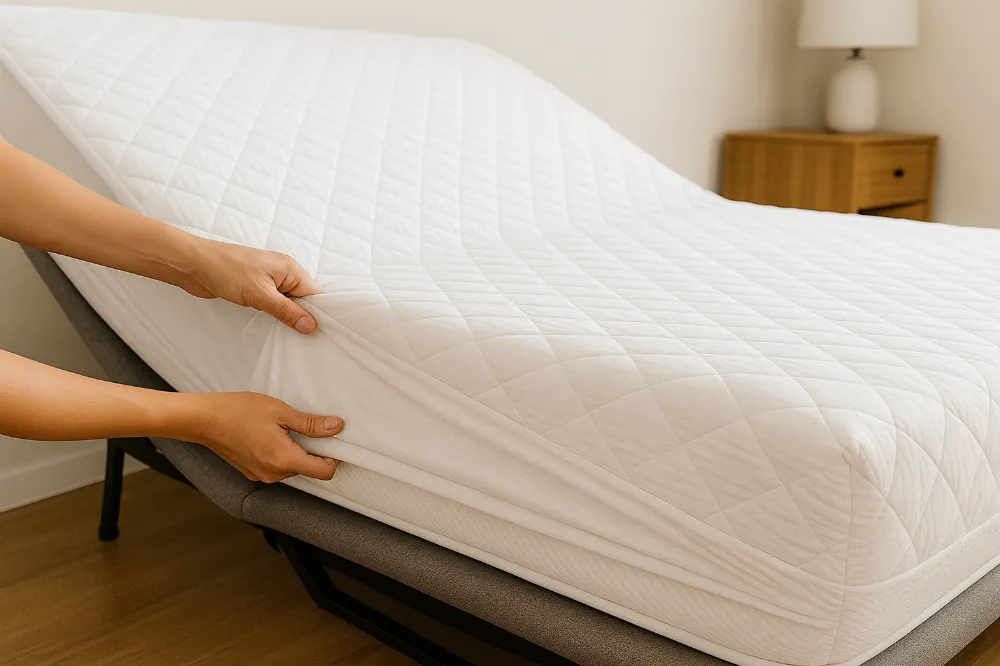
Step 6: Mattress Protectors for Adjustable Beds
Some protectors are thick and stiff, and while they seem durable, they end up fighting every movement of the mattress. Thin, breathable, flexible protectors work far better. They stretch with the mattress instead of crunching or sliding. Once I switched to a protector that behaved more like a smooth second skin, everything on top of it started moving more naturally too.
Step 7: Bed Skirts, Encasements, and Additional Layers
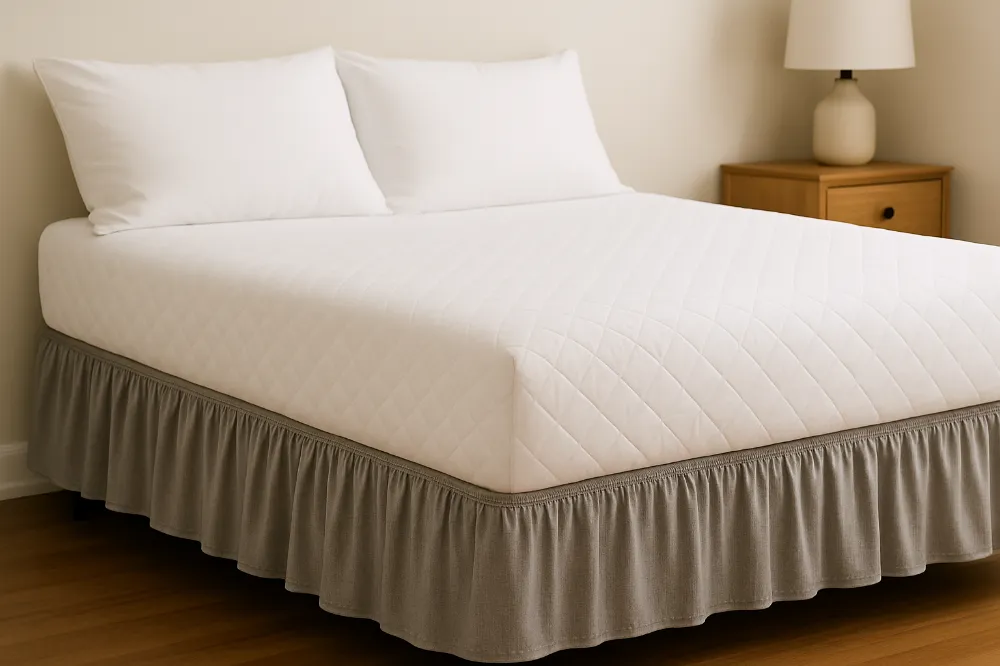
Traditional bed skirts don’t play nicely with adjustable bases. They bunch, they shift, and sometimes they get caught. A wrap-around skirt worked best because it hugged the base instead of the mattress. It moves independently, looks clean, and never interferes with the adjustable mechanics. Once you find a skirt that’s meant for adjustable bases, you never go back to the old style.
Step 8: Special Features That Make Bedding Work Better with Adjustable Bases
All the small details matter. Reinforced corners prevent tears. Elastic bands across the middle of the fitted sheet hold everything tighter. Cooling fabrics help more than you realize, especially if your mattress is memory foam. Once I started noticing these subtle features, I could tell instantly whether a bedding set would be adjustable-friendly or not.
Step 9: How to Keep Bedding from Shifting or Sliding
Adjustable beds move, so bedding will always shift a little. But sheet suspenders were the game changer. They clip under the mattress and hold the sheet like a loyal bodyguard. Washing bedding a few times also softens the fabric so it drapes better and stays in place. My rule became simple: let the mattress move freely, and help the bedding adapt to those movements instead of resisting them.
Step 10: Matching Bedding to Sleeping Style
Picking bedding based on your sleep style is the final layer of customization. Hot sleepers need breathable materials. Cold sleepers love jersey or flannel. Couples often realize they sleep much better when each has their preferred comforter. Adjustable beds already let you customize sleeping angles. Matching the bedding to your body’s needs is the next logical step.
Step 11: Choosing the Right Pillowcases and Pillows
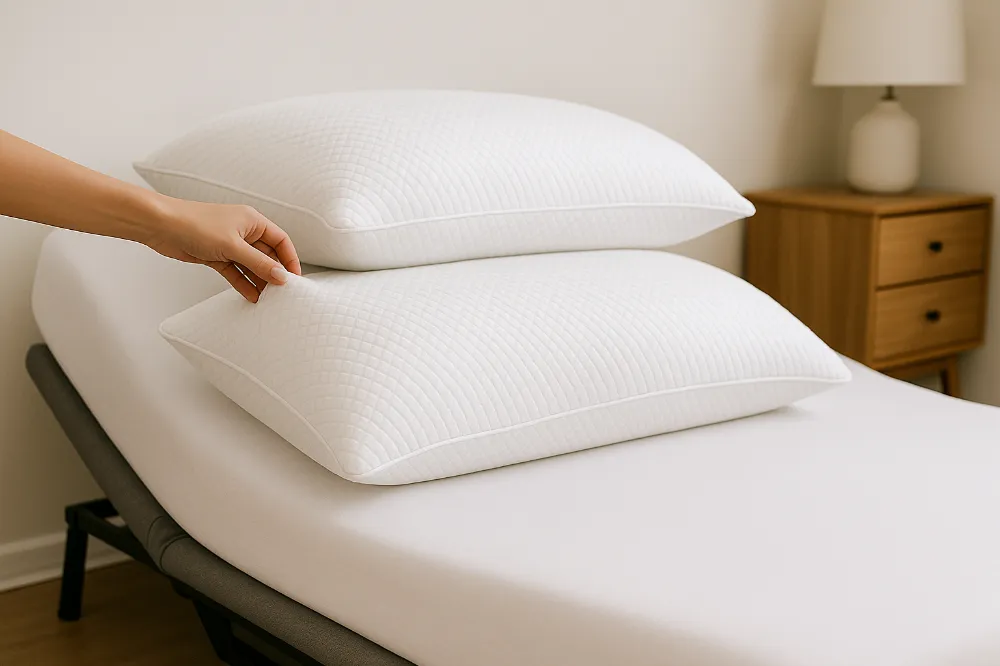
Once the head of the bed elevates, pillows behave differently too. High-loft pillows sometimes push your head forward too much. Adjustable loft pillows feel like they’re designed for adjustable beds because you can fine-tune their height. Memory foam and latex pillows maintain their shape better when the angle changes. Pillowcases with a little extra room keep the pillow from feeling tight or rigid. Everything works better when the pillow feels like part of the system instead of a separate piece.
Step 12: Selecting Bedding Aesthetics That Complement the Adjustable Frame
Adjustable beds look modern and clean. Their bedding should complement that look. Lightweight quilts, smooth duvets, and soft fabrics drape beautifully even when lifted. Heavy ruffles and stiff textures tend to get awkward when the bed bends. When the bed is elevated into a lounging position, the right bedding looks intentional instead of messy. You start to recognize which fabrics have natural elegance when draped.
Step 13: How Much Bedding You Actually Need
It turns out that less is more. A couple of high-quality fitted sheets, a comforter that drapes well, a reliable mattress protector, and pillowcases that feel good on your skin that’s really all you need. Adjustable beds reward thoughtful choices, not excessive ones.
Final Thoughts: Build a Bedding System That Moves with You
Adjustable beds are designed to make your sleep more comfortable and customizable. But without the right bedding, you’ll feel like you’re constantly chasing corners, smoothing wrinkles, or adjusting layers that don’t want to cooperate. Once you choose bedding that actually moves with the mattress, everything changes. Your bedtime routine becomes smoother. Your sheets stay put. Your comforter drapes perfectly. And the bed finally feels as comfortable and effortless as you imagined when you bought it.
FAQs
Sheets with deep pockets, strong elastic, and flexible fabrics like bamboo, jersey knit, or microfiber work best because they stay secure during movement.
Yes split king setups require two twin XL fitted sheets so each side can move independently without pulling.
Sheets pop off when they’re too shallow, lack strong elastic, or aren’t designed for mattress articulation.
Yes, bamboo sheets are flexible, breathable, and drape well, making them ideal for adjustable bases.
Most adjustable beds use thicker mattresses, so deep or extra-deep pockets help ensure the sheet stays in place.
Lightweight quilts, down-alternative comforters, or soft duvets work best because they drape smoothly during elevation.
It’s optional flat sheets can bunch during articulation, but oversized flat sheets or a duvet-only setup reduce issues.
Yes, as long as they’re flexible, thin, and have deep pockets so they move naturally with the mattress.
Regular bed skirts don’t work well. Wrap-around or adjustable-base-specific skirts fit better and don’t interfere with movement.
Two twin XL fitted sheets with either one shared king comforter or two individual twin XL comforters give each person freedom to adjust independently.