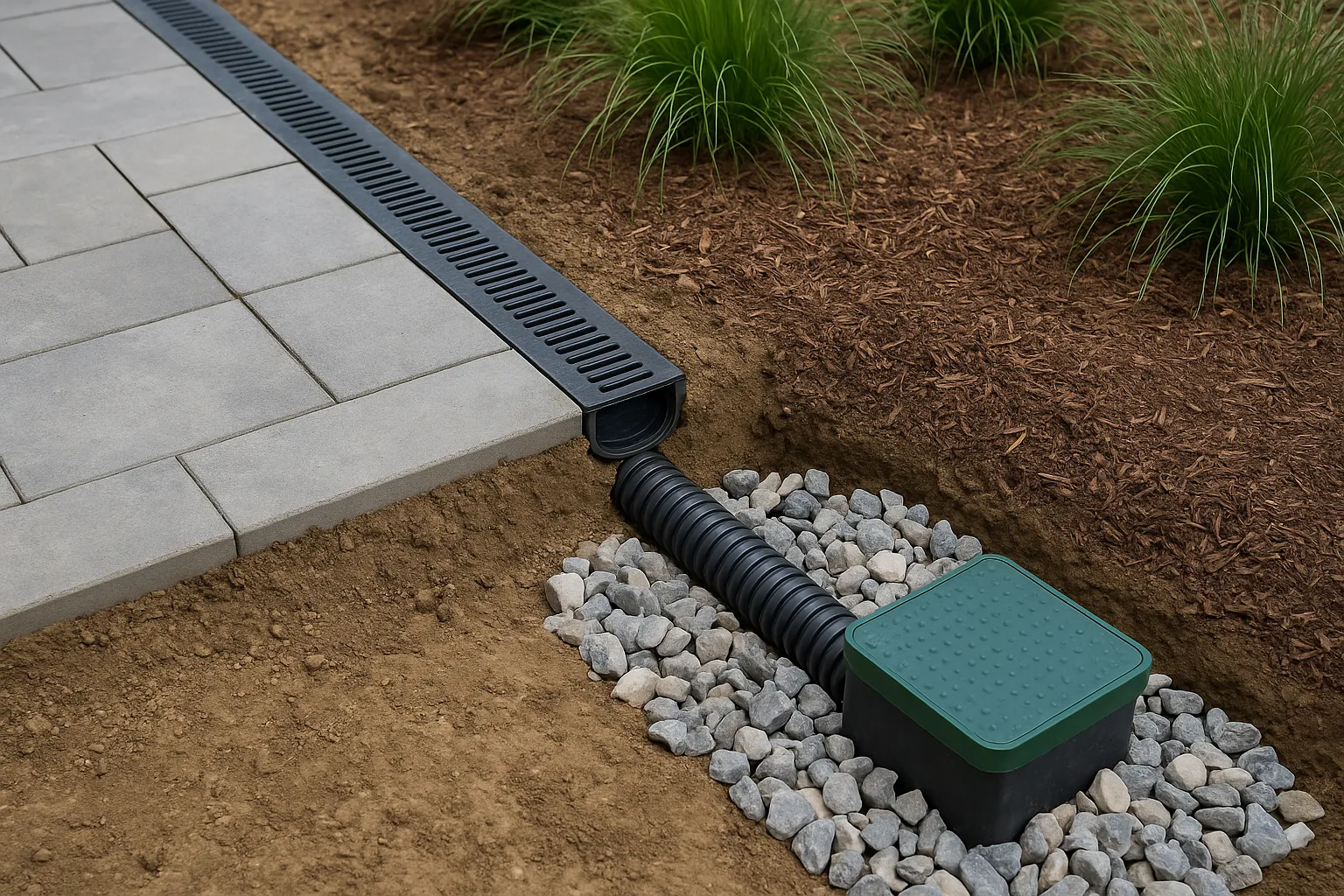
Contemporary landscape design has evolved far beyond the simple selection of plants and paving. Today, it is a sophisticated discipline that blends artistry with engineering, creating outdoor spaces that are not only visually stunning but also profoundly functional, sustainable, and resilient.
At the heart of this modern approach lies a critical, yet often unseen, component: advanced drainage. A well-conceived drainage strategy is no longer an afterthought—it is a foundational element that safeguards the entire investment and ensures the long-term viability of the design.
The Hidden Risks of Poor Drainage
The consequences of poor water management are both immediate and insidious.
Aesthetic Problems
- Unsightly surface water
- Muddy patches
- Soil erosion that disrupts clean, modern lines
Structural Risks
- Waterlogged ground causing uneven paving
- Compromised retaining walls
- Threats to foundations of nearby structures
Ecological Impacts
- Saturated soil suffocating plant roots
- Poor plant health
- Higher vulnerability to disease
In essence: without a robust plan for managing rainfall and groundwater, even the most expensive and carefully curated landscape is vulnerable to premature failure.
Why Professional Drainage Expertise Matters
This is where the value of professional insight becomes irreplaceable. Engaging with a team of expert drainage specialists at the very inception of a project transforms the approach from reactive to proactive.
Benefits of Working With Drainage Specialists
Companies like BDS Drainage bring diagnostic rigour to the process through:
- Detailed site assessments
- Understanding topography and soil composition
- Mapping existing water flow patterns
- Designing system components that work with the landscape—not against it
Outcome of Expert Involvement
- Intelligent water management
- Protection of architectural elements
- Preservation of horticulture
- Enhanced usability year-round
Modern Drainage Solutions for Landscapes
The solutions available today are both elegant and highly effective. Below is a breakdown of common drainage types and their functions.
1. Linear Drainage Systems
Ideal for paved areas and terraces.
Key Features
- Discreet, flush installation
- Customizable decorative grates
- Captures and channels surface water efficiently
2. French Drains & Subsurface Solutions
Best for handling underground water challenges.
Advantages
- Collects and stores excess groundwater
- Slowly releases water to prevent oversaturation
- Protects planted areas and structural elements
3. Attenuation Crates
- Create temporary underground water storage
- Help manage runoff during heavy rain
Sustainable Drainage Systems (SuDS): The Future of Landscape Water Management
One of the most significant advancements in drainage is the adoption of Sustainable Urban Drainage Systems (SuDS).
Core SuDS Principles
- Reduce pressure on public sewers
- Mimic natural water cycles
- Improve biodiversity
- Enhance ecological value
Popular SuDS Components
| SuDS Method | How It Works | Benefits |
| Permeable Paving | Allows water to infiltrate into the soil below | Reduces runoff and flooding |
| Rain Gardens | Planted depressions that hold and filter rainwater | Attracts wildlife, improves soil health |
| Swales | Shallow, landscaped channels | Slow, filter, and redirect stormwater |
This approach not only solves drainage problems but adds a new, dynamic ecological dimension to the landscape.
Engineering Precision: The Backbone of a Reliable Drainage System
The implementation of these systems requires precision and a deep understanding of construction principles.
Examples of Engineering Detail
- Creating subtle gradients (falls) across patios
- Using gravity-powered water flow
- Selecting aggregates and sub-base materials tailored to site demands
- Specifying pipes based on load and usage
Result: A landscape surface that clears quickly after rainfall and remains safe, functional, and long-lasting.
The Long-Term Value of Integrated Drainage
Ultimately, viewing drainage as an integral part of the design process is a mark of a truly professional and forward-thinking project.
Benefits of Excellent Drainage
- Year-round usability
- Structural stability
- Healthy, vibrant plant life
- Cleaner, more modern aesthetics
- Preservation of long-term investment
The collaboration between visionary landscape designers and skilled drainage engineers results in outdoor environments that are beautiful upon completion and built to endure.
In modern landscape design, effective drainage is the invisible thread that weaves together beauty, function, and longevity.
FAQs
Advanced drainage protects the landscape from water damage, preserves aesthetics, and ensures long-term structural and ecological stability.
It can lead to standing water, soil erosion, uneven paving, plant decline, and even structural damage.
Experts evaluate soil, topography, and water flow to design a drainage system that works seamlessly with the landscape.
It’s a sleek, surface-level channel designed to collect and redirect water from paved areas efficiently.
French drains handle subsurface water by collecting and redirecting groundwater to prevent soil saturation.
They temporarily store excess rainwater underground and release it slowly to reduce flooding and oversaturation.
Sustainable Urban Drainage Systems mimic natural water cycles, reducing runoff while improving ecological value.
They allow water to infiltrate through the surface, reducing surface runoff and pressure on traditional drains.
They capture, slow, and naturally filter rainwater while supporting plant and wildlife habitats.
These small slopes ensure water flows into drainage channels instead of pooling on the surface.