This post contains affiliate links. As an Amazon Associate, I earn from qualifying purchases, at no extra cost to you. See our disclosure policy.
Hardwood floors are built to last decades, but the finish on top of them is not. Over time, daily wear breaks down that protective layer, and most homeowners do not realize the damage until it has already gotten worse than it needed to be. The good news is that refinishing can bring almost any hardwood floor back to life for a fraction of the cost of replacement. The key is knowing what to look for so you can act before a simple fix turns into a major project.
1. The Finish Looks Dull, Even After Cleaning
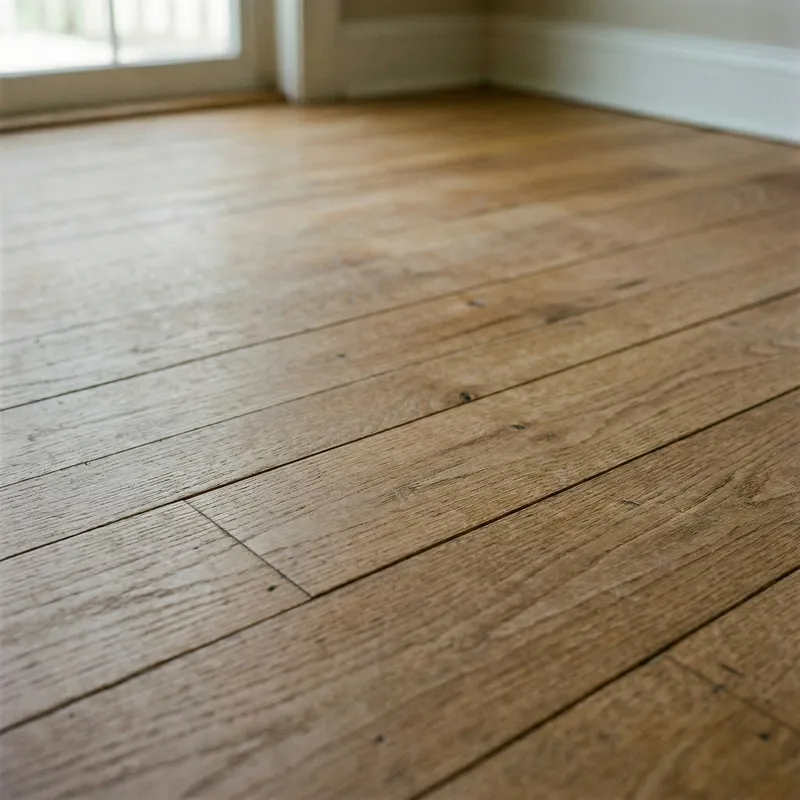
You mop, you Swiffer, you try every product at the hardware store, but your floors still look lifeless. No shine, no depth, no matter what you do.
What is happening: the polyurethane finish has worn through. The wood underneath is fine, but the protective layer is gone. Think of it like clear coat on a car. Once it wears off, everything underneath starts deteriorating faster.
What to do: A screen and recoat is usually all you need. This involves lightly scuffing the surface and applying a fresh coat of finish. No heavy sanding, minimal dust, and most jobs are done in a single day. Typical cost runs two to three dollars per square foot.
Quick test: Place a few drops of water on a high-traffic area. If the water beads up, your finish is still intact. If it soaks in and darkens the wood within 30 seconds, the finish is worn through.
2. Visible Scratches and Scuff Marks
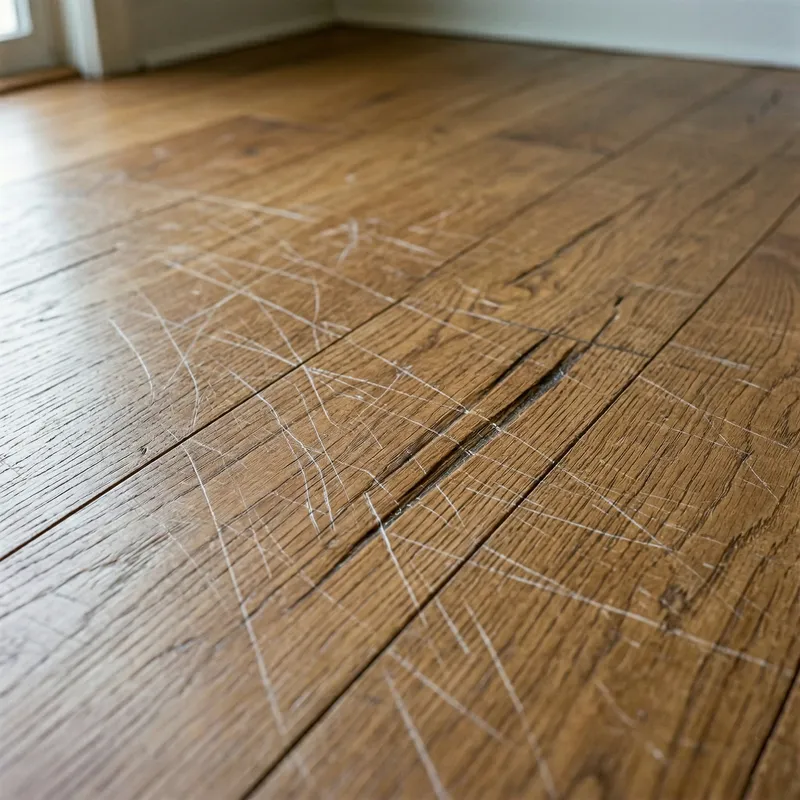
Scratches from furniture legs, pet nails, kids dragging toys across the floor. Light ones you can see but cannot feel with your fingernail. Maybe deeper grooves near doorways or high-traffic paths.
What is happening: surface scratches mean the finish is damaged but the wood may still be fine. Deep scratches mean the wood itself is gouged. Either way, those “scratch repair” pens from the store only fill the groove with wax. They do not restore the finish, so the damage keeps getting worse underneath.
What to do: Surface scratches come out with a screen and recoat. Deep scratches and widespread wear need a full sand and refinish, which takes the floor down to fresh wood and builds it back up with two to three coats of polyurethane. Cost ranges from two to six dollars per square foot depending on severity.
Quick test: Run your fingernail across a scratch. If you cannot feel it, it is a finish scratch and a recoat will fix it. If your nail catches, it is a wood scratch and will need a full refinish.
3. Discoloration, Dark Spots, or Gray Patches
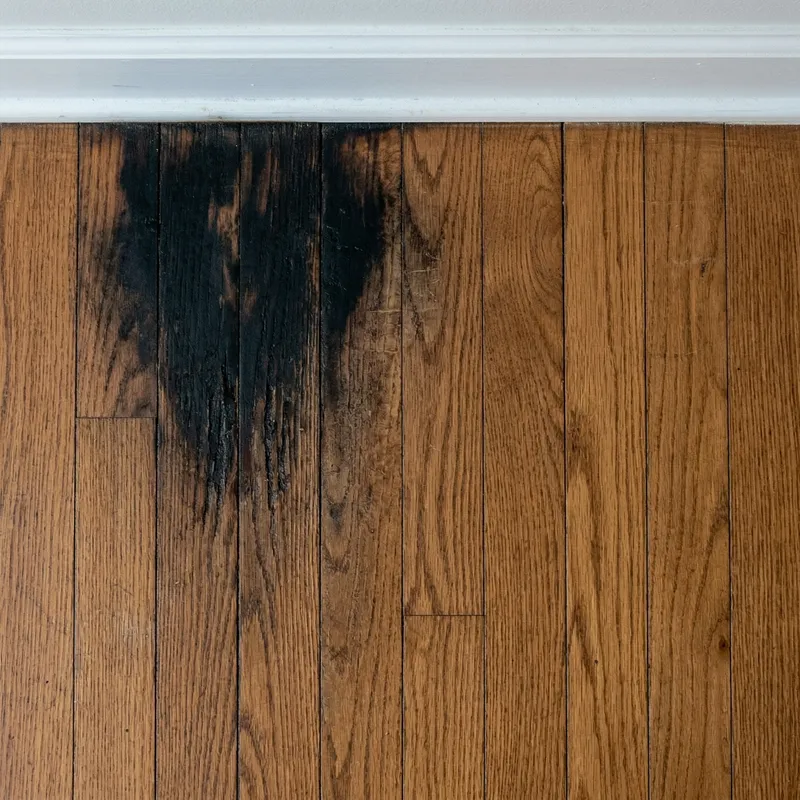
Areas that are noticeably darker, grayish, or a completely different color than the rest of the floor. You see this most often near windows, entryways, kitchens, and anywhere pets spend time.
What is happening: gray patches are moisture damage where water has penetrated the finish and started breaking down the wood fibers. Dark spots are usually deep stains from pet accidents, plant pots, or standing water. Sun fading happens when UV light bleaches the wood unevenly, which you will notice when you move a rug or piece of furniture.
What to do: A full sand and refinish removes the damaged surface layer and reveals fresh wood underneath. For deep pet stains that have gone into the grain, individual boards may need to be replaced before refinishing. That sounds expensive, but replacing a few boards and refinishing is still far cheaper than replacing the entire floor. Expect four to six dollars per square foot for a standard refinish, plus eight to fifteen per square foot for any board replacement.
Quick test: Lay a white paper towel on a dark spot and press down. If the towel picks up any color or moisture, the stain is still active and penetrating deeper. The sooner you act, the less wood needs to be replaced.
4. Gaps Between Boards or Creaking
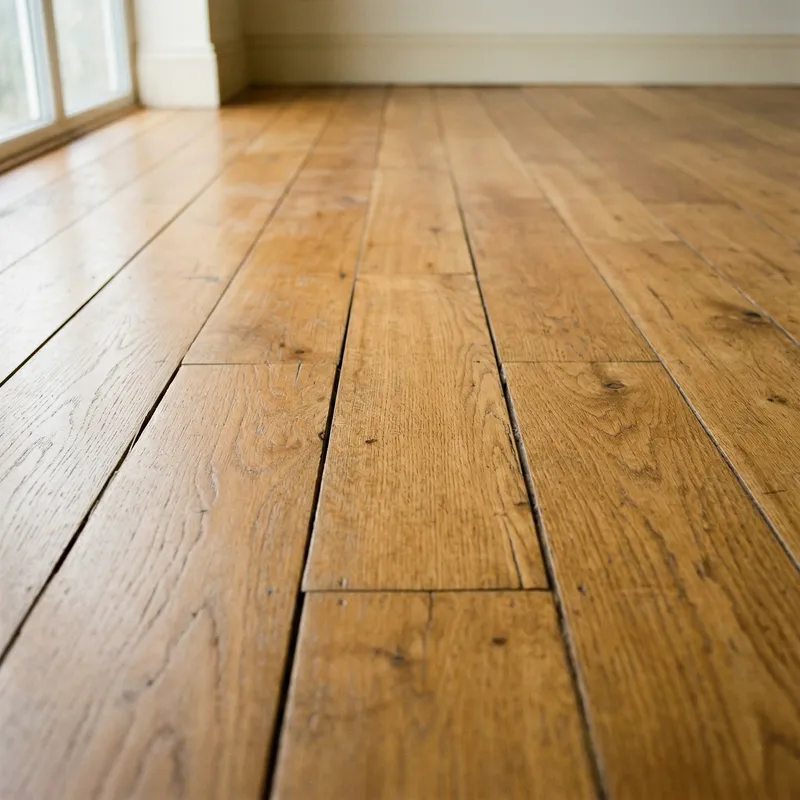
Gaps between planks, especially noticeable in winter. Maybe some boards creak or feel slightly loose underfoot.
What is happening: wood naturally expands and contracts with humidity changes. Small seasonal gaps that close up in summer are completely normal. But if gaps are wider than a credit card, persist year-round, or boards are visibly shifting, you may have a humidity problem or the floor was installed without proper acclimation.
What to do: Seasonal gaps usually close on their own when humidity rises. Persistent gaps can be filled with flexible wood filler during a refinish. Loose or creaking boards may need to be re-secured to the subfloor before refinishing. Gap filling is typically included in the refinish cost. Board repairs add three to eight dollars per square foot for the affected area.
Quick test: Check your gaps in summer versus winter. If they close when it is humid and open when it is dry, that is normal seasonal movement. If they stay wide year-round or boards move when you walk on them, it is worth getting a professional assessment.
5. Faded, Worn Areas in Front of the Sink or High-Traffic Zones
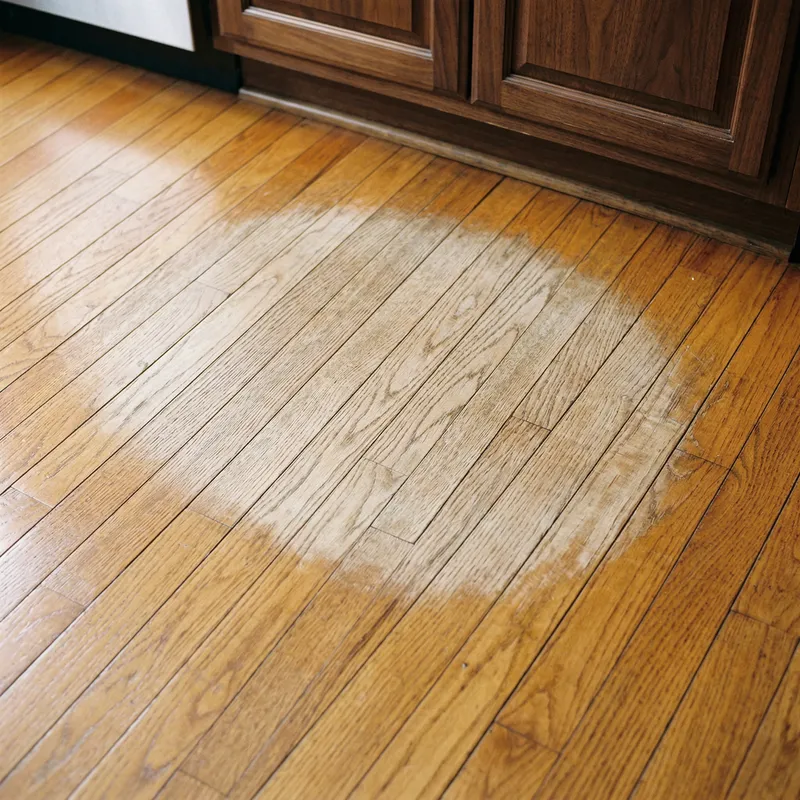
High-traffic areas like the kitchen in front of the sink, hallways, and doorways where the wood looks faded, dry, and noticeably lighter than the surrounding floor. The finish is thin or gone entirely.
This is the most urgent sign on this list. Without any protective layer, the wood is absorbing everything: water, dirt, oils from your feet. Every time you mop, water soaks directly into the grain. In humid climates, unprotected wood can warp or develop mold within months.
What to do: A full sand and refinish is required. The worn areas need to be sanded level with the rest of the floor and the entire room refinished for a uniform look. You cannot just refinish the worn spot because the new finish will not match the old, and you will see a visible line where they meet. Cost is typically four to six dollars per square foot.
Quick test: Run your hand across the faded area and then across a finished area. The worn wood feels rough, dry, or fuzzy. The finished area feels smooth and slightly slick. If the difference is obvious, that area needs immediate attention.
The Bottom Line
Most hardwood floors do not need to be replaced. They need to be refinished. The cost difference is significant: refinishing runs three to six dollars per square foot versus eight to fifteen for full replacement. For a typical 1,000 square foot main level, that is the difference between $3,000 to $6,000 and $10,000 to $15,000.
The key is catching these signs early. A floor that only needs a recoat today could need a full refinish in a year if you wait. And a floor that needs refinishing now could need board replacement or a full tear-out if moisture damage is allowed to spread.
If you are not sure where your floors stand, Oakerds Hardwood Floor Refinishing offers free in-home assessments for homeowners in the Atlanta area. A professional can tell you in ten minutes whether your floors need refinishing, a simple recoat, or nothing at all.
FAQs
Most hardwood floors need refinishing every 7–10 years, depending on traffic and wear. High-traffic homes may need it sooner.
A recoat refreshes the top layer without sanding to bare wood, while a full refinish removes the old finish completely and rebuilds it.
If the finish is worn through, cleaning products won’t restore shine. A screen and recoat is usually the best solution.
Not always—light scratches can often be fixed with a recoat, but deeper ones that catch your fingernail require full refinishing.
These are usually caused by moisture damage or stains penetrating the wood, often from spills, pets, or standing water.
Small seasonal gaps are normal, but wide or permanent gaps may indicate humidity issues or installation problems.
In most cases, no—refinishing only one area will create visible color differences, so the entire space should be done.
Most refinishing projects take 2–5 days depending on the size of the area and drying time between coats.
Yes, refinishing typically costs much less—often about half or more compared to full floor replacement.
If you see bare wood, deep stains, or moisture damage, refinishing should be done as soon as possible to prevent further deterioration.