Kids don’t really see “beds” the way adults do. For them it’s more like: today it’s a castle, tomorrow a pirate ship, and by evening probably a secret HQ where snacks are “classified info.” That’s basically why the Montessori bed house blew up. It takes a normal sleep setup and turns it into something with personality. In Montessori-style rooms (where everything is supposed to scream “I can do it myself”), this thing fits like a glove. It’s practical, but also a bit fun—without turning the room into a circus.
What is a Montessori bed house?
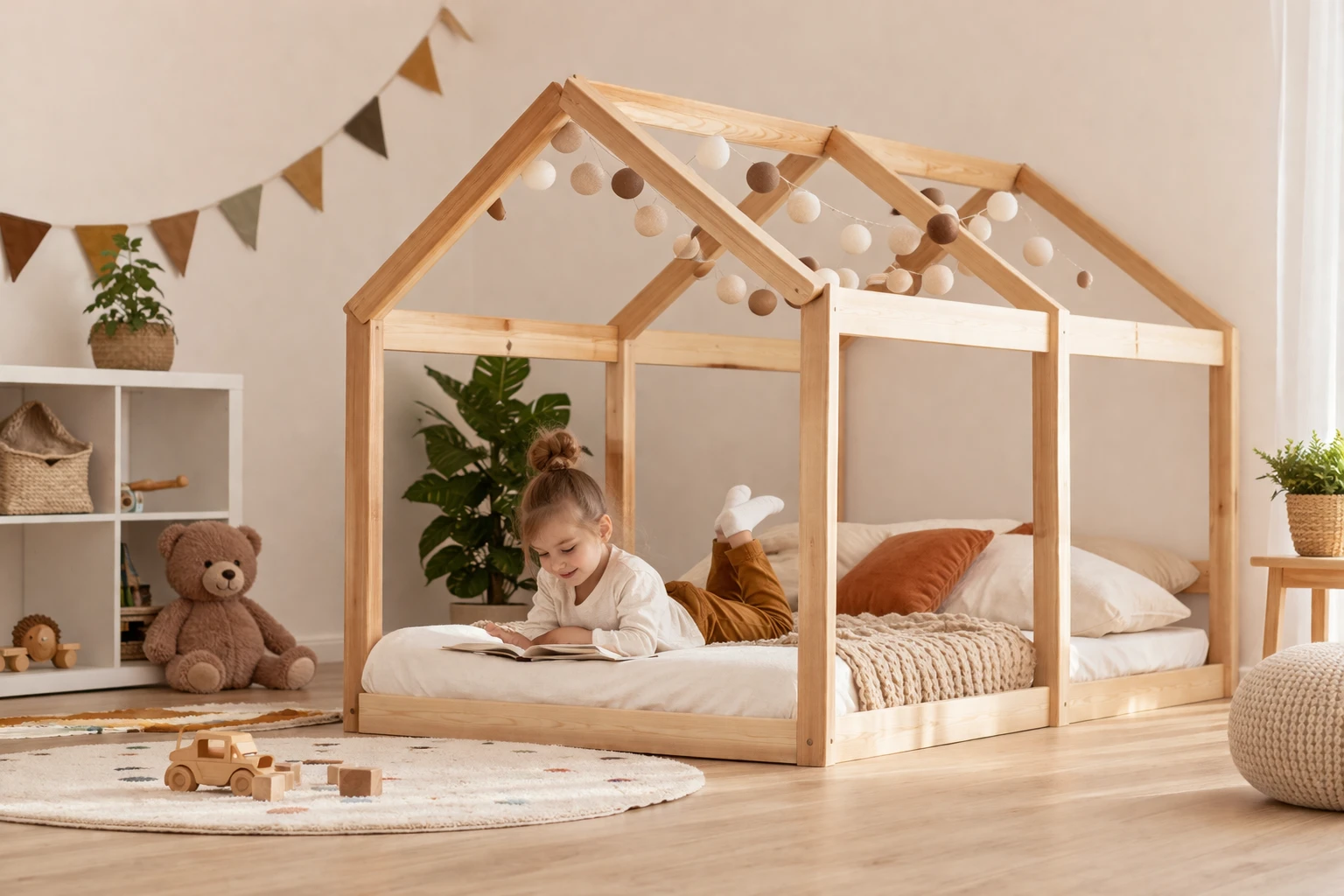
So imagine a bed that went to IKEA, came back, and said: “I want to be a house.” That’s basically it. A low mattress setup with a simple wooden frame shaped like a little roof. Nothing fancy, no closed walls, no prison vibes like old-school cribs. Kids can jump in, roll out, change positions 10 times before sleeping—totally fine. And during the day? Boom—instant play zone. One minute it’s a reading corner, next minute it’s a base like in Home Alone where the kid is clearly the CEO of chaos.
Benefits of a bed house for a child
First thing—kids LOVE it. Like, genuinely. Because it feels like their own tiny world. Not just “sleep here,” but “this is my space, don’t touch.” It’s cozy, a bit like a personal bunker, but in a cute way. Second—imagination goes wild. One day it’s Hogwarts vibes, next day it’s a camping trip, next day probably a spaceship. Honestly, it’s giving Harry Potter and the Sorcerer’s Stone energy, but in toddler version. And bedtime? Surprisingly less drama. When the space feels fun, kids don’t treat sleep like punishment.
How is it different from a classic Montessori bed?
A normal Montessori bed is like: “Here’s your low bed, good luck.” Minimal, clean, functional. The bed house is that same idea but with a glow-up. It’s still low, still accessible, still Montessori-approved—but with extra personality. Think of it as the difference between plain white sneakers and the same sneakers but with cool design details. Same function, more vibe. Less “hospital room,” more “Pinterest but chill.”
How to choose a bed house?
Don’t get distracted by cute Instagram photos—that’s step one. First check size. Kids grow faster than your phone battery dies at 3%. Then materials—solid wood only, no weird mystery board stuff. Stability is a big one: if it shakes when you touch it, hard pass. Edges should be smooth, because nobody wants a bedtime “ouch moment.” And paints? Non-toxic, obviously. This is one of those “don’t overthink but also don’t be lazy” situations.
How to integrate it into a child’s room?
This is where people usually go full Pinterest mode and then regret it. Keep it simple. A few soft textiles, maybe a blanket, maybe some light curtains like a mini tent. Add warm lighting—nothing that looks like a football stadium. The goal is cozy, not chaotic. Montessori spaces work best when they don’t look like a toy store exploded inside. Brands like BusyWood usually keep it clean and balanced—nothing extra, just solid design that doesn’t scream for attention.
A Montessori bed house is basically the sweet spot between “functional furniture” and “kid fantasy world unlocked.” It gives independence, supports good habits, and makes the room feel like it actually belongs to the child—not just adult-approved decoration. And let’s be real—if bedtime becomes easier and less like negotiating with a tiny lawyer… that’s already a huge win.
FAQs
Most children can start using a Montessori house bed as early as 18 months, once they can safely get in and out on their own.
Yes, as long as it’s low to the ground, made from sturdy materials, and has smooth, rounded edges.
Guardrails are optional; many parents add them for younger toddlers, but older kids usually don’t need them.
A twin size is the most common, but choosing a slightly larger size can help accommodate your child as they grow.
Solid wood is ideal because it’s durable, stable, and typically safer than engineered materials.
Yes, it often helps because kids feel more comfortable and in control of their sleep space.
It can work well in small spaces, especially since the low design keeps the room feeling open and uncluttered.
Keep it simple with soft bedding, light curtains, and warm lighting to create a cozy but calm environment.
Yes, it’s designed to transition children out of cribs into a more accessible sleep setup.
For many families, yes—they combine functionality, independence, and creativity in one piece of furniture.