It’s one of the most common — and frustrating — problems homeowners face in San Diego. Your air conditioner is running, the fan is blowing, but your home still feels warm and uncomfortable. If your AC is on but not cooling properly, several issues could be to blame. The good news is that many of them are identifiable and fixable with the right help from professionals like Guthrie & Sons Heating, Air, and Solar.
Let’s look at the most common causes.
Dirty or Clogged Air Filter
A clogged air filter is one of the leading reasons an AC system struggles to cool. When airflow is restricted, your system cannot properly circulate conditioned air throughout your home. In severe cases, limited airflow can even cause the evaporator coil to freeze, making cooling nearly impossible.
San Diego homeowners should check their air filters every 1–3 months, especially during heavy summer usage. Replacing a dirty filter is a simple step that can immediately improve performance.
Low Refrigerant Levels
Refrigerant is essential for absorbing heat from inside your home. If your system is low on refrigerant — typically due to a leak — it won’t be able to cool effectively. Signs of low refrigerant include:
- Warm air coming from vents
- Ice forming on the indoor or outdoor unit
- Hissing or bubbling sounds
- Longer-than-normal cooling cycles
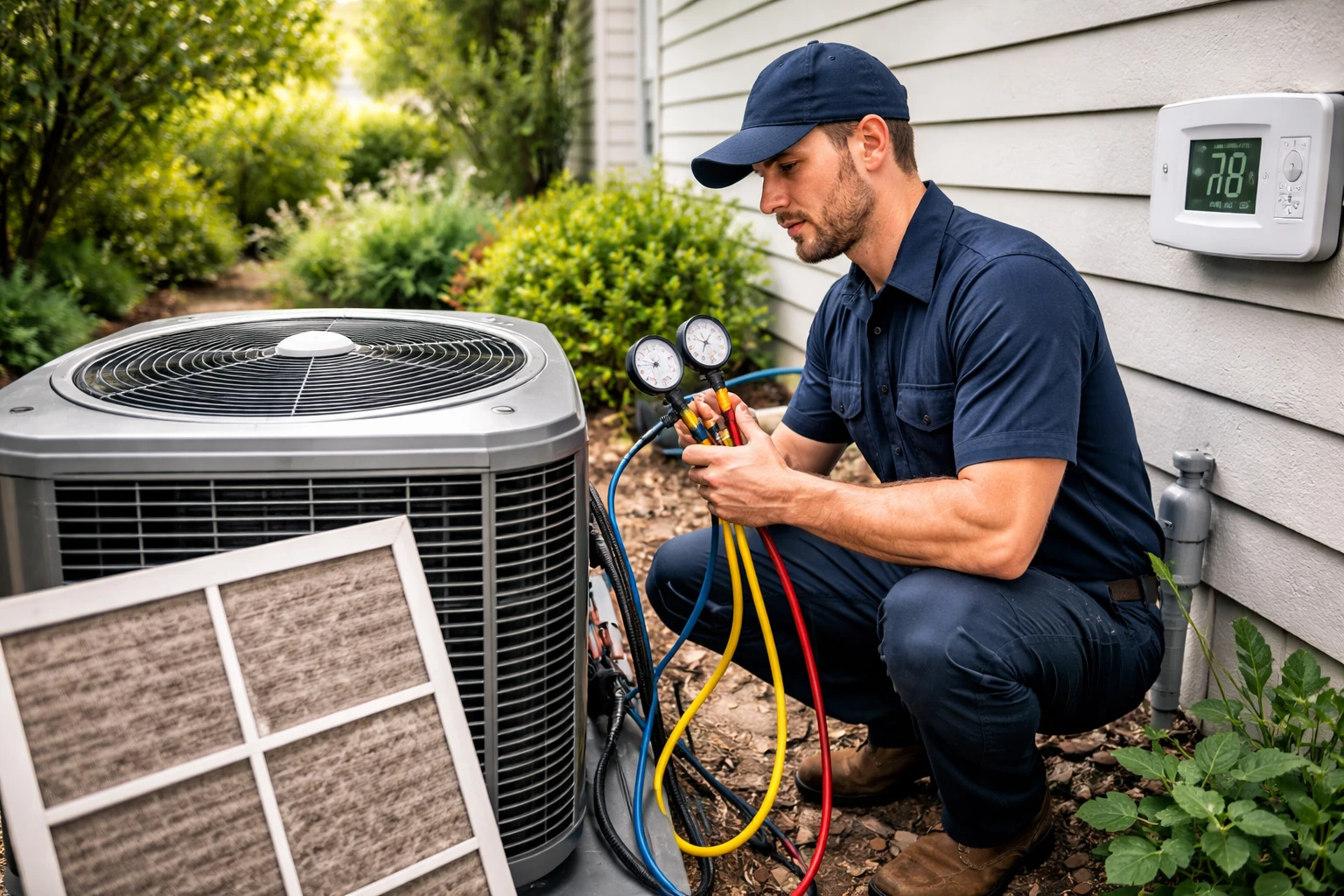
Refrigerant issues should always be handled by a licensed HVAC technician. The team at Guthrie & Sons Heating, Air, and Solar can inspect your system, locate leaks, and restore proper refrigerant levels safely.
Dirty Outdoor Condenser Unit
Your outdoor unit releases the heat pulled from your home. If the condenser coils are covered in dirt, dust, or debris, heat transfer becomes less efficient. This is especially common in San Diego’s dry climate, where debris can accumulate quickly.
Regular maintenance ensures your outdoor unit stays clean and operates at peak efficiency.
Thermostat Issues
Sometimes the issue isn’t the AC unit at all. Incorrect thermostat settings, weak batteries, or faulty sensors can prevent proper cooling. Make sure:
- The thermostat is set to “cool”
- The temperature is lower than the current room temperature
- Batteries are fresh (if applicable)
Upgrading to a smart thermostat can improve comfort, energy efficiency, and system control.
Leaky or Aging Ductwork
In many older San Diego homes, ductwork may have leaks, gaps, or poor insulation. This allows cooled air to escape before reaching your living spaces, resulting in uneven temperatures and reduced performance.
Professional duct inspections can identify hidden airflow problems that may be affecting your comfort.
Aging or Undersized Equipment
If your AC system is 15–20 years old, it may simply be losing efficiency. Older units work harder to produce less cooling, leading to higher energy bills and more frequent breakdowns. In some cases, systems are improperly sized for the home, which limits their ability to maintain consistent temperatures.If your AC is running but not cooling, addressing the issue early can prevent larger repairs and rising energy costs. A professional evaluation from Guthrie & Sons Heating, Air, and Solar can identify the root cause and restore reliable comfort to your home.
FAQs
This usually happens due to airflow issues, low refrigerant, dirty components, or thermostat problems that prevent proper cooling.
Yes, a clogged filter restricts airflow, making it difficult for your system to circulate cool air effectively.
Common signs include warm air from vents, ice buildup on the unit, and longer cooling cycles.
It’s not recommended, as it can strain the system and potentially cause more serious damage.
Most homeowners should replace it every 1–3 months, depending on usage and indoor air conditions.
Yes, incorrect settings, dead batteries, or faulty sensors can prevent the system from cooling properly.
A dirty condenser reduces heat transfer efficiency, making it harder for your AC to cool your home.
Yes, leaks or poor insulation in ductwork can cause cool air to escape before it reaches your rooms.
If your system is over 15–20 years old and frequently underperforms, replacement may be more cost-effective.
Basic tasks like changing filters are fine, but refrigerant or mechanical issues should always be handled by a licensed HVAC professional.