As dogs grow older, their needs change significantly. Just like humans, aging dogs often experience reduced mobility, joint stiffness, arthritis, and other physical challenges that make everyday activities more difficult. Simple tasks like climbing stairs, jumping onto furniture, or even walking across slippery floors can become uncomfortable or painful.
Creating a comfortable home environment for an aging dog is one of the most important ways pet owners can improve their dog’s quality of life. With thoughtful adjustments to your living space, you can help minimize strain on your dog’s joints, reduce discomfort, and provide a safe, supportive environment where they can continue to thrive. From supportive bedding and non-slip flooring to proper exercise and pain management strategies, designing a home that accommodates senior dogs doesn’t have to be complicated. Here’s how you can create a comfortable and safe home for your aging canine companion.
Understanding the Needs of Senior Dogs
Before making adjustments to your home, it’s helpful to understand the physical and behavioral changes that occur as dogs age. Many dogs begin showing signs of aging around seven to ten years old, depending on breed and size.
Common age-related issues include:
- Joint pain and arthritis
- Reduced muscle strength
- Limited mobility
- Decreased vision or hearing
- Increased sensitivity to cold temperatures
- Difficulty climbing stairs or jumping
These changes can make previously comfortable spaces difficult for your dog to navigate. By adapting your home environment to support these evolving needs, you can reduce stress on their bodies and help them remain active and comfortable.
Choose Supportive and Orthopedic Bedding
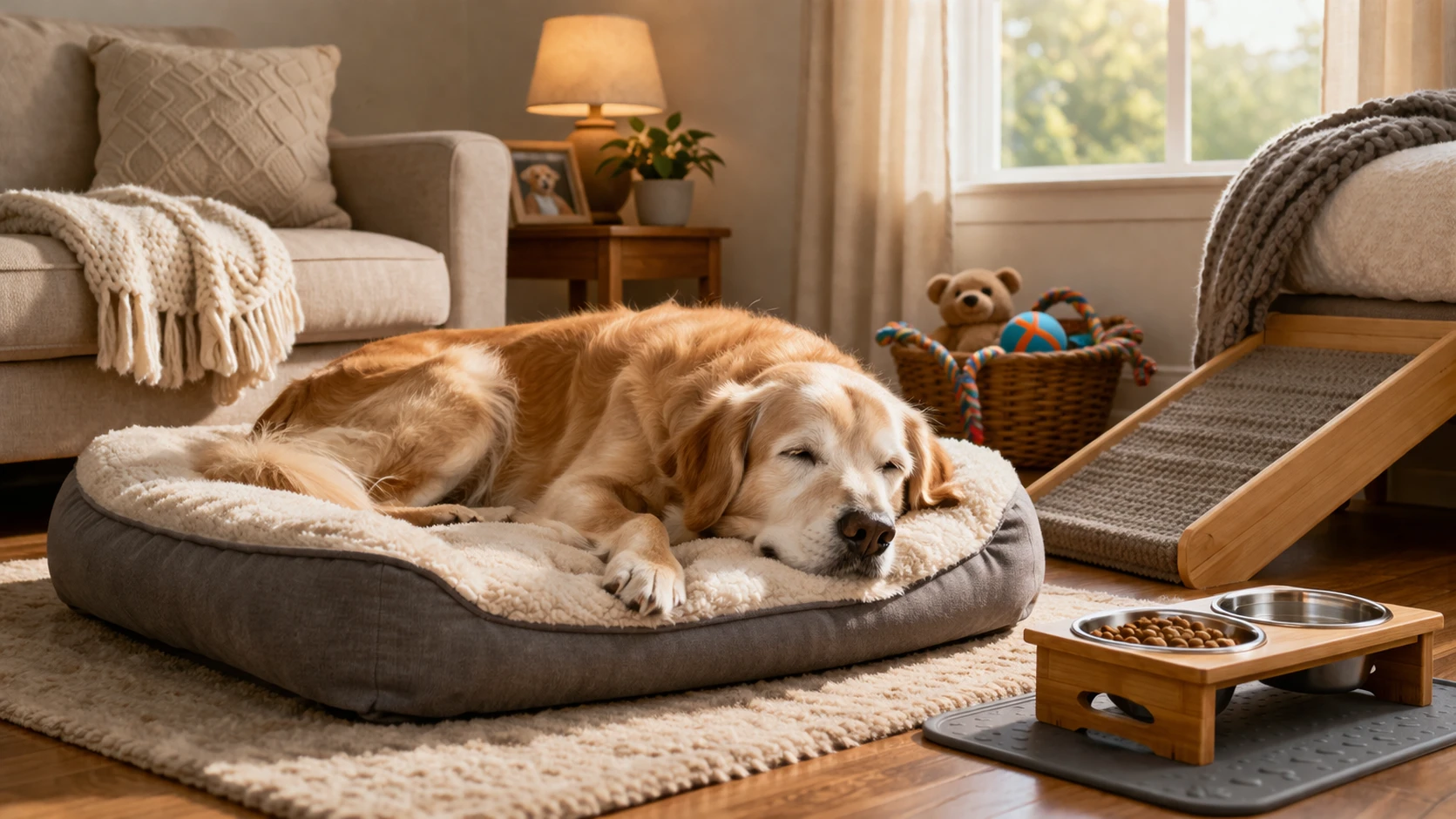
One of the most important investments for a senior dog is a high-quality orthopedic bed. Aging dogs often spend more time resting, and a supportive sleeping surface can significantly reduce pressure on joints and muscles. Orthopedic beds made from memory foam or high-density foam provide better weight distribution and support compared to standard dog beds. These beds help cushion sensitive joints and prevent pressure points that may worsen discomfort.
When selecting a bed, consider the following features:
- Thick orthopedic foam for joint support
- Low entry height for easy access
- Washable covers for easy cleaning
- Non-slip bottoms to prevent sliding
Placing beds in several areas of the house can also encourage your dog to rest comfortably without needing to walk far.
Improve Traction with Non-Slip Flooring
Slippery floors can be particularly challenging for older dogs with joint pain or mobility issues. Hardwood, laminate, and tile floors may cause dogs to slip, increasing the risk of injury. Adding non-slip surfaces can greatly improve stability and confidence when your dog moves around the house.
Helpful Flooring Solutions
- Area rugs with non-slip pads
- Carpet runners along hallways
- Rubber-backed mats in frequently used areas
- Foam floor tiles for play or resting zones
These simple additions provide traction and help reduce the strain that slipping can place on aging joints.
Install Ramps and Pet Stairs
Many senior dogs struggle with climbing stairs or jumping onto furniture. Providing ramps or pet stairs can help reduce joint stress and prevent injuries.
Ramps are particularly helpful for:
- Accessing beds or couches
- Getting in and out of cars
- Climbing porch or deck steps
Look for ramps with non-slip surfaces and sturdy construction. Gradual inclines are easier for dogs with mobility issues, making it safer and more comfortable for them to move around.
Maintain a Warm and Comfortable Environment
Older dogs tend to be more sensitive to temperature changes, especially cold weather. Arthritis and joint stiffness can worsen in cooler environments. Keeping your home warm and cozy can make a significant difference in your dog’s comfort level.
Ways to Keep Senior Dogs Warm
- Place beds away from drafts or cold floors
- Use heated pet beds or warming pads
- Add blankets for extra insulation
- Maintain consistent indoor temperatures
A warm sleeping area helps relax stiff joints and promotes better rest.
Provide Easy Access to Food and Water
Senior dogs may have difficulty bending down to reach food and water bowls placed directly on the floor. Elevated feeding stations can reduce strain on the neck, back, and shoulders. Raised bowls also promote better digestion and improve overall feeding comfort for older pets. Make sure food and water stations are located in quiet, easily accessible areas of the home where your dog doesn’t have to travel far.
Encourage Gentle Exercise and Mobility
While senior dogs may move more slowly, regular physical activity remains essential for maintaining muscle strength, joint flexibility, and overall health.
Low-impact activities are ideal for aging dogs, including:
- Short daily walks
- Light play sessions
- Swimming or hydrotherapy
- Gentle stretching routines
These activities help maintain mobility without placing excessive stress on the joints.
Address Pain and Discomfort Proactively
Pain management is a critical aspect of caring for an aging dog. Conditions like arthritis, hip dysplasia, and degenerative joint disease can cause chronic discomfort if left untreated. Pet owners should watch for common signs of pain in dogs, such as limping, stiffness after resting, decreased activity levels, or reluctance to climb stairs.
If you notice these symptoms, it’s important to explore treatment options and supportive therapies. Many veterinarians and canine rehabilitation specialists recommend a combination of treatments, including physical therapy, massage, medications, and lifestyle adjustments. Learning more about how to relieve pain in dogs can help pet owners better understand the available options and create a care plan that improves their dog’s comfort and mobility.
Create Quiet and Stress-Free Spaces
Older dogs often prefer quieter environments where they can rest without disruption. Busy households with children or other pets may unintentionally create stressful conditions for senior dogs. Designating a calm area of the home specifically for your dog can provide a peaceful retreat.
How to Create a Relaxing Space
- Choose a quiet corner away from high traffic areas
- Provide comfortable bedding and blankets
- Keep favorite toys nearby
- Ensure the space is easily accessible
This type of dedicated resting area helps aging dogs feel secure and relaxed.
Schedule Regular Veterinary Checkups
Routine veterinary care becomes even more important as dogs age. Regular checkups allow veterinarians to monitor changes in mobility, joint health, and overall wellness.
Your veterinarian may recommend additional supportive treatments such as:
- Joint supplements
- Weight management plans
- Physical rehabilitation therapy
- Laser therapy or hydrotherapy
Early detection and proactive care can help manage age-related conditions before they significantly impact your dog’s quality of life.
If your pet struggles with stress during storms or loud noises, calming toys for anxious dogs can provide a safe and soothing distraction. Many pet owners find that using calming toys for anxious dogs helps reduce destructive behavior and promotes a more relaxed environment at home.
Conclusion
Aging is a natural part of life, but with the right home environment and supportive care, senior dogs can continue to enjoy comfortable and happy lives. Simple changes such as orthopedic beds, non-slip flooring, ramps, and accessible feeding stations can dramatically improve mobility and reduce strain on aging joints.
Equally important is addressing pain and discomfort through proper veterinary care, gentle exercise, and appropriate treatment options. By understanding your dog’s evolving needs and making thoughtful adjustments to your home, you can create a safe and nurturing space that supports their health and well-being throughout their golden years. With patience, attention, and a few practical home modifications, you can help ensure your aging dog remains comfortable, active, and deeply connected to the family they love.
FAQs
Orthopedic beds with memory foam provide the best support by reducing pressure on joints and improving comfort.
Use non-slip rugs, mats, or carpet runners to improve traction and prevent slipping.
Yes, ramps help reduce joint strain and make it easier for dogs to access furniture, cars, or elevated areas.
Older dogs often have joint issues and reduced circulation, making cold temperatures more uncomfortable.
Elevated bowls reduce strain on the neck and joints, making eating and drinking more comfortable.
They need gentle, low-impact exercise like short walks or light play to maintain mobility and muscle strength.
Common signs include limping, stiffness, reduced activity, and reluctance to climb stairs or jump.
Regular checkups, typically every 6 months, help monitor health changes and manage age-related conditions.
Yes, small changes like better bedding and safer flooring can significantly improve comfort and mobility.
Yes, a calm and low-traffic area helps reduce stress and allows them to rest comfortably.