I recently watched a client swap builder-grade knobs for satin-brass levers across six openings in one hallway. The budget was modest, but guests assumed the whole floor had been redesigned. The shift had nothing to do with paint, tile, or lighting. It came from a one-page spec that fixed function, finish, grade, and measurements before anyone ordered a box.
Most homeowners shop for hardware the way they shop for lightbulbs. They grab whatever looks close enough and hope it fits. That habit leads to mixed finishes, loose levers, and a pile of return labels. A simple interior hardware spec replaces guesswork with a repeatable system.
It tells you what to buy, how to measure, and where each set belongs. That matters whether you are refreshing one bath or finishing a full-house update. Treat hardware with the same care you give paint and lighting, and every room feels more resolved.
Key Takeaways
These principles keep the process clear, cohesive, and hard to mess up.
- Start with measurements, not style. Confirm thickness, backset, and bore sizes before you browse. This step prevents roughly ninety percent of returns.
- Match function to each opening. Use keyed entry, privacy, passage, or dummy trim so every room behaves the way people expect.
- Choose BHMA grade by traffic. BHMA, the Builders Hardware Manufacturers Association, rates locksets by durability. Grade 1 suits the hardest-working openings, Grade 2 fits most interior rooms, and Grade 3 belongs on light-duty closets.
- Favor levers for accessibility. Levers reduce wrist rotation and can be used with a palm, fist, or forearm. That supports Americans with Disabilities Act, or ADA, guidance and helps anyone carrying bags or managing arthritis.
- Limit finishes in each sightline. Keep one or two metal finishes in any connected view, match undertones, and use finish codes such as US15 or BHMA 619 so the shade stays consistent.
- Protect rated openings. NFPA 80, the main standard for fire doors and frames, requires listed and labeled parts throughout the assembly. Unapproved changes can void the rating.
What a Hardware Specification Includes
A hardware spec turns dozens of small product choices into one clear plan.

Think of it as a recipe card for the house. Without it, people substitute, improvise, and forget details. With it, the supplier, installer, and homeowner all follow the same instructions.
A useful schedule lists the room name, function, lever or knob model, finish code, BHMA grade, backset, and door thickness. Add notes for fire ratings, handing when needed, and special use cases such as bath privacy with an exterior release or dummy trim on an inactive panel.
Keep hinge finish, hinge count, and strike finish on the same sheet. People remember the lever style and forget the supporting pieces, which is how a polished latch ends up beside satin hinges.
The schedule also helps months later. If one lever is damaged, you can reorder the exact rose size, finish, and latch type without measuring again.
Measurements That Prevent Ninety Percent of Returns
Most fit problems come from missing measurements, not bad taste.

Start with thickness. Standard interior doors are usually 1-3/8 inches thick, while most exterior doors are 1-3/4 inches. Measure at the latch edge, not across a molded face. Next check backset, the distance from the edge of the door to the center of the main bore hole. Most homes use 2-3/8 inches or 2-3/4 inches, and most residential latches adjust to one of those two sizes.
Then confirm the bores. The cross-bore, the large face hole for the lockset, is usually 2-1/8 inches, and the edge bore is usually 1 inch. If an older opening is oversized or damaged, use a reinforcement plate instead of forcing a loose fit. Check handle height before you order trim plates or long escutcheons. Residential templates usually center hardware about 36 inches from the floor, and matching that height across a hall makes the work look intentional.
Do not assume old hardware was installed well. In older homes, one bath might sit at 35 inches and the next at 37-1/2. Pick a house standard before you patch paint or drill fresh holes. If you are replacing an older set, photograph the edge prep and strike. That quick record helps a supplier spot odd spacing, nonstandard latch faces, or a reversible lever requirement before you buy.
Finish Strategy That Looks Cohesive
A tight finish palette makes hardware look designed instead of pieced together.
When lever shapes, faucet lines, and cabinet pulls all need to feel related across adjoining rooms, a quick outside review can keep the palette from drifting as orders get split between brands and delivery dates. That is why many homeowners check their spec with a designer during renovation planning before they buy, using Ali & Shea Design as a quick way to lock in a cohesive direction.

Limit yourself to one or two metal finishes in any single view from a hall, foyer, or open-plan room. When undertones match, the mix feels layered rather than accidental. Use finish codes when you order. US15 equals BHMA 619 for satin nickel, and US26D equals BHMA 626 for satin chrome. Writing the code on the schedule keeps different brands on the same shade.
Warm metals such as brass and bronze work well with white oak, walnut, beige paint, and earthy stone. Cool metals such as nickel, chrome, and stainless steel fit black accents, gray palettes, and crisp whites. Matte black can bridge warm and cool rooms, but it still needs support from nearby fixtures. Repeat it in lighting, cabinet pulls, or plumbing trim so it reads as a choice, not a leftover.
If you are working room by room, buy one sample set first. Check it next to faucets, appliance handles, and cabinet hardware in daylight and at night before you place the full order. Do not rely on online photos alone. Satin brass can read muted gold in one brand and orange in another, especially under warm bulbs. A sample check costs less than returning ten mismatched levers. If the palette still feels uncertain, a short design consult can save you from buying two rounds of hardware.
Function Choices by Room
Match the function to the room, and every opening will work the way people expect.
- Front entry and garage-to-house connection: Keyed entry lever plus a deadbolt.
- Bedrooms and bathrooms: Privacy set that locks from the inside and opens from the outside with an emergency release.
- Hallways, pantries, and linen closets: Passage set that turns but does not lock.
- Side-by-side closet pairs and inactive panels: Dummy trim, which looks finished but does not operate a latch.
- Nursery or child’s room: Privacy hardware with a coin-turn exterior release so an adult can always get inside.
Pocket and sliding systems need their own line on the schedule. Specify privacy kits where needed, match the pull finish to nearby levers, and keep the operating hardware usable from both sides when the panel is fully open, as ADA section 404.2.7 requires.
If a closet wall is visible from a bedroom or hall, treat it like a design surface. Matching dummy trim on paired doors keeps the elevation balanced and keeps cheap pulls from standing out.
On double doors, mark the active and inactive leaf on the schedule. That one note prevents the common mistake of ordering two operating sets where one side only needs dummy trim or flush bolts.
Durability and Grade Selection
Grade is the fastest way to judge whether a set will last where you plan to use it.
BHMA rates residential locksets by cycle testing. Grade 1 is tested to 800,000 cycles and suits busy entries, rentals, and accessory dwelling units, or ADUs. Grade 2 is tested to 400,000 cycles and works well in most interior rooms. Grade 3 is rated for 200,000 cycles and is best kept to light-use closets.
For sliding and pocket systems, look for hardware tested under ANSI/BHMA A156.14 when smooth motion and acoustic control matter. For heavy solid-core or tall doors, ball-bearing hinges under ANSI/BHMA A156.1 reduce sag, squeaks, and hinge wear.
When to Step Up to Commercial Grade
When residential traffic starts to look commercial, upgrade before the cheap set fails.
If commercial grade sounds bulky, it usually is not. Several lines use slim roses and finishes that sit comfortably beside residential plumbing and lighting.
Busy mudrooms, rentals, and garage-to-kitchen entries can see thirty to fifty uses a day, especially when kids, pets, grocery runs, and work schedules keep the same door cycling from early morning until late evening. For those spots, once the wear pattern starts to resemble a small shared entry rather than a quiet interior room, upgrading to commercial door hardware gives you Grade 1 durability with finishes that still coordinate with residential palettes. Pair it with reinforced strikes and 3-inch screws driven into framing for a firmer close and better security.
| Feature | Residential Grade 2 | Commercial Grade 1 |
|---|---|---|
| BHMA Cycle Rating | 400,000 | 800,000 |
| Best Locations | Bedrooms, baths, closets | Entries, mudrooms, rentals |
| Finish Options | Wide residential palette | Mostly neutral and satin finishes |
| Cost Over Time | Mid-range | Higher upfront, lower replacement cost |
Accessibility and Family-Friendly Choices
Levers make daily use easier for children, guests, and anyone with limited grip strength.
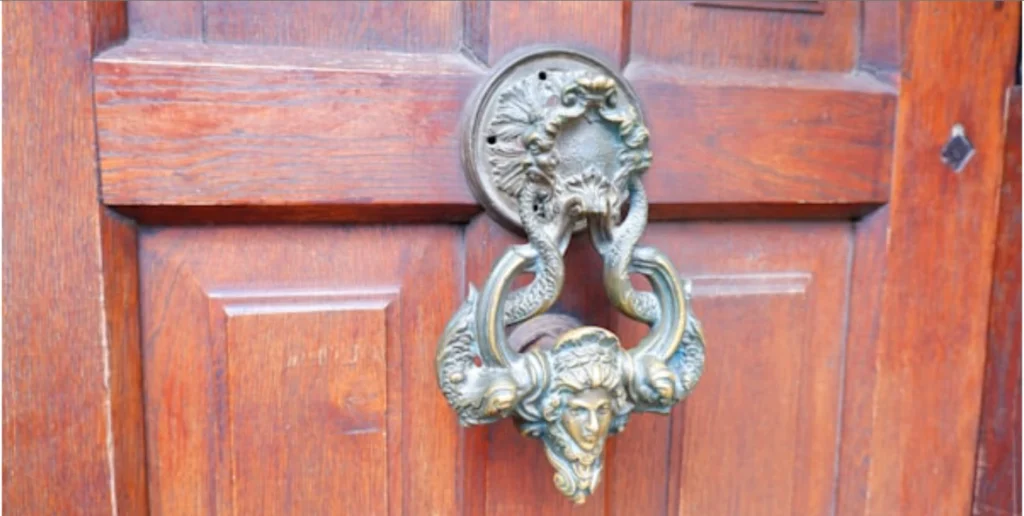
The ADA favors operable hardware that does not require tight grasping, pinching, or twisting. Section 404.2.7 also places hardware 34 to 48 inches above the finished floor, a range that works well in homes even when ADA rules do not apply.
Levers can be pressed with a palm, fist, or forearm, which helps when hands are wet or full. If you love the look of knobs in a traditional home, save them for decorative closets and keep levers on rooms used every day.
Children’s rooms should use privacy sets with an exterior emergency release. A metal chassis and a well-tuned spring latch also give the quiet, solid feel people notice right away.
Code, Safety, and Finish Longevity
Safety rules matter most on rated openings and in damp or coastal rooms.

If any opening is fire rated, NFPA 80 requires the entire assembly, including the door, frame, hinges, closer if present, and latch, to stay listed and labeled. Swapping in an unlisted part or drilling beyond the listing can void the rating.
For finish longevity, choose PVD, or physical vapor deposition, when you need higher resistance to tarnish and corrosion. That extra durability pays off in humid baths, vacation homes, and coastal air. Oil-rubbed bronze is a living finish, so expect wear and patina instead of perfect uniformity.
Clean hardware with mild soap and water. Abrasive pads and harsh cleaners can strip protective coatings faster than daily use ever will.
BHMA residential standards A156.39 and A156.40 support the Secure Home label. When you compare products side by side, an AAA rating across security, durability, and finish is a strong benchmark.
Common Questions
These questions come up on almost every residential hardware schedule.
Yes. Levers need less wrist rotation and can be pushed with an elbow, forearm, or closed fist. They are the easier choice for accessibility and for busy daily routines.
For visual consistency, center most residential handles about 36 to 38 inches from the floor. In common areas or ADA-informed layouts, keep the hardware within 34 to 48 inches above the finished floor.
Grade 2 is the safe default for most bedrooms, baths, and shared interior spaces. Move up to Grade 1 for busy entries, rentals, and any opening used more than thirty times a day.
Yes, but keep the mix disciplined. Limit each view to one or two finishes, keep undertones aligned, and use matte black only when it repeats elsewhere in the room.
Yes. Specify a pocket privacy set that matches the finish and profile of nearby levers. The pull should remain usable from both sides when the panel is fully open.
Unlisted hardware and unapproved field changes are the biggest problems. Always verify the label on the opening and match replacement parts to the listing before you drill, trim, or swap anything.