This post contains affiliate links. As an Amazon Associate, I earn from qualifying purchases, at no extra cost to you. See our disclosure policy.
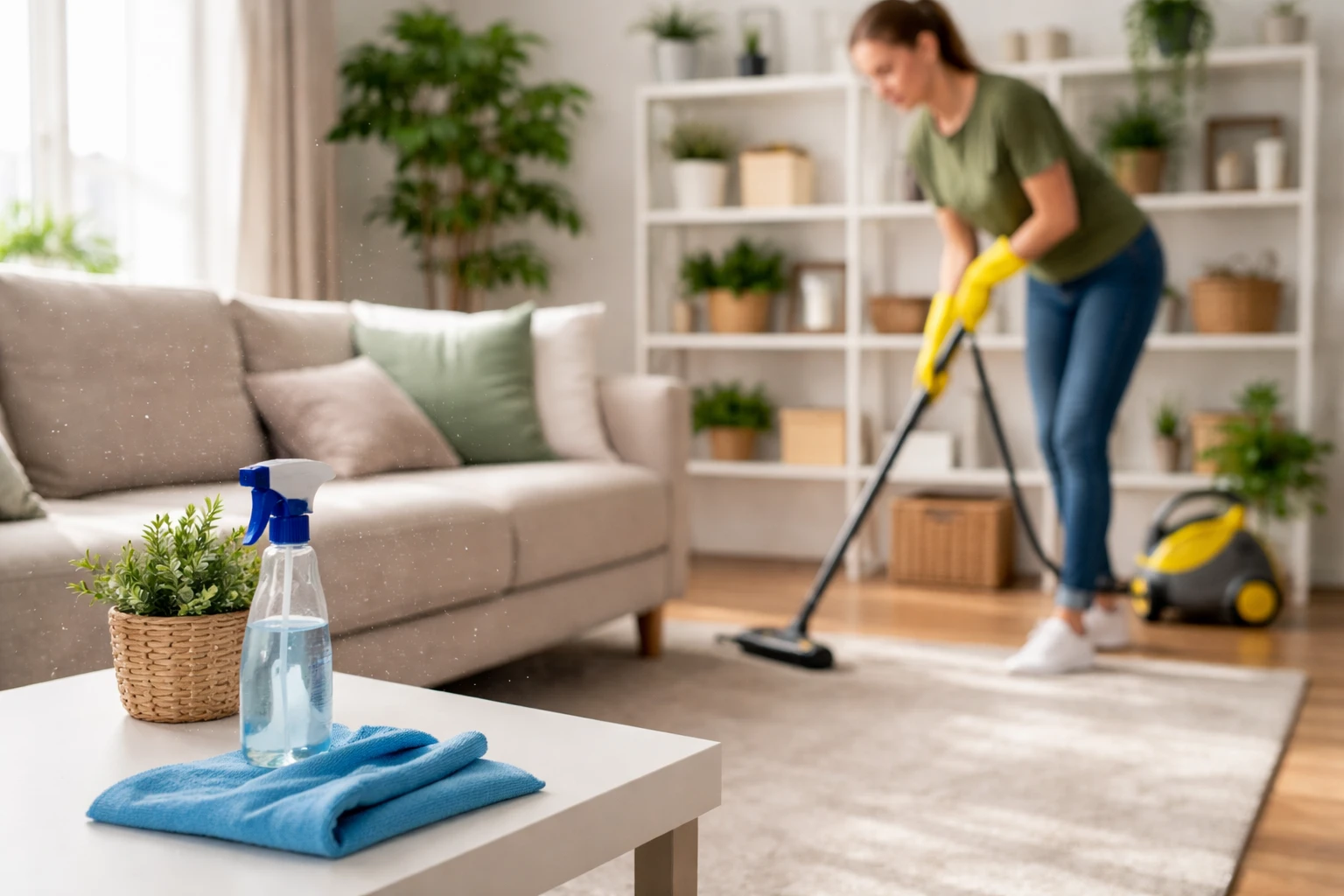
You wipe the counters.
You vacuum the floors.
You even fluff the pillows.
And yet, somehow, your home still feels dusty after you clean.
That lingering dryness in the air. The fine layer settling back on furniture within days. The faint “stale” feeling you can’t quite explain. It’s frustrating — especially when you’ve put in real effort. If you’ve ever searched for solutions like carpet cleaning near Lynnwood Washington because regular vacuuming just isn’t cutting it, you’re not alone.
Here’s the truth: when your home still feels dusty after you clean, the issue usually isn’t effort. It’s airflow. It’s soft surfaces. It’s hidden reservoirs. It’s indoor air quality.
And most people are only cleaning what they can see.
Let’s fix that.
Dust Isn’t Just Dirt — It’s a Circulating System
Before you solve the problem, you have to understand it.
Dust isn’t a single substance. It’s a mixture:
- Dead skin cells
- Textile fibers
- Pet dander
- Pollen
- Outdoor soil particles
- Microscopic debris from cooking and daily life
Every time you walk across the room, sit on the couch, or turn on the HVAC system, those particles move. They settle. They lift. They circulate again.
That’s why your home still feels dusty after you clean. You’re wiping surfaces — but the air itself is still carrying fine particles.
Dust is dynamic. It behaves like a loop:
- Particles settle on surfaces.
- Movement or airflow disturbs them.
- They become airborne again.
- They resettle somewhere else.
Unless you interrupt the cycle at multiple points, it continues.
Hidden Dust Reservoir #1: Your HVAC System
You can clean every visible surface and still lose the battle if your HVAC system is redistributing debris.
Think about it. Your heating and cooling system pulls air in, conditions it, and pushes it back through your home. If the filter is clogged or low-grade, it won’t capture fine particles effectively.
And the ductwork? It can accumulate dust over time.
What to check:
- Replace HVAC filters every 1–3 months.
- Upgrade to higher-efficiency filters if compatible with your system.
- Inspect return air vents for visible buildup.
- Schedule duct inspection if airflow seems weak or dusty.
If your home still feels dusty after you clean, stand near a vent when the system kicks on. Do you notice a faint dusty smell? That’s a clue.
Airflow doesn’t just distribute comfort. It distributes particles.
Hidden Dust Reservoir #2: Ceiling Fans and High Surfaces
Look up.
Ceiling fans collect dust silently. So do light fixtures, cabinet tops, crown molding, and curtain rods. Warm air rises — and so do fine particles. Over time, they settle on elevated surfaces you rarely clean.
Then you turn on the fan.
And everything re-enters circulation.
This is one of the most common reasons a home still feels dusty after you clean. You’re addressing eye-level areas but missing overhead zones.
Actionable fix:
- Clean high surfaces first, always.
- Use a microfiber cloth slightly dampened — dry dusting often pushes particles into the air.
- Let the room sit for 20–30 minutes before vacuuming so disturbed particles can settle.
Clean top-to-bottom. Every time.
Hidden Dust Reservoir #3: Upholstered Furniture
Soft surfaces are particle magnets.
Your sofa, dining chairs, fabric headboard, and throw pillows trap fine debris deep inside fibers. You may vacuum the visible areas, but embedded dust remains.
Then someone sits down.
And a small cloud — invisible, but real — releases into the air.
That’s how your home still feels dusty after you clean. Upholstery acts like a storage system for particles.
Practical approach:
- Vacuum upholstery weekly using a brush attachment.
- Remove and wash cushion covers when possible.
- Rotate cushions to reduce uneven buildup.
- Schedule periodic professional upholstery cleaning.
Surface cleaning is not extraction cleaning. There’s a difference.
Flooring: The Biggest Dust Trap in Your Home
Let’s talk about floors.
Hardwood, tile, laminate, and carpet all trap debris differently.
| Flooring Type | How It Holds Dust | What Often Gets Missed |
| Hardwood | Settles in micro-gaps | Under furniture edges |
| Tile | Collects in grout lines | Fine debris in corners |
| Laminate | Static attracts particles | Edges along baseboards |
| Carpet | Fibers hold embedded dust | Deep layers below surface |
Carpet is the most misunderstood.
Vacuuming removes surface debris. But embedded dust settles deep within fibers and backing. Over time, it accumulates. Regular vacuuming cannot fully extract it.
That’s why deep carpet cleaning removes embedded dust that vacuuming cannot reach, improving indoor air freshness significantly.
If your home still feels dusty after you clean and you have carpet, this may be your missing piece.
Foot Traffic: The Redistribution Machine
You may clean perfectly — and then undo it by walking across the room.
Shoes track in soil, pollen, and microscopic pollutants. Even indoors-only shoes contribute to redistribution. Every step lifts settled particles back into the air.
High-traffic zones near entryways and hallways become dust “launch pads.”
Break the cycle:
- Adopt a shoe-free home policy.
- Use heavy-duty entry mats inside and outside doors.
- Vacuum high-traffic areas more frequently.
- Mop hard floors with damp methods instead of dry sweeping.
Dry sweeping often stirs particles. Damp methods capture them.
Small change. Big impact.
Why Vacuuming Isn’t Always Enough
Let’s be honest. Most household vacuums are not designed for microscopic particle control.
If your vacuum:
- Lacks HEPA filtration
- Leaks air around seals
- Has a worn-out brush roll
- Uses an overfilled bag or canister
… then it may be redistributing fine debris instead of trapping it.
If your home still feels dusty after you clean, inspect your vacuum.
Upgrade checklist:
- Choose a vacuum with true HEPA filtration.
- Replace filters as recommended.
- Empty canisters before they reach capacity.
- Vacuum slowly — speed reduces suction effectiveness.
Technique matters more than frequency.
Indoor Air Quality: The Real Issue
Dust is not just a cleaning issue. It’s an air quality issue.
When fine particles remain airborne, your home can feel heavy. Stale. Irritating.
Signs your dust problem is actually an indoor air quality issue:
- Sneezing primarily indoors
- Visible particles in sunlight beams
- Dust returning within 24–48 hours
- A faint dryness in the air
Humidity plays a role too. Air that’s too dry allows particles to remain suspended longer. Balanced humidity (around 40–50%) helps reduce airborne time.
Consider:
- Portable air purifiers with HEPA filters
- Maintaining balanced humidity
- Improving airflow between rooms
Air management changes everything.
Overlooked Zones That Quietly Collect Dust
Even meticulous cleaners miss certain areas.
Here are zones I see ignored repeatedly:
- Baseboards
- Door frames
- Behind refrigerators and stoves
- Under beds
- Closet floors
- Return air vents
- Mattress surfaces
These spaces collect dust because they experience low disturbance. Ironically, that makes them long-term reservoirs.
When your home still feels dusty after you clean, do a “forgotten zone sweep.” It’s eye-opening.
The Role of Soft Materials in Air Freshness
Let’s zoom out.
Soft materials don’t just trap visible debris. They trap microscopic particles that influence how your home smells and feels.
Carpets, rugs, drapes, bedding — they function like filters. Over time, filters become saturated.
If you only clean surfaces and ignore embedded dust, the cycle continues. That’s when periodic deep cleaning becomes essential.
Professional extraction methods reach beneath carpet fibers and upholstery layers. They remove embedded dust that daily cleaning leaves behind.
That’s not cosmetic. That’s structural.
A Strategic Plan to Break the Dust Cycle
Let’s make this practical.
Step 1: Clean in the Right Order
- High surfaces
- Mid-level surfaces
- Soft furnishings
- Floors last
Step 2: Improve Filtration
- Replace HVAC filters regularly
- Upgrade to compatible high-efficiency filters
- Add portable air purifiers in high-use rooms
Step 3: Manage Entry Points
- Shoe-free rule
- Wash pet bedding weekly
- Groom pets regularly
Step 4: Schedule Deep Cleaning
- Upholstery: every 12–18 months
- Carpets: every 12 months (more with pets/kids)
- HVAC inspection: as needed
Consistency beats intensity.
When Professional Help Makes Sense
Sometimes, despite best efforts, your home still feels dusty after you clean.
That’s when professional intervention helps:
- Older homes with aging duct systems
- High-pile carpeting
- Allergy-sensitive households
- Persistent odors
Professionals use equipment that extracts debris beyond surface reach. It’s not about replacing your routine. It’s about reinforcing it.
Think of it as resetting your indoor environment.
The Real Takeaway
If your home still feels dusty after you clean, it’s rarely because you’re careless. It’s because you’re addressing only part of the system.
Dust lives:
- In the air
- In the ducts
- In soft surfaces
- In flooring layers
- On high surfaces
Surface cleaning alone won’t solve a systemic issue.
Once you start thinking in terms of indoor air quality — airflow, filtration, embedded debris — everything shifts. Your cleaning becomes strategic. Intentional. Effective.
And suddenly, your home doesn’t just look clean.
It feels clean.
That’s the difference.
FAQs
Because dust circulates through the air and hides in soft surfaces, HVAC systems, and flooring where routine cleaning can’t fully remove it.
Most homes benefit from replacing filters every 1–3 months, depending on usage, pets, and indoor air conditions.
Yes. Carpet fibers trap embedded dust that vacuuming may not reach, which can later become airborne again.
Not always. A vacuum with HEPA filtration helps, but deep cleaning and proper air filtration are often necessary.
Foot traffic, airflow from vents, and disturbed soft surfaces can reintroduce settled particles into the air within days.
Yes. Dust builds up on blades and can redistribute into the room when the fan is turned on.
Use entry mats, remove shoes indoors, and regularly clean high-traffic areas to limit outdoor particles.
Yes. Very dry air allows particles to stay airborne longer, while balanced humidity helps them settle more quickly.
Most homes benefit from professional deep cleaning every 12 months, or more often with pets or allergies.
High-quality HEPA air purifiers can significantly reduce airborne particles and improve indoor air freshness.