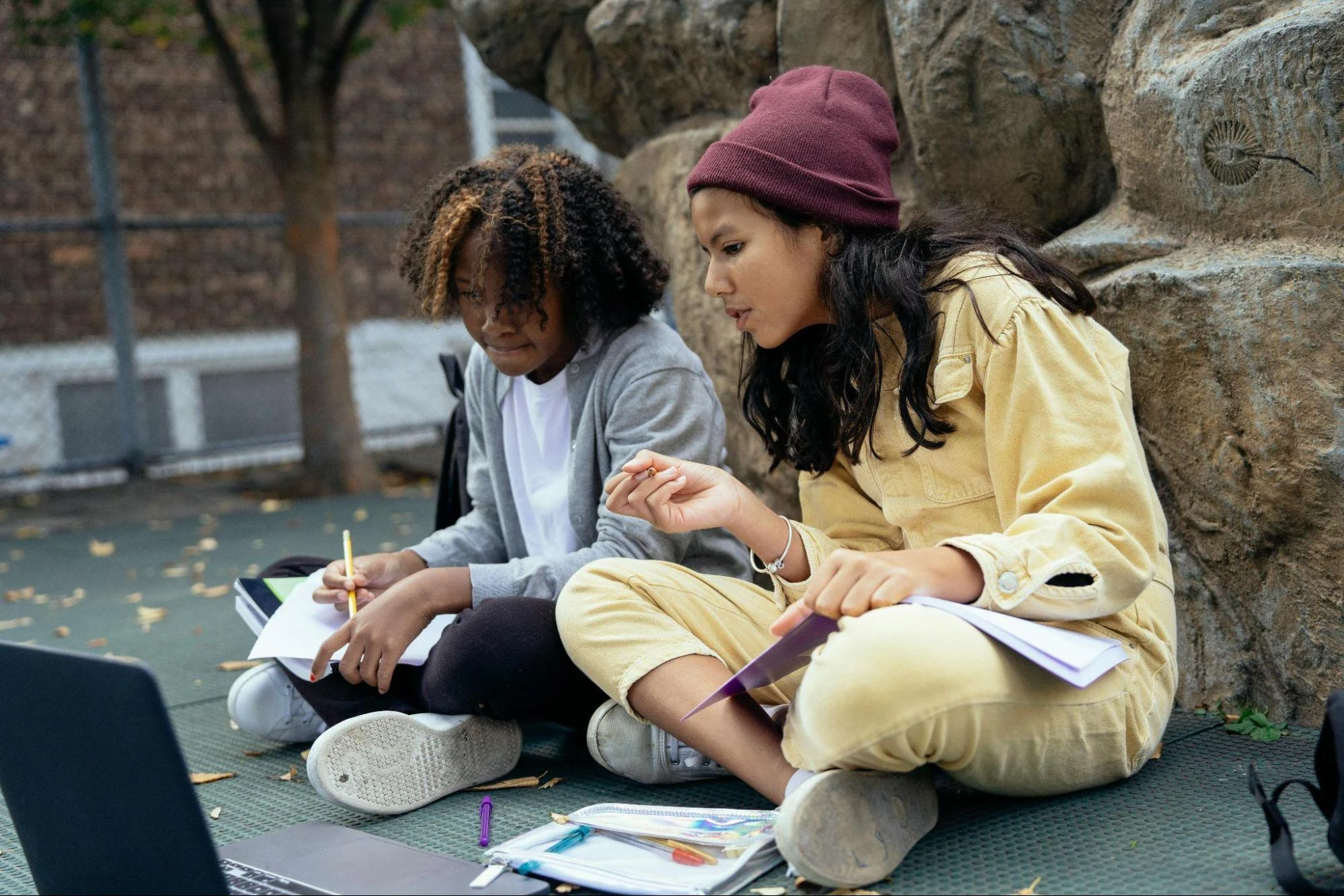
Most students sit through thousands of hours of lectures before they realize something’s off. The formula is always the same: listen, take notes, memorize, regurgitate. Repeat for twelve years, then four more in college. And somewhere in that cycle, the spark dies. Not because the content is worthless (it’s not) but because the human brain wasn’t designed to learn everything from a chair.
The traditional classroom does what it was built to do. It transfers information efficiently. It creates a baseline. But growth? Real growth? That happens when students step outside those four walls and actually do something with what they’ve learned.
The Problem Nobody Talks About
Here’s the uncomfortable truth: most students graduate without knowing if they’re actually good at anything. They have GPAs. They have test scores. And they might even have coursework writing help from KingEssays to polish their academic papers. But can they solve a problem nobody’s solved before? Can they navigate ambiguity? Can they lead a team through failure?
The classroom doesn’t teach that. It can’t. Those skills only develop through experience.
Students who realize this early start looking for alternatives. Some find internships. Others volunteer. A few stumble into research positions or join community projects. And almost universally, they report the same thing: they learn more in three months of real-world work than in three years of traditional study. Not because classrooms are useless, but because experiential learning benefits go beyond memorization. They build competence.
This isn’t speculation. A 2019 study from Michigan State University tracked 3,200 students across 73 institutions and found that those engaged in high-impact experiential learning showed significantly higher critical thinking scores and career readiness markers than their classroom-only peers. The gap wasn’t small. It was measurable, consistent, and it widened over time.
What Actually Changes When Learning Moves Outside
The shift isn’t just location. It’s responsibility.
In a classroom, the teacher holds the answers. Students ask questions, teachers respond, everyone goes home. Outside, there’s no answer key. There’s no syllabus telling you exactly what to expect on page 47. There’s a problem, some resources, and a deadline. Figure it out.
That’s where real-world learning opportunities create growth that traditional education can’t replicate. Students working on environmental conservation projects in Costa Rica don’t just learn about biodiversity. They negotiate with local farmers, deal with equipment failures, and present findings to government officials. Students interning at startups don’t just observe business operations. They’re handed projects with actual stakes, real budgets, and consequences if things go wrong.
Stanford University’s d.school has been pushing this model for years. Their programs throw students into ambiguous design challenges with minimal structure. No lectures about innovation theory. Just teams, tools, and tough problems. And the results speak clearly: students develop prototype-to-production skills that classroom simulations never touch.
Some students also leverage resources from writeanypapers.com when applying to competitive experiential programs, recognizing that strong application materials open doors to these transformative opportunities.
The Five Skills Classrooms Miss
Students who’ve done both (traditional coursework and hands-on external projects) consistently identify skills that develop almost exclusively outside:
- Navigating Uncertainty – Classroom problems have solutions. Real problems have trade-offs, incomplete information, and shifting constraints. Learning to move forward anyway is a skill you can’t fake.
- Cross-Functional Communication – Explaining technical concepts to non-technical stakeholders. Translating business needs into actionable tasks. This doesn’t happen when everyone in the room has the same background.
- Recovering from Failure – In class, failure means a bad grade. Outside, failure means iteration, pivoting, learning what doesn’t work. The psychological difference is enormous.
- Self-Directed Learning – Nobody’s going to tell you which chapter to read when your project hits a wall. You find the knowledge you need, when you need it. That changes how students approach learning permanently.
- Professional Judgment – Knowing when good enough is actually good enough. When to push for excellence and when to ship. This only comes from watching experts make those calls in real time.
These aren’t soft skills. They’re the difference between a graduate who can perform assigned tasks and one who can create value in ambiguous situations.
The Data on Outdoor and Experiential Methods
Outdoor education benefits extend beyond teamwork-building exercises and trust falls. Research from the University of Illinois found that students participating in nature-based learning programs showed a 27% improvement in standardized science test scores compared to control groups. But more interesting than the scores was the retention rate: students tested six months later retained 73% of the material from outdoor contexts versus 41% from traditional classroom instruction.
The mechanism isn’t mysterious. Memory formation strengthens with emotional engagement and physical context. Learning about erosion while watching a riverbank collapse creates neural pathways that reading about erosion in a textbook doesn’t. The brain codes the experience differently.
Here’s a breakdown of how different learning environments impact skill development:
| Learning Environment | Knowledge Retention (6 months) | Problem-Solving Score | Application Ability | Engagement Level |
| Traditional Classroom | 41% | Moderate | Limited | Variable |
| Outdoor/Field-Based | 73% | High | Strong | Consistently High |
| Internship/Work-Based | 68% | Very High | Very Strong | High |
| Hybrid Model | 79% | Very High | Strong | High |
The hybrid model (combining structured classroom learning with regular hands-on application) produces the strongest outcomes across metrics. But most institutions still operate on 90% classroom, 10% application models. The ratio is backward.
Student Personal Growth Strategies That Work
The students who grow fastest aren’t necessarily the smartest or most naturally talented. They’re the ones who deliberately seek discomfort.
Maya Chen, now a product manager at Stripe, spent her junior year of college doing exactly three things: taking the minimum course load to stay enrolled, working 30 hours a week at a local tech nonprofit, and running a side project building educational tools for immigrant communities. Her GPA dropped from 3.8 to 3.3. Her job offers after graduation? Six, including one from her current employer.
“Everything I use daily in my job I learned outside class,” she said in a 2023 interview with TechCrunch. “The coursework gave me vocabulary and frameworks. The real work gave me judgment.”
That pattern repeats constantly. Students who prioritize experiential opportunities over perfect grades tend to develop faster, adapt better, and report higher career satisfaction five years out. Not because grades don’t matter (they do) but because accelerated learning techniques exist outside traditional metrics.
The most effective student personal growth strategies share common elements:
Seek Projects with Real Stakes – Not simulations. Not case studies. Actual work where performance matters to someone other than a professor.
Work with Practitioners – People doing the work daily, not academics studying the work. Both perspectives have value, but practitioners teach what textbooks can’t capture.
Embrace Interdisciplinary Challenges – Problems that require pulling from multiple domains. Engineering students working on public health initiatives. Business students collaborating with environmental scientists. Complexity builds adaptability.
Document Everything – Not for grades. For reflection. What worked? What failed? And what would you do differently? The metacognitive practice of analyzing your own learning accelerates growth dramatically.
Repeat Deliberately – One experience isn’t enough. Three internships teach more than one. Five community projects reveal patterns one doesn’t. Iteration builds intuition.
The University of Waterloo Model
Some institutions have figured this out systemically. The University of Waterloo in Canada requires engineering students to complete six four-month co-op work terms before graduating. That’s two full years of real work integrated into a five-year program.
The results? Waterloo engineering graduates command starting salaries 18-23% higher than national averages and report job satisfaction scores significantly above peers from traditional programs. More importantly, they report feeling prepared for work on day one, not after two years of on-the-job training.
The model isn’t perfect. It extends time to graduation. It complicates scheduling. And it requires robust industry partnerships. But it proves that accelerated learning techniques work when implemented structurally, not just as optional enrichment.
What This Means for Students Right Now
Most students reading this won’t attend Waterloo. They’re already enrolled somewhere else, probably following a traditional path, wondering if they should disrupt everything to chase experiential opportunities.
The answer isn’t binary. You don’t have to choose between classroom learning and real-world experience. You need both. The question is ratio and timing.
Start small. Find one opportunity per semester that puts you in an unfamiliar environment with real responsibility. Could be a research position. Could be volunteering. And could be a part-time role in your field. The specific opportunity matters less than the pattern: consistent exposure to contexts where you don’t have all the answers.
Track what you’re learning. Not what you’re doing, what you’re learning. The skills, the insights, the moments where something clicked. That reflection process matters as much as the experience itself.
And be honest about gaps. If you’re crushing it in class but avoiding anything outside your comfort zone, you’re not growing as fast as you could. If you’re so busy with external projects that your foundational knowledge is weak, that’s also a problem. Balance isn’t equal time in both spaces. It’s intentional movement between them.
Why This Matters More Than Ever
Traditional education isn’t broken. It’s incomplete.
Students who rely exclusively on classroom learning graduate with knowledge but without wisdom. They know facts but haven’t developed judgment. They can answer questions but struggle to identify which questions matter.
The path to faster growth isn’t abandoning traditional education. It’s supplementing it aggressively with experiences that demand more than correct answers. It’s seeking contexts where failure is possible, where ambiguity is normal, where nobody’s going to tell you exactly what to do next.
That’s uncomfortable. It’s supposed to be. Growth lives in discomfort. The classroom provides foundation. The world outside provides friction. You need both.
The students who figure that out early don’t just grow faster. They grow differently, developing capabilities that can’t be taught, only earned through doing.
FAQs
It refers to gaining knowledge and skills through real-world experiences like internships, volunteering, research, and fieldwork rather than lectures alone.
Hands-on experiences create emotional and physical context, which strengthens memory formation and improves recall over time.
No, it complements it—classrooms provide foundational knowledge, while real-world experience builds judgment and application skills.
Students build adaptability, communication, problem-solving, resilience, and professional judgment more effectively outside structured classrooms.
They can pursue part-time internships, volunteer work, research roles, or project-based collaborations alongside their coursework.
GPA still matters, but employers often prioritize candidates who can demonstrate applied skills and real-world competence.
It combines structured classroom instruction with consistent hands-on application, producing stronger retention and skill development outcomes.
Real-world failure encourages iteration, reflection, and adaptation, which build resilience and deeper understanding.
Yes, research shows outdoor education can improve both knowledge retention and problem-solving performance.
Ideally, students should engage in at least one meaningful hands-on experience each semester to build consistent growth momentum.