The Timeless Value of Teak in Outdoor Hospitality Spaces
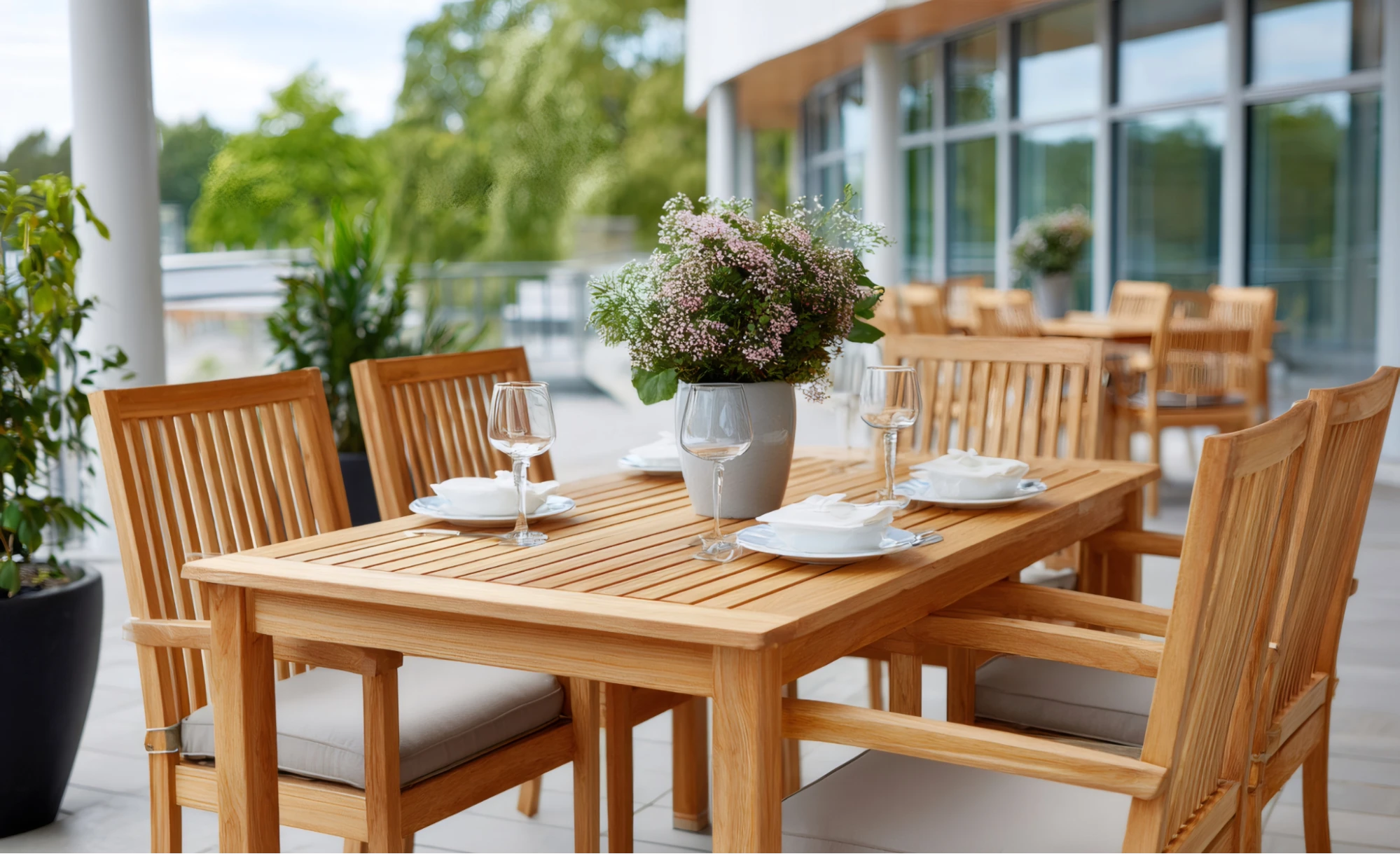
Teak has long been the preferred material for high-end outdoor hospitality environments—from beachfront lounges to rooftop restaurants—because of its natural durability, rich appearance, and resistance to moisture, pests, and extreme weather. Hotels, resorts, restaurants, and commercial venues rely on teak furnishings not only for their elegance but also for their long-term performance under heavy daily use.
However, even premium teak furniture benefits from proper care. Understanding how to clean teak outdoor furniture correctly ensures that pieces maintain their structural integrity and aesthetic appeal for years, preserving both guest experience and operational value.
Unlike many outdoor materials, teak naturally contains protective oils that shield the wood from rot and insects. Over time, exposure to sunlight and rain gradually transforms the original golden tone into a sophisticated silver-gray patina. Some property owners prefer this weathered finish, while others choose to maintain the original warm color through periodic cleaning and restoration.
This guide explains how to clean outdoor teak furniture, outlines best practices, and highlights the most common mistakes to avoid—helping hospitality operators protect their investment while maintaining the refined look guests expect.
Why Proper Teak Cleaning Matters for Commercial Spaces
For hospitality and commercial environments, furniture is more than décor—it is part of the guest experience. Clean, well-maintained outdoor seating communicates professionalism, comfort, and attention to detail. Neglected furniture, on the other hand, can diminish even the most beautifully designed outdoor setting.
Regular cleaning teak garden furniture provides several operational benefits:
- Extends service life: Removing dirt, mold, and environmental buildup prevents premature wear.
- Maintains safety: Smooth, clean surfaces reduce splintering and slipping risks.
- Preserves visual consistency: Clean furniture ensures patios, pool decks, and terraces maintain a cohesive design aesthetic.
- Reduces long-term replacement costs: Preventative maintenance significantly lowers lifecycle expenses.
Industry recommendations from furniture manufacturers and wood-care specialists consistently emphasize gentle cleaning methods using mild solutions rather than harsh chemicals or aggressive power washing, which can damage the wood fibers.
Step-by-Step: How to Clean Teak Outdoor Furniture
The safest and most effective method for how to clean teak wood involves simple tools and consistent maintenance rather than intensive treatments.
Step 1: Remove Loose Dirt and Debris
Begin by brushing the surface with a soft-bristle brush or cloth to remove dust, leaves, and loose particles. This prevents dirt from being pushed deeper into the wood during washing.
Step 2: Prepare a Mild Cleaning Solution
Mix warm water with a small amount of mild dish soap or a specialized teak cleaner recommended by furniture manufacturers. Avoid bleach, ammonia, or strong solvents, which can strip natural oils from the wood.
Step 3: Gently Scrub Along the Grain
Using a soft brush, scrub the furniture gently along the wood grain, not against it. This protects the surface fibers and ensures even cleaning.
Step 4: Rinse Thoroughly
Rinse the furniture with clean water using a garden hose. Avoid high-pressure washers unless set to a very low setting, as strong pressure can damage the surface texture.
Step 5: Allow to Air Dry Completely
Let the furniture dry naturally in a well-ventilated outdoor space before use. Proper drying prevents moisture retention and mold growth.
For commercial properties, performing this cleaning routine every few months—more frequently in coastal or humid environments—helps maintain both appearance and durability.
How to Restore Teak Outdoor Furniture to Its Original Color
Some hospitality operators prefer to maintain teak’s warm golden hue rather than allow the natural silver patina to develop. In such cases, learning how to restore teak outdoor furniture is essential.
Restoration typically involves:
- Deep cleaning: Removing oxidation, stains, and environmental buildup using a specialized teak cleaner.
- Light sanding (if needed): Gently sanding weathered surfaces to even out color variations.
- Applying teak protector or sealer: Using a professional-grade teak protector preserves the original color without the maintenance demands of traditional teak oil.
It is important to note that teak oil does not extend furniture life and may require frequent reapplication. Many commercial operators now prefer modern teak sealers that provide longer-lasting color retention with lower maintenance requirements.
When restoring large hospitality installations—such as resort pool decks or restaurant patios—professional maintenance teams often schedule seasonal restoration to ensure a uniform appearance across all furniture pieces.
Do’s and Don’ts of Cleaning Teak Furniture
Do’s
Clean regularly. Routine cleaning prevents deep staining and minimizes restoration work later.
Use mild cleaning agents. Gentle soaps or teak-specific cleaners protect the natural oils that make teak durable.
Brush with the grain. Always scrub in the direction of the wood grain to avoid surface damage.
Allow natural weathering if preferred. The silver-gray patina is a natural protective process and does not indicate deterioration.
Protect during off-seasons. Using breathable covers in extreme winter conditions can reduce seasonal wear, particularly in regions with snow or heavy rainfall.
Don’ts
Do not use harsh chemicals. Bleach, chlorine, or strong detergents can weaken wood fibers.
Avoid aggressive pressure washing. High-pressure water erodes the surface and shortens furniture lifespan.
Do not apply random wood varnishes or paints. These trap moisture inside the wood and can cause cracking or peeling.
Avoid steel brushes or abrasive pads. These scratch the wood and create uneven surfaces.
Do not store damp furniture. Always allow pieces to dry thoroughly before stacking or covering.
Understanding these simple guidelines ensures that how to clean outdoor teak furniture becomes a predictable, low-effort maintenance routine rather than a major restoration project.
Commercial Maintenance Strategies for Hospitality Operators
For hotels, resorts, and restaurants managing large outdoor installations, a structured maintenance program is the most efficient approach. Facilities teams often adopt a quarterly inspection schedule that includes:
- Surface cleaning and inspection for cracks or loosened hardware
- Mold or mildew removal in shaded or humid areas
- Seasonal restoration where required
- Protective sealing for high-visibility guest seating areas
This proactive approach ensures outdoor furniture continues to reflect the property’s brand standards while maximizing long-term value.
High-quality teak furnishings—such as those designed for hospitality-grade environments—are engineered for durability, but their performance depends heavily on proper care. When maintained correctly, commercial teak furniture can perform reliably for decades, even in demanding coastal or high-traffic settings.
Elevating Outdoor Spaces Through Proper Care
Outdoor furniture is often the first point of contact guests experience—whether arriving at a resort pool deck, dining on a terrace, or relaxing in a rooftop lounge. Clean, beautifully maintained teak pieces instantly communicate comfort, craftsmanship, and professionalism.
For hospitality brands committed to delivering memorable guest experiences, proper maintenance is as important as the initial furniture selection. Knowing how to clean teak outdoor furniture, cleaning teak garden furniture routinely, and understanding how to restore teak outdoor furniture when needed ensures outdoor spaces remain inviting year after year.
At KingMake, every collection is crafted for comfort, built for commercial strength, and designed to perform in demanding hospitality environments worldwide. From poolside loungers to restaurant dining sets, our furnishings combine refined aesthetics with long-term durability—designed for hospitality, made to last.
By following the care practices outlined above, hospitality operators can preserve both the beauty and performance of teak furniture, ensuring that every patio, terrace, and outdoor lounge continues to welcome guests with timeless elegance and dependable comfort.
FAQs
For commercial environments, cleaning every 2–3 months is recommended, with more frequent maintenance in coastal or high-humidity areas.
Use warm water, mild soap, and a soft-bristle brush, scrubbing gently along the grain and rinsing thoroughly with low-pressure water.
Yes, high-pressure washing can erode wood fibers and shorten the furniture’s lifespan; only very low-pressure settings should ever be used.
No, teak naturally contains protective oils; applying teak oil is optional for color retention but does not extend structural life.
Sunlight and weather exposure cause a natural oxidation process that transforms teak’s golden tone into a silver-gray patina.
Restoration typically involves deep cleaning, light sanding if needed, and applying a professional teak protector or sealer.
No, the patina is a natural and protective aging process and does not indicate deterioration.
Avoid bleach, ammonia, chlorine, steel brushes, and harsh chemical cleaners that strip natural oils or damage the surface.
Yes, breathable covers can help reduce weather exposure in extreme conditions, especially in regions with snow or heavy rainfall.
With routine maintenance and correct cleaning practices, hospitality-grade teak furniture can last for decades.