This post contains affiliate links. As an Amazon Associate, I earn from qualifying purchases, at no extra cost to you. See our disclosure policy.
You spray. It looks flawless. Smooth. Even. Exactly how you imagined it. Then a few hours later, you walk back into the room and your finish looks like it shrank into itself. Ripples. Tiny folds. A strange puckered texture that wasn’t there before.
If you’re asking, why is my spray paint wrinkling after drying, you’re dealing with one of the most common spray paint failures and one that feels especially frustrating because it shows up after you think you’re done. The good news? Wrinkling isn’t random. It follows predictable rules. And once you understand what’s happening beneath the surface, you can prevent it completely.
Let’s break it down.
What Spray Paint Wrinkling Actually Is
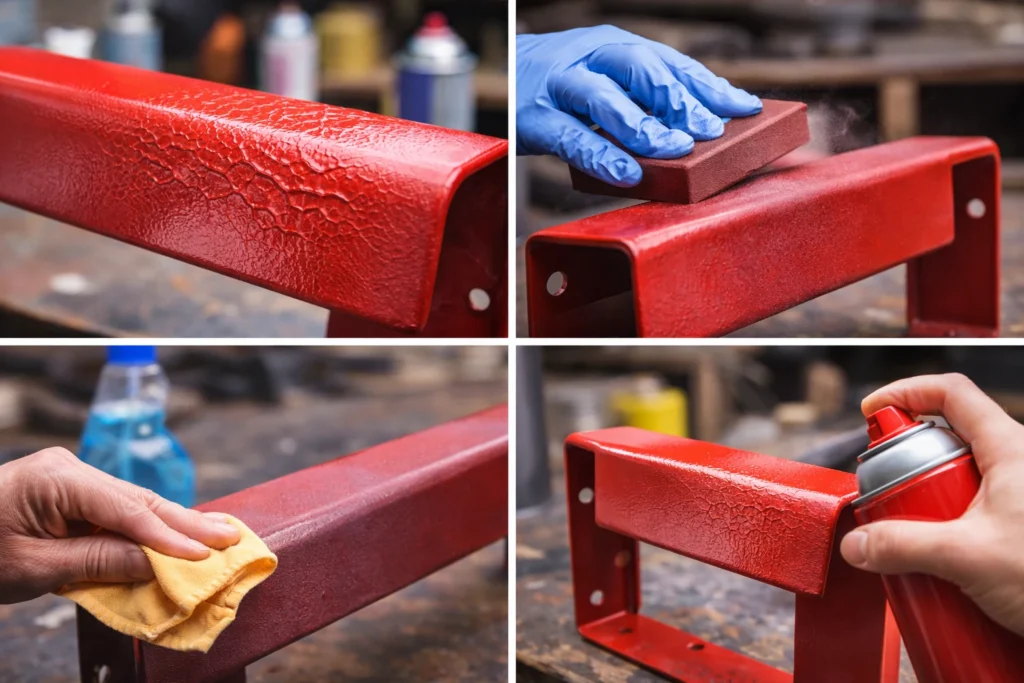
Spray paint wrinkling happens when the top layer of paint dries faster than the layers underneath it. The surface forms a thin “skin,” while the paint below is still soft and full of solvents.
As those trapped solvents continue evaporating, they push against the hardened surface layer. That pressure causes the paint film to buckle creating wrinkles, ridges, or a shriveled look.
It often resembles:
- Crinkled plastic wrap
- Fine surface waves
- Soft puckering
- Slight distortion in glossy finishes
This isn’t orange peel. It isn’t bubbling from contamination. And it isn’t age-related cracking.
Wrinkling is a curing imbalance.
How Spray Paint Actually Dries
To fully understand why your spray paint is wrinkling after drying, you need to understand how paint cures.
Spray paint dries in stages:
- Solvent evaporation – Liquid carriers begin to evaporate.
- Surface drying – The outer layer becomes dry to the touch.
- Film formation – The paint layers bond and level.
- Full curing – Chemical reactions complete and the coating hardens throughout.
That “dry to the touch” stage is misleading. Just because the surface feels dry doesn’t mean the lower layers are stable.
Many spray paints feel dry within 20–60 minutes but remain soft underneath for hours. If the top layer seals off too quickly, solvents trapped underneath create pressure. When that pressure shifts the paint film, wrinkles appear.
The process is heavily influenced by evaporation the phase change where liquids turn into vapor. If you want a deeper understanding of evaporation and how it works in coatings, Wikipedia offers a clear scientific explanation. Evaporation must occur evenly for paint to cure properly. When it doesn’t, distortion happens.
The Most Common Cause: Coats Applied Too Thick
This is the number one reason spray paint wrinkles after drying.
When you apply a heavy coat:
- The outer layer dries first.
- The lower layer remains solvent-rich.
- The surface forms a rigid film.
- Trapped solvents try to escape.
That pressure causes buckling.
Heavy coats often happen when:
- You hold the can too close.
- You spray slowly over one area.
- You try to achieve full coverage in a single pass.
- You apply a “wet” glossy coat too aggressively.
Spray paint is designed for multiple light coats. Not one heavy one.
Thin layers cure evenly. Thick layers trap solvent.
The Recoat Window Problem
This catches people constantly.
Most spray paints specify:
- Recoat within 1 hour
or - Recoat after 24–48 hours
Anything in between is dangerous territory.
If you apply a second coat during the middle window for example, 4–8 hours later the first layer has partially cured but not fully hardened. The solvents in the second coat soften that unstable first layer.
The film shifts. Wrinkling appears.
If you’ve ever thought, “It feels dry I’ll add one more coat,” and returned to wrinkles later, you likely sprayed outside the proper recoat window. Always follow the label exactly.
Incompatible Paint Layers
Another major cause of wrinkling is incompatibility between coatings.
Examples include:
- Spraying enamel over lacquer
- Applying oil-based paint over certain water-based finishes
- Spraying over unknown old finishes
- Painting furniture coated in polyurethane or wax
When new solvents hit an incompatible surface, they can partially dissolve or soften the underlying coating. That destabilizes the entire film.
The result? Movement. Lifting. Wrinkling.
A small hidden test area can prevent major frustration.
Surface Preparation Issues
Paint adheres best to clean, slightly rough surfaces.
If you spray over:
- Grease
- Wax
- Silicone furniture polish
- Dust
- Glossy finishes without sanding
You create weak adhesion points.
As paint dries, it shrinks slightly. Uneven adhesion means uneven movement during curing. That stress can result in wrinkles. Proper preparation including light sanding and degreasing significantly reduces this risk.
Temperature and Humidity Matter More Than You Think
Environmental conditions directly affect curing.
Ideal spray painting conditions are typically:
- 60°F to 85°F
- Low to moderate humidity
- Stable airflow
If it’s too cold:
- Solvent evaporation slows down.
- Paint remains soft longer.
- The surface can skin unevenly.
If it’s too humid:
- Moisture interferes with solvent evaporation.
- Drying becomes inconsistent.
If it’s too hot:
- The surface dries too quickly.
- Lower layers get trapped.
For more detailed federal safety and environmental information regarding spray application and coating behavior, the Occupational Safety and Health Administration (OSHA) provides guidance on spray finishing operations. While OSHA focuses on industrial safety, the underlying principles of solvent behavior and environmental control apply to DIY spray painting as well.
Direct Sunlight and Hot Surfaces
Painting metal or outdoor items in direct sunlight is risky.
Heat causes rapid surface drying. The outer layer forms a skin almost immediately, while the underside remains soft. Later, as deeper solvents evaporate, pressure builds beneath that hardened surface.
Wrinkles form.
If you’re painting metal, always check the surface temperature. Metal can be much hotter than the surrounding air.
Old or Improperly Stored Spray Paint
Spray paint degrades over time.
If a can has been:
- Stored in freezing temperatures
- Left in extreme heat
- Sitting unused for years
- Insufficiently shaken
The formula may separate or spray unevenly.
Uneven spray patterns create uneven film thickness. Uneven thickness leads to uneven curing. Always shake the can for at least one full minute after you hear the mixing ball.
How to Fix Wrinkled Spray Paint
If the damage is already done, here’s how to recover.
Step 1: Let It Fully Cure
Do not rush this. If you sand too early, you’ll tear soft paint underneath and worsen the problem.
Wait 24–48 hours minimum.
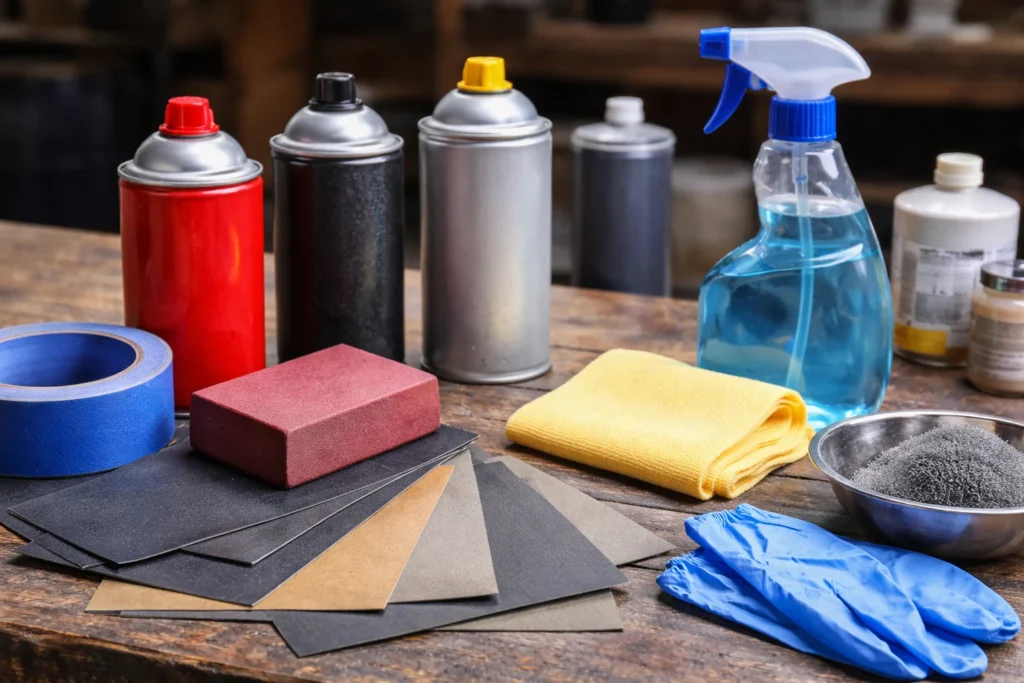
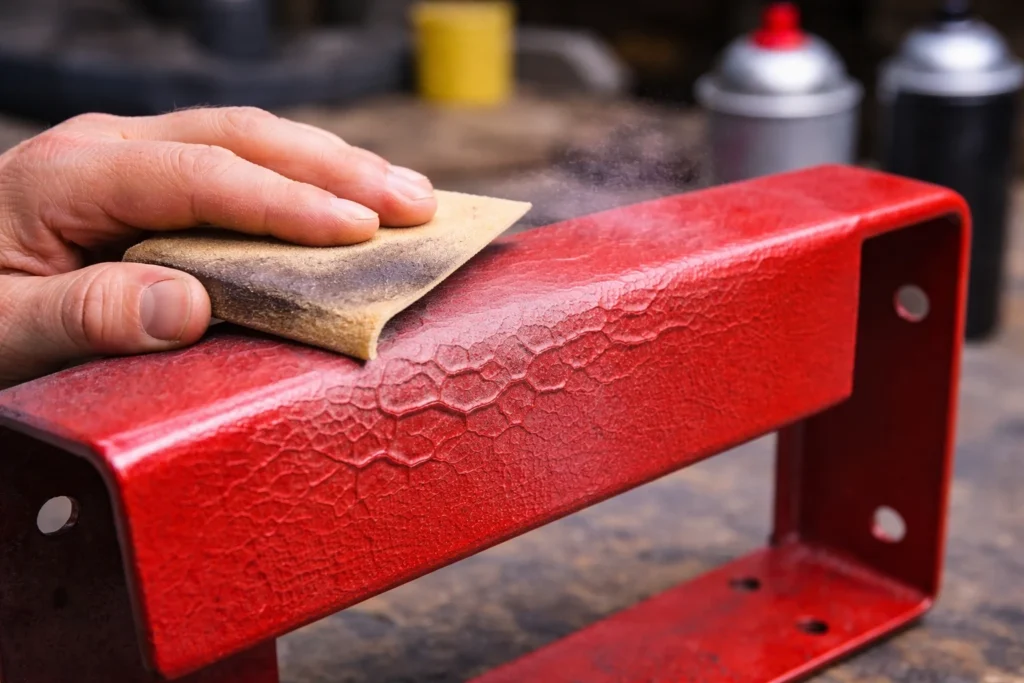
Step 2: Sand Smooth
Use:
- 220–320 grit to level wrinkles
- 400 grit to smooth and feather edges
If wrinkling is severe across the entire surface, stripping completely may be necessary.
Step 3: Clean Thoroughly
Remove all dust and residue. Use a degreaser or appropriate cleaner and allow full drying.
Step 4: Reapply Properly
- Apply light mist coats.
- Hold the can 8–12 inches away.
- Keep the can moving steadily.
- Respect recoat windows.
Build coverage gradually.
Professional Techniques to Prevent Wrinkling
Professionals rely on discipline more than speed.
Here’s what works consistently:
- Multiple thin coats instead of heavy passes
- Strict adherence to recoat timing
- Stable temperature conditions
- Light sanding before repainting
- Testing compatibility on hidden areas
Spray painting isn’t about rushing. It’s about controlling variables.
Special Situations That Increase Risk
Certain materials require extra care.
Furniture Refinishing
Old varnish and polyurethane often react unpredictably. Sand thoroughly and use primer.
Metal
Allow metal to cool before spraying.
Plastic
Use adhesion promoter for best stability.
Automotive Work
Respect flash times between base coat and clear coat carefully.
Final Thoughts
If you’re still wondering why your spray paint is wrinkling after drying, remember this: the issue is almost always one of four things.
- Thickness
- Timing
- Compatibility
- Environment
Spray paint is forgiving when applied correctly and unforgiving when rushed.
Light coats. Controlled conditions. Proper timing. Clean surfaces. Master those, and wrinkling becomes rare. Ignore them, and it becomes predictable. The finish you want isn’t about luck. It’s about understanding how paint behaves and working with it instead of against it.
FAQs
Because “dry to the touch” isn’t fully cured—solvents trapped underneath can still cause the surface to buckle.
Yes. Applying coats too thick or too quickly traps solvents and creates uneven curing, leading to wrinkles.
Follow the label exactly usually within 1 hour or after 24–48 hours to avoid the recoat danger zone.
Yes. Low temperatures slow solvent evaporation, increasing the risk of uneven drying and wrinkling.
Absolutely. Excess moisture interferes with evaporation and curing, which can destabilize the paint film.
Heat causes the top layer to dry too fast, trapping solvents underneath and creating pressure that wrinkles the surface.
Yes, but only after it fully cures. Sand smooth, clean thoroughly, and reapply light coats properly.
Yes. Incompatible layers like polyurethane or enamel can react with new paint and cause lifting or wrinkling.
Definitely. Poor mixing can result in uneven spray patterns and inconsistent curing.
If the wrinkling is widespread or keeps happening, stripping back to a clean surface is often the best solution.