This post contains affiliate links. As an Amazon Associate, I earn from qualifying purchases, at no extra cost to you. See our disclosure policy.
When we think about home safety in Florida, our minds usually jump to hurricane prep, mold prevention, or keeping the AC running during a heatwave. While those are vital, there is a much quieter, more persistent hazard hiding right behind your laundry room wall. It’s a danger that causes thousands of structural fires every year, yet most people don’t realize there’s a problem until they smell smoke. I’m talking about your dryer vent.
According to national fire safety data, the leading cause of dryer fires is simply a failure to clean the venting system. In our unique Sunshine State climate, this risk is amplified. As noted by the local specialists at Wray’s Home Services, Florida’s weather actually changes how lint behaves inside your home’s infrastructure. It isn’t just “dust”—in Florida, it’s a combustible clog waiting for a spark.
Why Florida’s Humidity is a “Lint Trap”
If you lived in a desert climate, dryer lint would remain light, dry, and easy for your machine to blow outside. But in Central Florida, humidity is a constant companion. When that moist, heavy outdoor air meets the warm exhaust from your dryer, it creates a “sticky” environment inside the ductwork.
Instead of flowing freely out the vent, the lint becomes damp and adheres to the walls of the pipe. Over time, this creates a thick, felt-like layer that narrows the airflow. When your dryer can’t “breathe,” the internal temperature spikes to dangerous levels. That damp, sticky lint eventually dries out under the high heat, becoming the perfect fuel for a flash fire inside your walls.
The Sneaky Way Your Dryer Steals Your Money
Maintenance isn’t just about safety; it’s about your monthly budget too. Have you noticed your towels taking two or even three cycles to dry lately? Most homeowners assume their appliance is just getting old. In reality, the machine is usually fine—it’s just struggling to push air through a “clogged straw.”
When the vent is restricted, your dryer has to work twice as hard and run twice as long. This doesn’t just spike your monthly electric bill; it burns out the heating element and thermostat prematurely. Investing in professional dryer vent cleaning in Central Florida is significantly cheaper than calling a technician for a $300 repair or replacing a $1,000 appliance.
5 Warning Signs You Shouldn’t Ignore
You don’t need to be an engineer to know when your system is failing. Keep an eye out for these red flags:
- The “Hot Touch”: The top of your dryer or your clothes feel burning hot at the end of a cycle.
- The Never-Ending Cycle: One load of laundry takes more than 45–50 minutes to dry completely.
- The Laundry Room Sauna: The room feels unusually humid or smells slightly musty when the dryer is running.
- The Silent Flap: Check your exterior vent while the dryer is on. If the flap isn’t moving or the air feels weak, you have a blockage.
- Visible Debris: You see large clumps of lint gathered on the ground outside the vent opening.
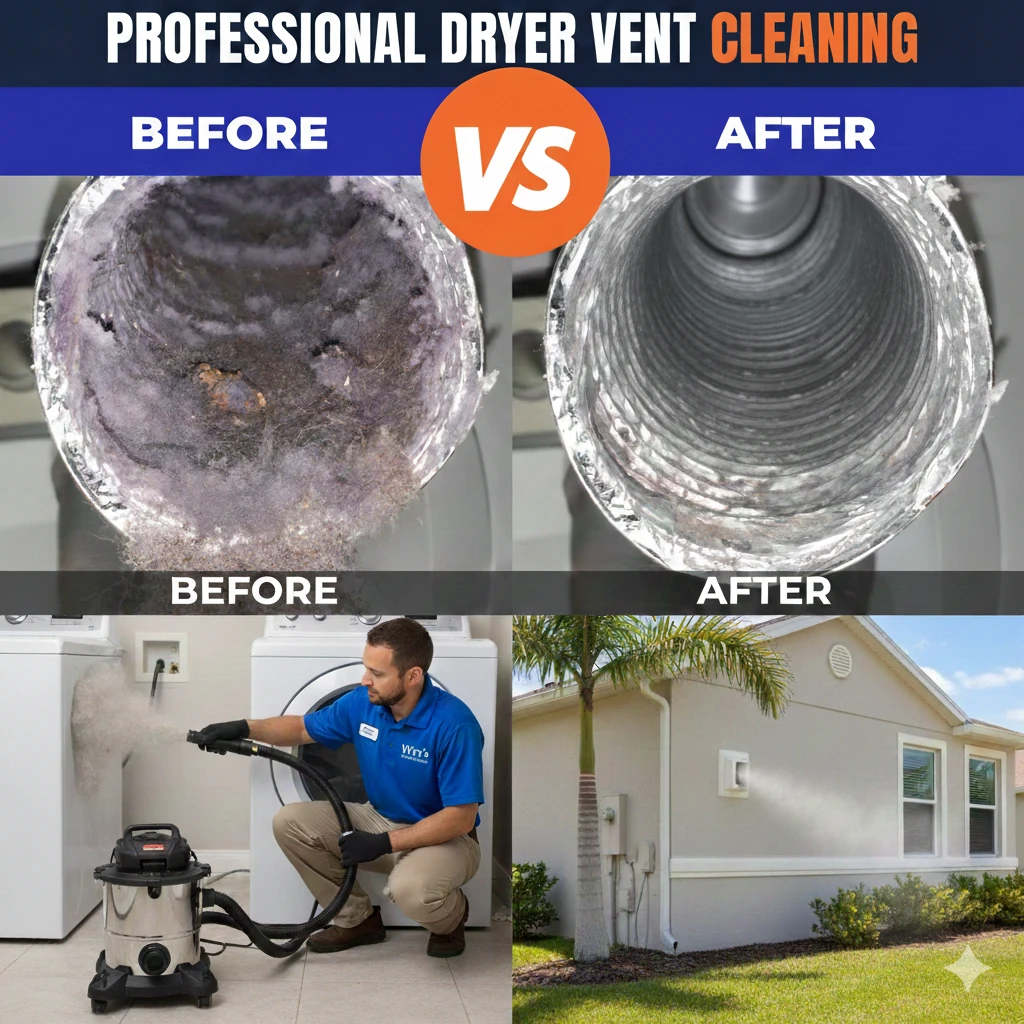
DIY vs. Professional Cleaning: What’s the Difference?
While there are DIY brush kits available at hardware stores, they can be risky for certain Florida homes. Many houses in Volusia and Seminole Counties feature long vent runs that exit through the roof.
If a DIY brush snaps or gets stuck inside a 20-foot pipe, you’ve created a much bigger (and more expensive) problem. Professionals use high-powered equipment like the Rotobrush system and an anemometer to measure airflow. This ensures the path is 100% clear from the back of the dryer all the way to the roof cap.
FAQs
Due to high humidity levels, we recommend a professional cleaning at least once a year. If you have a large family and do multiple loads daily, every 6 months is safer.
Absolutely. A clogged vent can increase your appliance’s energy consumption by as much as 30% per load because the dryer has to run much longer.
Basic lint trap cleaning is a DIY task, but deep-cleaning the internal ductwork—especially those exiting through the roof—requires professional tools to ensure no debris is left behind.
The accumulation of lint is the primary cause. In Florida, this lint often becomes damp and sticky due to humidity, making it much harder to exhaust naturally.
Conclusion: Peace of Mind for Your Home
Home maintenance can often feel like a never-ending checklist, but dryer vent cleaning is a task that offers an immediate return on investment. It saves you money on utilities, extends the life of your appliances, and most importantly, protects your family from a preventable fire. Don’t wait for a burning smell to take action—proactive care is the best way to keep your Florida home safe and efficient.