Warm lighting has a way of making spaces feel lived in. It softens edges, calms the eye, and turns rooms into places people actually want to stay. For decades, halogen bulbs set the benchmark for this kind of light. They were reliable, familiar, and flattering. Then LEDs arrived, promising efficiency, longevity, and lower energy bills but often delivering light that felt colder, harsher, or simply wrong.
Today, the conversation has shifted. It’s no longer just halogen versus LED. It’s about whether modern LED alternatives can truly recreate the warmth people associate with halogen lighting, without the downsides that pushed halogen out in the first place. This is also why some homeowners still research alternatives to LED lights for home lighting, especially when visual comfort matters as much as efficiency.
This article breaks that comparison down clearly. Not in technical jargon. Not in marketing language. Just a practical, honest look at halogen versus LED alternatives for warm lighting and how to choose what actually works.
Why Warm Lighting Still Matters
Lighting isn’t just functional. It’s emotional.
Warm light influences how we relax, how we socialize, and even how we perceive color and texture in a space. Homes lit with warm tones feel calmer and more inviting. Restaurants use it to slow people down. Hotels rely on it to signal comfort. Designers use it to add depth and intimacy.
Despite advances in lighting technology, people still chase the “feel” of halogen. That soft glow. That natural color rendering. That sense that the room isn’t fighting your eyes. Understanding why halogen earned that reputationand how LEDs are trying to replicate it is the key to making smarter lighting decisions.
Understanding Warm Lighting and Color Temperature
Warm lighting is typically defined by its color temperature, measured in Kelvin. Lower Kelvin values produce warmer, more amber-toned light. Higher values move toward neutral white and eventually blue-white daylight tones.
Most warm lighting falls into three common ranges:
- Around 2200K: Very warm, amber, candle-like light
- Around 2700K: Traditional incandescent and halogen warmth
- Around 3000K: Warm white, slightly crisper but still comfortable
Color temperature is a widely recognized lighting standard, and its definition and measurement are explained in detail.
Halogen bulbs naturally sit in the 2700K to 3000K range. LEDs can be manufactured at any of these temperatures, but matching the number alone doesn’t guarantee the same visual experience.
Warmth isn’t just about color temperature. It’s also about how light renders colors, how it spreads, and how it behaves when dimmed.
How Halogen Lighting Works
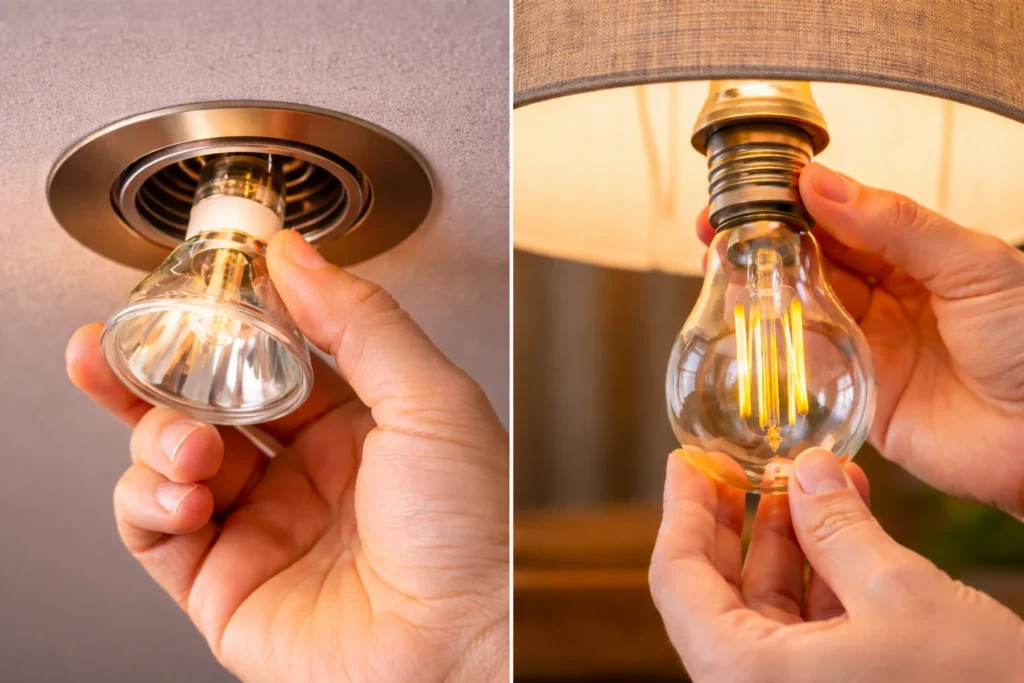
Halogen bulbs are a refined version of incandescent lighting. Electricity heats a tungsten filament until it glows. A small amount of halogen gas inside the bulb redeposits evaporated tungsten back onto the filament, extending its life slightly compared to traditional incandescent bulbs.
The result is a continuous light spectrum. Colors appear natural. Skin tones look healthy. Materials like wood, fabric, and stone look richer. Halogen light feels warm because it is warm literally. A significant amount of energy is released as heat, not light. That inefficiency is also why halogen lighting produces such a familiar glow.
Why Halogen Became the Gold Standard for Warm Light
Halogen didn’t become popular because it was efficient. It became popular because it looked good.
Its strengths were simple:
- Excellent color rendering
- Smooth dimming from full brightness to near darkness
- Consistent beam quality
- Warm tones without green or blue distortion
Designers trusted it. Homeowners liked it. Electricians understood it. There was no learning curve.
But those benefits came with real costs.
The Downsides of Halogen Lighting
Energy inefficiency is the biggest issue. Most halogen bulbs convert only a small fraction of electricity into visible light. The rest becomes heat. That means higher energy bills and unnecessary strain on electrical systems.
Heat output is another concern. Halogen bulbs run hot enough to be a burn risk in some fixtures and can contribute to room heat buildup, especially in kitchens or commercial spaces. Lifespan is limited. Even with halogen gas extending filament life, most halogen bulbs last a fraction of what LEDs can offer. Environmental pressure has also played a role. Many regions have restricted or phased out halogen bulbs due to energy standards, making them harder to source and less future-proof.
How LED Lighting Works
LEDs produce light through electroluminescence. When electricity passes through a semiconductor, photons are released. The color of that light depends on the materials used and any phosphor coatings applied.
Early LEDs struggled with warm tones. They often relied on heavy phosphor layers to mimic warmth, which dulled color accuracy and created flat-looking light. That reputation stuck, even as technology improved. Modern LEDs are far more sophisticated. Manufacturers now engineer LEDs specifically for warm applications, rather than forcing cool LEDs to appear warm.
Can LEDs Really Match Halogen Warmth?
The short answer is yes but only if you choose carefully.
There are three main factors that determine whether an LED feels like halogen.
First is color rendering. Halogen bulbs naturally score close to perfect on color rendering because they emit a continuous spectrum. LEDs rely on engineered spectra. High-quality warm LEDs now reach very high color rendering levels, making colors appear more natural and balanced.
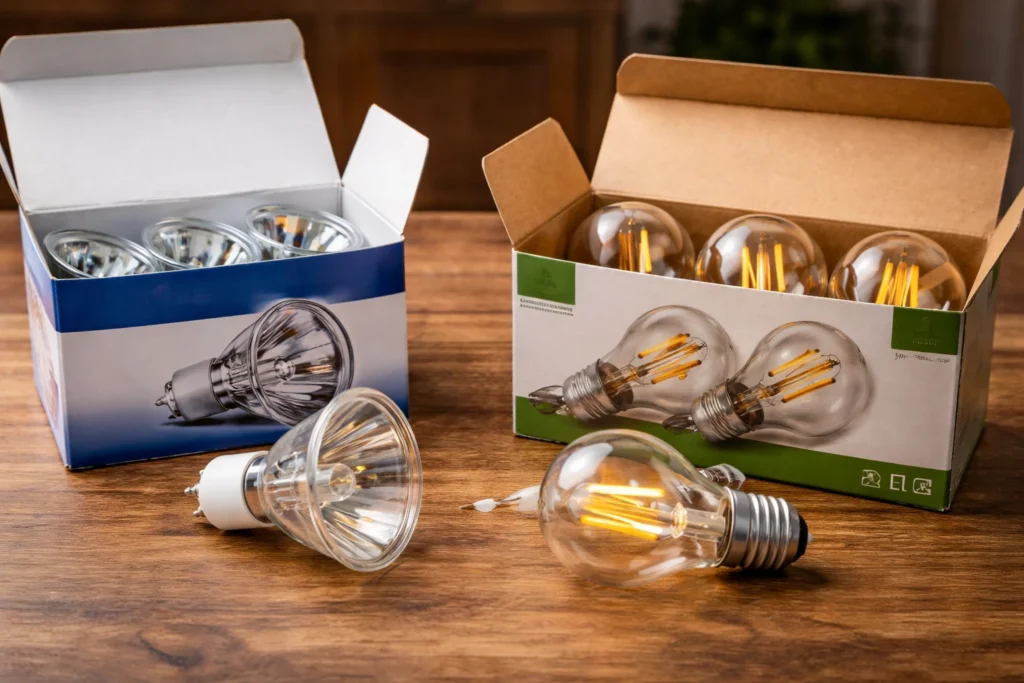
Second is light distribution. Halogen bulbs emit light in all directions. Many LEDs are directional. Poorly designed LEDs can create harsh shadows or uneven pools of light. Better LED designs address this with diffusers and filament-style layouts. Third is dimming behavior. Halogen dims smoothly and warms further as it dims. Many LEDs dim unevenly or flicker if paired with incompatible dimmers. Some advanced LEDs now mimic halogen’s warm-dim effect, shifting to lower color temperatures as brightness decreases.
Halogen vs LED Alternatives: A Practical Comparison
In terms of light quality, halogen still sets a high bar, but modern warm LEDs are no longer far behind. The difference is noticeable only when comparing low-quality LEDs to halogen, not premium alternatives. Energy consumption strongly favors LEDs. According to the U.S. Department of Energy, LED lighting uses significantly less energy and lasts much longer than traditional incandescent and halogen bulbs, making it one of the most efficient lighting options available.
Lifespan is another clear win for LEDs. Where halogen bulbs may last a couple of thousand hours, quality LEDs often last tens of thousands. Heat generation also favors LEDs. Lower heat output improves safety and reduces cooling demands in warm climates. Environmental impact increasingly pushes decisions toward LEDs. Lower energy use means reduced emissions over the product’s lifetime. Upfront cost used to favor halogen. Today, that gap has narrowed significantly, especially when factoring in energy savings and replacement costs.
The Best LED Alternatives for Halogen-Style Warm Lighting
Not all warm LEDs are created equal.
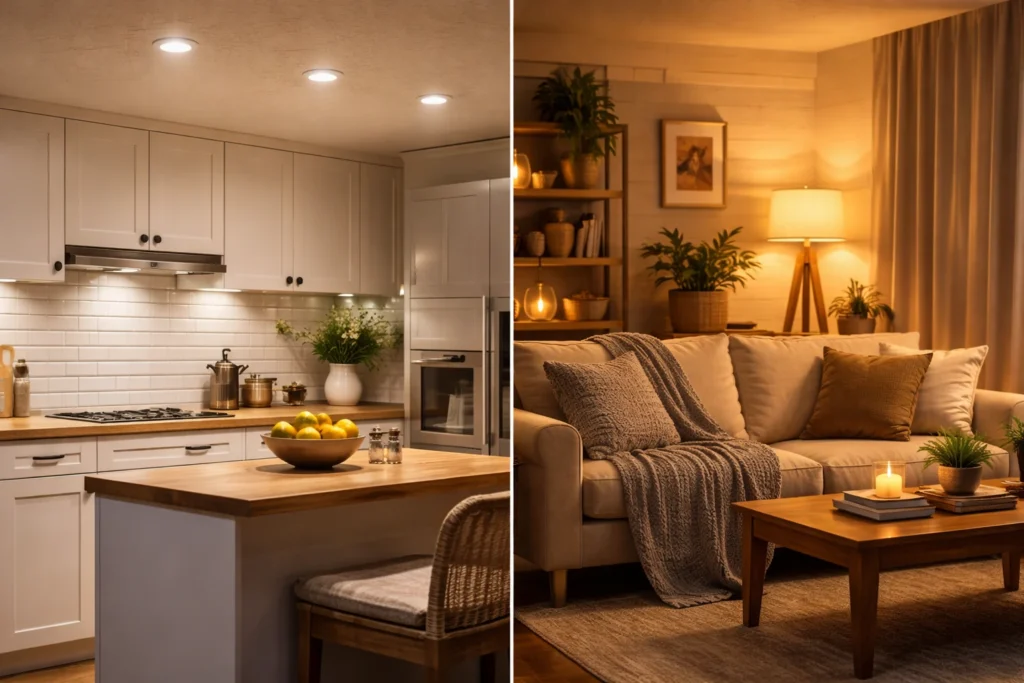
Warm white LEDs in the 2700K to 3000K range are the closest general replacements for halogen. For spaces that rely heavily on mood, extra-warm LEDs around 2200K to 2400K provide a softer, more atmospheric glow. High color rendering LEDs are essential. These ensure fabrics, finishes, and skin tones don’t look washed out or unnatural.
Filament-style LEDs are especially effective for exposed fixtures. They replicate the shape and glow pattern of traditional bulbs while delivering LED efficiency. The key is choosing LEDs designed for residential or hospitality warmth not office or utility lighting repurposed for home use.
Choosing Warm Lighting for Different Spaces
Living rooms and bedrooms benefit from softer, warmer tones that encourage relaxation. LEDs at the lower end of the warm spectrum work best here, especially when paired with dimmers. Kitchens and dining areas often need a balance. Slightly warmer light keeps the space inviting, while enough clarity ensures food preparation and dining feel natural.
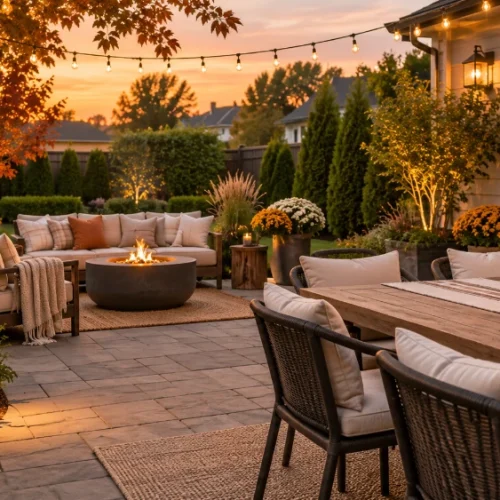
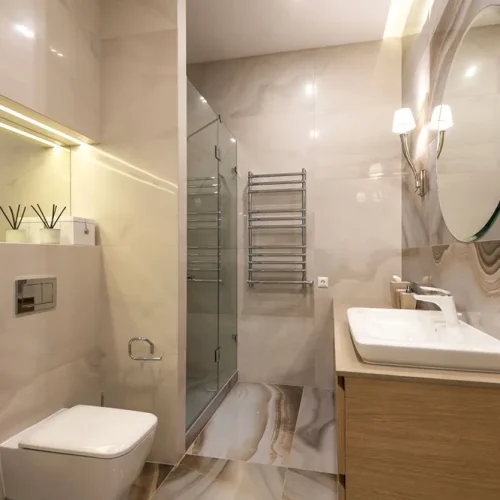
Bathrooms require careful selection. Warm lighting flatters skin tones, but overly amber light can distort color. Mid-range warm LEDs with good color rendering are ideal. Commercial and hospitality spaces often combine warm ambient lighting with targeted task lighting. LEDs offer flexibility here, allowing designers to layer light without excessive heat or energy use. Outdoor spaces also benefit from warm lighting. Warm LEDs reduce glare, minimize harsh shadows, and blend better with natural surroundings at night.
Final Thoughts: Choosing Warm Lighting That Feels Right
Halogen earned its reputation honestly. Its warmth, color quality, and dimming behavior made it a favorite for decades. LEDs didn’t replace halogen overnight because replicating that warmth took time. Today, that gap has largely closed.
The real decision isn’t about old versus new technology. It’s about understanding what makes light feel warm and choosing LED alternatives designed to deliver that experience intentionally. With the right selection, it’s possible to enjoy the comfort of halogen-style warmth while benefiting from the efficiency, longevity, and flexibility that modern lighting offers.
FAQs
Yes, modern warm LEDs can closely match halogen warmth when chosen with the right color temperature and color rendering.
LEDs in the 2700K–3000K range are the closest match to traditional halogen light.
Poor color rendering, directional light output, or incorrect dimmer compatibility can make LEDs feel harsh.
Only if they are dimmer-compatible; some advanced LEDs also mimic halogen’s warm-dimming behavior.
In many regions, halogen bulbs are restricted or discouraged due to energy efficiency regulations.
Yes, LEDs use significantly less electricity while producing similar light output.
No, beam spread, color rendering, and dimming behavior also affect how warm light feels.
Yes, they closely resemble halogen bulbs in both appearance and light distribution.
In most cases yes, but checking bulb size, beam angle, and dimmer compatibility is important.
Halogen may still be suitable for specialty fixtures or short-term lighting needs where exact light behavior is required.