Fluorescent lights had a long run. They’re bright, inexpensive, and they make a room feel “lit” in the most literal sense. But they also come with baggage: harsh glare, flicker that can trigger headaches, poor color quality that makes everything look washed out, and that familiar buzzing hum that somehow gets louder the moment you need to concentrate.
If your home office is where you earn, build, study, or create, your lighting deserves more than “good enough.” The right alternative to fluorescent lighting can make your space feel calmer, reduce eye strain, improve how you look on video calls, and even help you stay focused longer. Here are the best fluorescent light alternatives for a home office what they are, why they work, and how to choose the right setup for the way you actually use your space.
What Makes a Good Fluorescent Alternative?
Before picking a replacement, it helps to know what you’re trying to improve. Most people switch away from fluorescent because of one (or more) of these issues:
- Flicker that causes visual fatigue
- Glare reflecting off monitors
- Poor color accuracy that dulls surfaces and skin tones
- A cold, clinical atmosphere
- Audible buzzing from aging ballasts
Light quality matters more than many people realize. One important metric is Color Rendering Index (CRI), which measures how accurately a light source reveals colors compared to natural light. A deeper explanation of this concept.
A strong fluorescent alternative should offer:
- Stable, low-flicker illumination
- High CRI for accurate colors
- Comfortable light distribution
- Dimming or adjustability
LED Panel Lights
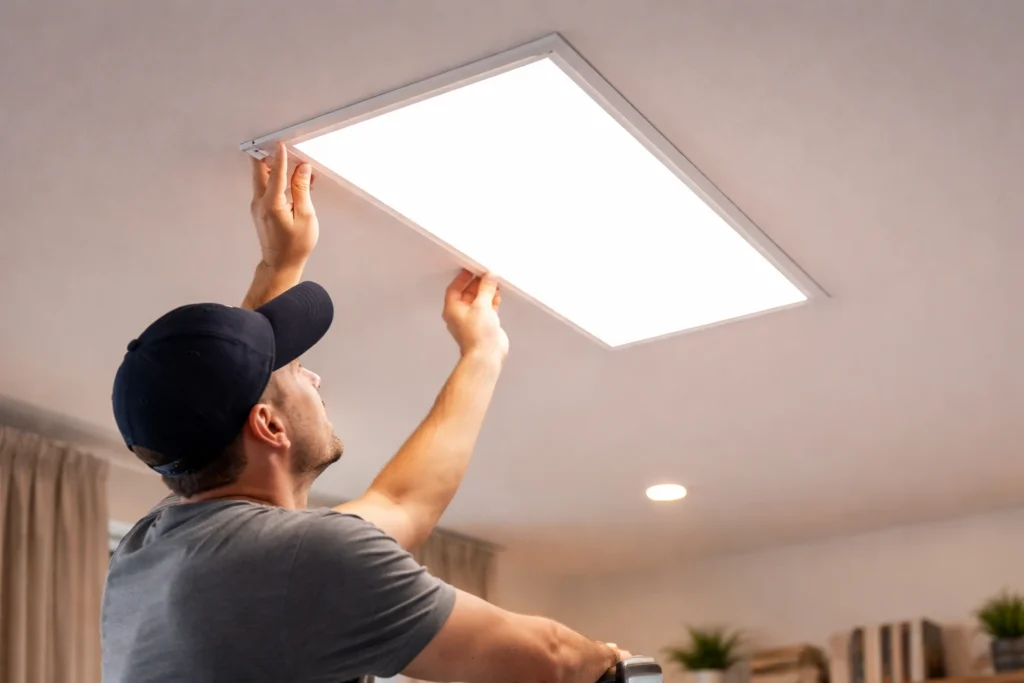
LED panel lights are one of the closest functional replacements for fluorescent ceiling fixtures but without the drawbacks. They deliver wide, evenly diffused light that fills a room without harsh hotspots.
These panels are especially useful in home offices where overhead lighting is unavoidable. Compared to fluorescent fixtures, LED panels run cooler, stay silent, and offer far better color quality. They’re commonly available in neutral color temperatures around 4000K, which balances alertness and comfort. High-quality panels also reduce glare, making them easier on the eyes during long work sessions.
LED Tube Lights
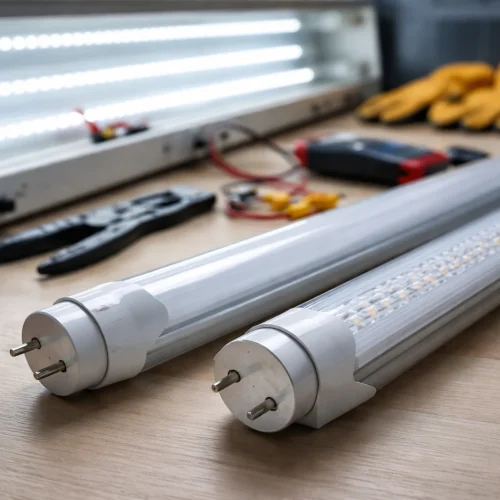
For home offices located in converted garages, basements, or older rooms with fluorescent strip fixtures, LED tube lights offer a straightforward upgrade path. LED tubes are designed to replace fluorescent tubes directly. Some work with existing ballasts, while others bypass the ballast entirely for improved efficiency and reliability.
The U.S. Department of Energy highlights LED lighting as a significantly more efficient and longer-lasting alternative to traditional fluorescent systems, with additional guidance. Replacing fluorescent tubes with LEDs often improves brightness consistency, eliminates buzzing, and reduces maintenance over time.
LED Desk Lamps
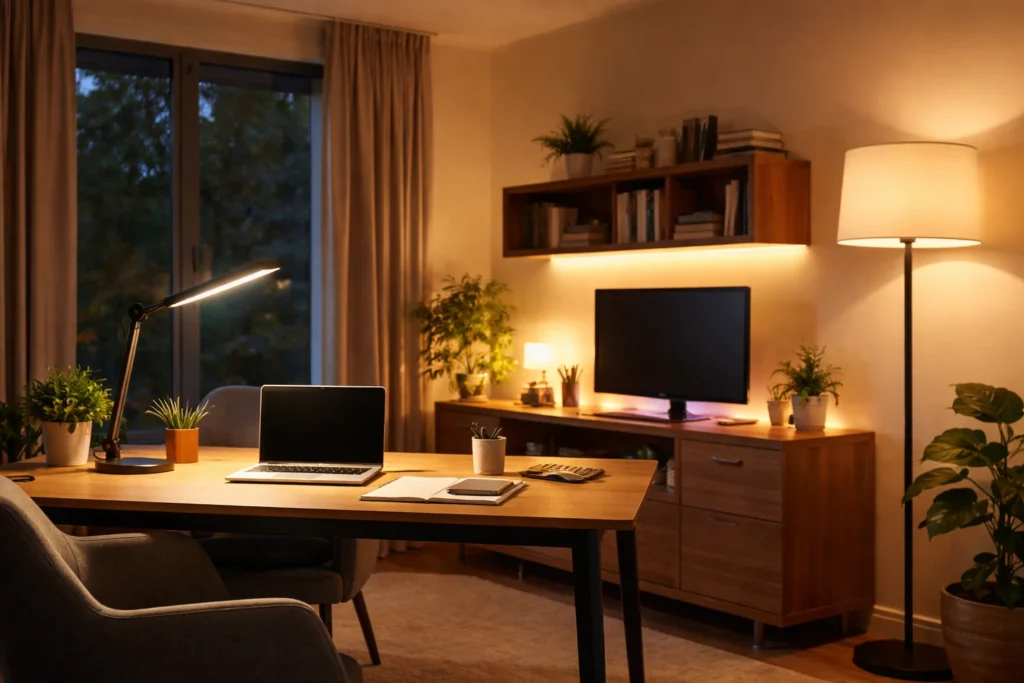
One of the most effective fluorescent alternatives doesn’t involve the ceiling at all. A high-quality LED desk lamp can dramatically improve comfort by delivering focused light exactly where it’s needed.
Desk lamps reduce reliance on overhead lighting, which helps minimize screen glare and eye strain. Many modern LED desk lamps include adjustable brightness levels and color temperatures, allowing you to tailor lighting throughout the day. For computer-heavy tasks, placing the lamp to the side of your dominant hand helps avoid shadows while keeping light out of your direct line of sight.
Floor Lamps with Diffused Shades
Fluorescent lighting often feels harsh because it’s unfiltered. Floor lamps with fabric or frosted shades soften light before it reaches your eyes, creating a more relaxed and visually comfortable environment.
These lamps work well as ambient lighting, especially in home offices that share space with living rooms or bedrooms. They also improve how a room looks on video calls by reducing overhead shadows. Using a floor lamp alongside a desk lamp creates layered lighting that feels far more natural than a single fluorescent source.
Smart Lighting Systems
Smart bulbs and smart fixtures give you control that fluorescent lighting never could. You can adjust brightness, shift color temperature, and create lighting schedules that align with your workday. Cooler light settings help with focus during daytime hours, while warmer tones reduce stimulation in the evening. This flexibility is especially valuable in multipurpose spaces where your office setup changes throughout the day. Smart lighting also allows subtle adjustments instead of all-or-nothing brightness, which reduces eye fatigue.
Indirect Lighting Solutions
Indirect lighting works by bouncing light off walls or ceilings instead of shining it directly downward. This approach dramatically reduces glare and creates a softer, more even glow. Common options include uplight floor lamps, wall-mounted fixtures, or LED strips placed behind desks or monitors. Indirect lighting is particularly effective for people who experience headaches or visual discomfort under fluorescent lights. This method provides consistent illumination without harsh contrasts, making it ideal for long hours of screen work.
Natural Light Paired with Daylight LEDs
Natural daylight is still the gold standard for comfort and productivity. When possible, positioning your desk near a window can significantly improve mood and focus. However, daylight changes throughout the day. Supplementing it with daylight-balanced LED lighting ensures consistent brightness during cloudy weather, early mornings, or late afternoons. Neutral LED lighting complements natural light better than fluorescent sources, which often clash in color tone and intensity.
Why Halogen and Incandescent Fall Short
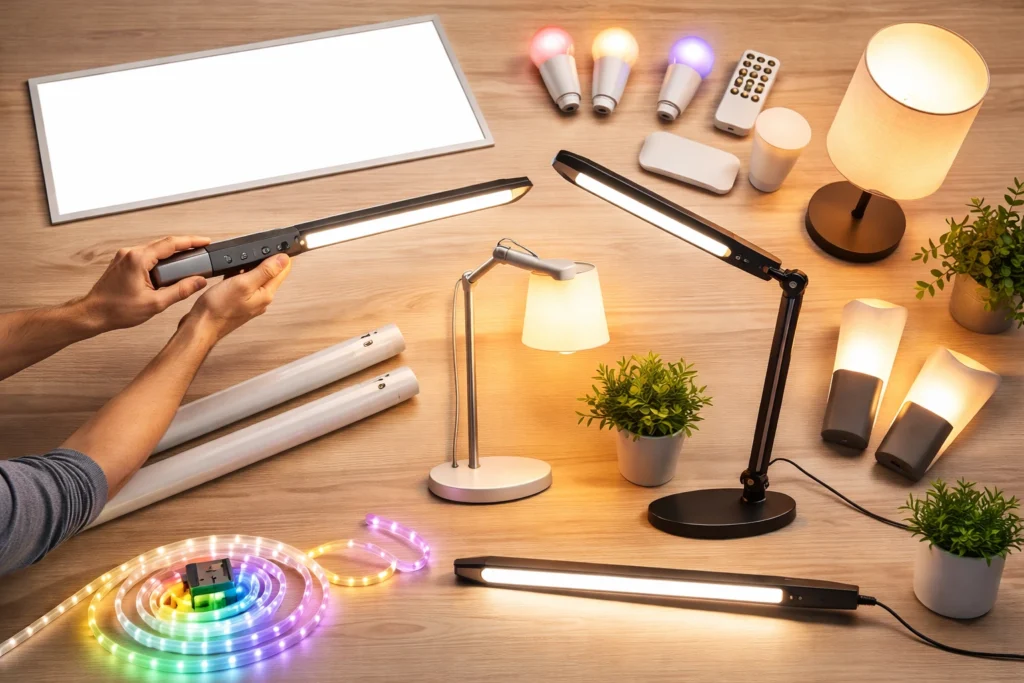
Halogen and incandescent bulbs can create warm, pleasant light, but they’re rarely practical as primary home office lighting. They consume more energy, generate heat, and burn out faster than LED alternatives. While they may work for accent lighting or decorative fixtures, modern LEDs can achieve the same warmth with better efficiency and control.
Building a Better Home Office Lighting Setup
Instead of relying on a single overhead fixture, the most comfortable home offices use layered lighting:
Ambient lighting provides overall brightness.
Task lighting supports focused work.
Indirect or accent lighting softens the space.
This layered approach offers flexibility and reduces visual stress something fluorescent lighting simply can’t match.
Final Thoughts
Fluorescent lights were designed for large commercial spaces, not personal work environments. In a home office, comfort, control, and visual quality matter far more than raw brightness. The best fluorescent light alternatives for home offices give you softer illumination, better color accuracy, and the ability to adapt lighting to your work style. Whether you choose LED panels, desk lamps, indirect lighting, or a combination of all three, upgrading away from fluorescent lighting can immediately improve how your space feels and how well you work in it.
FAQs
LED panel lights and high-quality LED bulbs are the most effective replacements due to better light quality, efficiency, and comfort.
Yes, LED lights typically produce less flicker and glare, which helps reduce eye strain during long work sessions.
A neutral white range between 3500K and 4000K works best for focus without feeling too harsh.
Yes, many people rely on layered lighting using desk lamps and indirect lighting instead of overhead fixtures.
In many cases, yes especially flicker-free LEDs with high CRI ratings.
Smart lights offer adjustable brightness and color temperature, making them a flexible and effective alternative.
Most home offices need between 1,500 and 3,000 total lumens, depending on room size and wall color.
Yes, indirect lighting reduces glare on screens and creates a more comfortable viewing environment.
Yes, LED tubes are designed to replace fluorescent tubes and offer improved efficiency and color quality.
Absolutely—proper lighting improves focus, reduces fatigue, and creates a more comfortable work environment.