This post contains affiliate links. As an Amazon Associate, I earn from qualifying purchases, at no extra cost to you. See our disclosure policy.
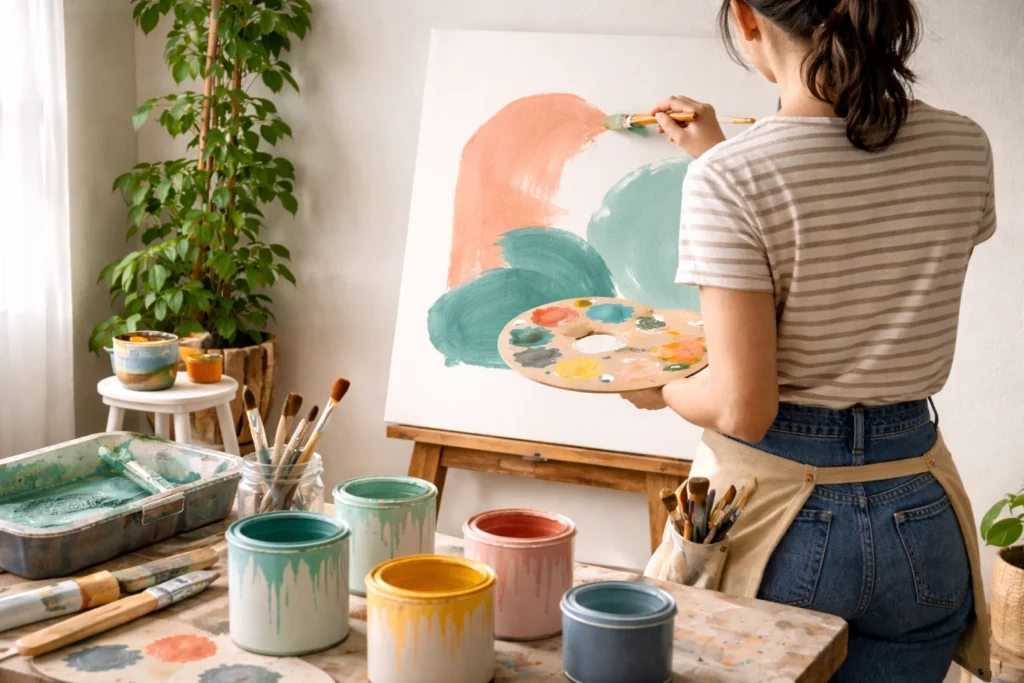
Leftover paint has a bad reputation. It sits in garages, clutters shelves, and quietly dries out while waiting for a “someday” that rarely arrives. But that half-used can is actually one of the most flexible creative tools you can have in a home. Limited paint forces smart decisions. It pushes creativity. And it often leads to projects that feel more intentional than full-scale repaint jobs.
DIY painting ideas using leftover paint aren’t about cutting corners. They’re about working with what you already have and using constraints to your advantage. Small amounts of paint are perfect for detail work, accents, patterns, and statement pieces that don’t require gallons of material. When done well, these projects can look custom, thoughtful, and surprisingly high-end. This guide walks through practical, visually impactful ways to use leftover paint across walls, furniture, décor, and outdoor spaces without needing professional skills or expensive tools.
Why Leftover Paint Works So Well for DIY Projects
Small paint quantities naturally lend themselves to projects with defined boundaries. An accent wall, a piece of furniture, or a painted detail doesn’t need uniform coverage across large surfaces. That limitation encourages layering, mixing, and intentional color placement.
Leftover paint also removes pressure. Since the paint is already paid for, experimentation feels safer. If a color combo doesn’t work, it’s easier to pivot. Many people discover their most creative results when there’s nothing to “waste.”
There’s also a sustainability factor. Using what you already have reduces waste, minimizes disposal issues, and keeps usable materials out of landfills. According to the U.S. Environmental Protection Agency, reducing household waste through reuse is a key strategy for sustainable living, as outlined.
Getting Leftover Paint Ready for Use
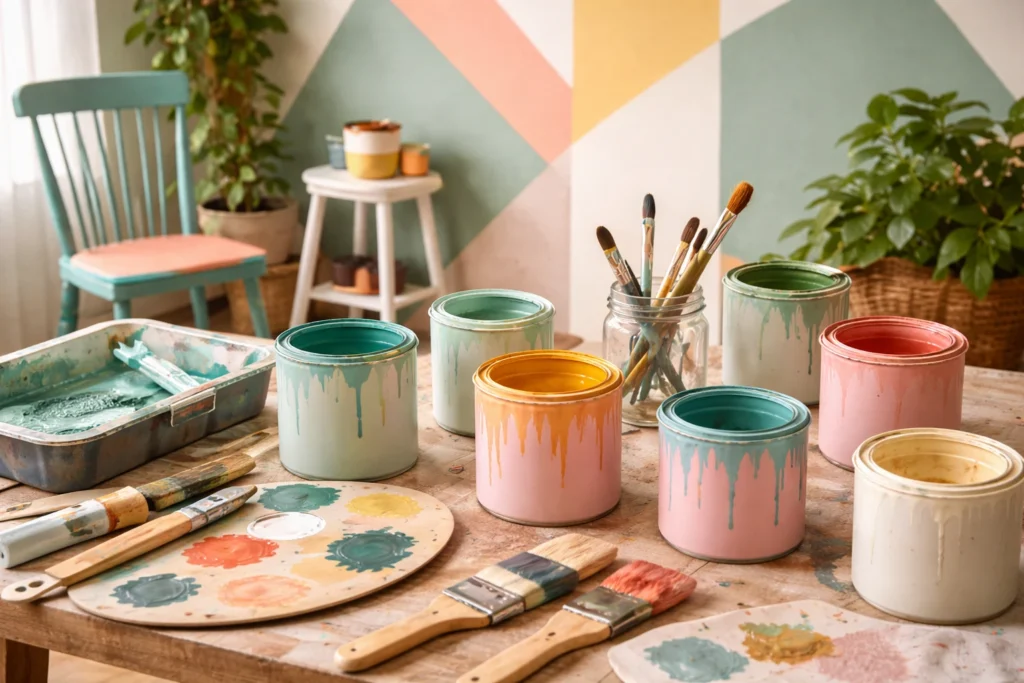
Before starting any project, leftover paint needs a quick assessment. Open the can and check consistency. If the paint smells sour, has hardened chunks that won’t mix, or has separated beyond recovery, it’s no longer usable. Paint that’s thick but smooth can often be revived with thorough stirring and, if necessary, a small amount of water for latex paint.
Straining paint through a fine mesh or old stocking helps remove dried bits that could ruin a finish. Always test revived paint on scrap material before committing to a surface. This step ensures color accuracy and smooth application. Understanding paint composition also matters. Different binders and pigments affect how paint behaves over time, which is explained in detail in the general overview of paint materials on Wikipedia.
Accent Wall Ideas That Don’t Rely on Wallpaper
Accent walls are one of the most effective ways to stretch leftover paint. Instead of painting an entire wall, focus on intentional shapes, sections, or zones that create visual interest with minimal material. This approach works especially well for homeowners looking for diy accent wall painting ideas without wallpaper, where thoughtful design replaces the need for printed patterns or additional materials.
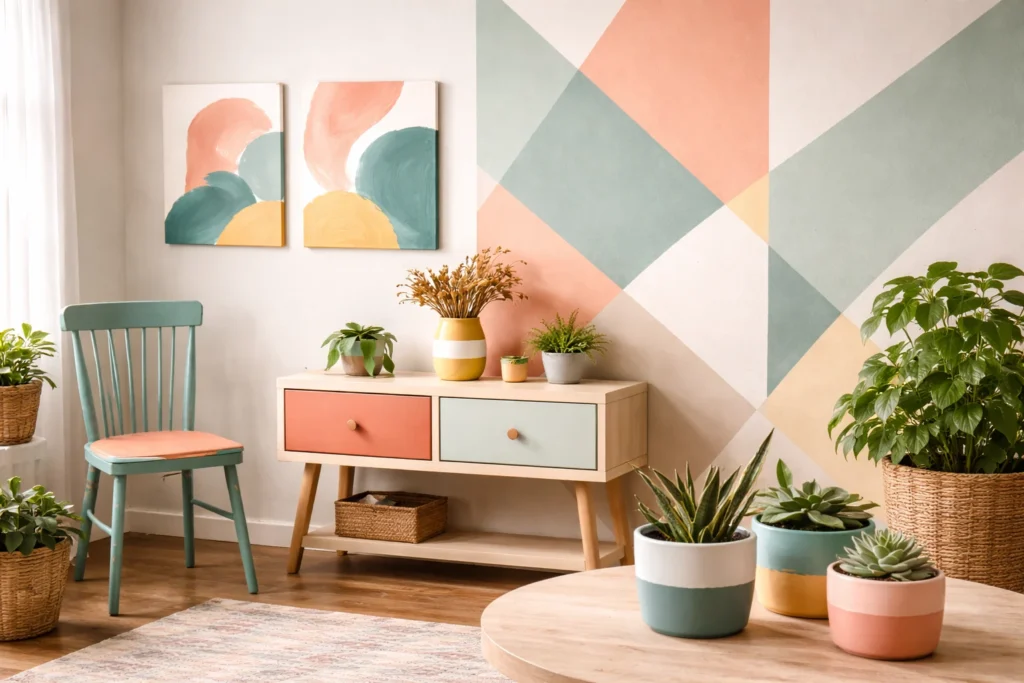
Color blocking is a strong starting point. Dividing a wall vertically or horizontally allows you to use multiple colors in a controlled way. Even bold or mismatched shades can feel intentional when aligned with furniture, lighting, or architectural features. Painted arches, half-walls, and geometric sections also add depth while keeping paint usage low, making them ideal projects when working with excess or leftover paint.
Furniture Makeovers Using Small Amounts of Paint
Furniture is ideal for leftover paint projects because pieces are small and forgiving. Chairs, stools, nightstands, side tables, and shelves can all be transformed with a single color or layered tones. Two-tone furniture designs are especially effective. Painting just the legs, drawers, or trim creates contrast and visual interest. Even neutral leftover paint can modernize dated furniture when applied strategically.
Distressed and layered finishes work well when paint quantities are limited. Applying one color, lightly sanding, then adding another color on top creates depth and texture without requiring precision. Imperfections enhance the character rather than detract from it. Always finish furniture projects with a protective sealant if the piece will see frequent use. Clear wax or water-based polyurethane extends durability without altering the color.
DIY Wall Art and Canvas Projects
Leftover paint shines when used for wall art. Canvas projects allow full creative freedom and don’t require perfection. Abstract designs, color fields, and textured layers can be created with basic tools or household items like sponges, old brushes, or even cardboard. Creating a cohesive art set from multiple small canvases works especially well when paint colors are limited. Repeating the same colors across different patterns ties the pieces together visually.
Minimalist designs simple shapes, arches, or organic lines often feel more elevated than complex compositions. The goal isn’t to fill space with color but to use it thoughtfully. Wall art projects are also a great way to test color combinations before committing them to walls or furniture.
Painting Trim, Molding, and Architectural Details
One of the most overlooked DIY painting ideas using leftover paint is highlighting architectural details. Painting baseboards, window trim, door frames, or ceiling edges adds contrast without overwhelming a space. A darker or bolder color on trim can define a room and draw attention to its structure. Even subtle tonal shifts create depth when applied consistently.
Stair risers are another opportunity. Painting just the vertical faces of stairs introduces pattern and color while keeping wear-prone treads neutral. Small details like vent covers, interior doors, or shelving brackets can also be refreshed with leftover paint for a cohesive look.
Patterned Walls Without Wallpaper
Wallpaper isn’t the only way to add pattern. Painted designs offer more flexibility and are easier to update later. Arches and curved shapes soften rooms and work well behind beds, desks, or seating areas. Freehand patterns don’t need to be perfect organic edges often feel more natural and modern.
Stencils help create repeating designs with minimal paint. Checkered patterns, grids, and subtle motifs can transform small areas like entryways or reading nooks. Using a limited palette actually strengthens patterned designs. Too many colors can overwhelm, while two or three coordinated shades keep the look refined.
Outdoor Projects That Make Use of Leftover Paint
Leftover paint is perfect for outdoor accents where wear and tear are expected. Planters, pots, benches, and small tables can all be refreshed with minimal material. Painting just the rims or bases of planters adds color without requiring full coverage. Outdoor furniture details like chair legs or armrests can be updated without repainting entire pieces.
Porch floors and patios benefit from painted patterns rather than solid colors. Stripes, borders, or tile-inspired designs use less paint while adding personality. Always confirm that leftover paint is suitable for outdoor use or seal it properly to protect against weather exposure.
Beginner-Friendly and Low-Pressure Paint Projects
For beginners, leftover paint offers a low-risk way to build confidence. Small projects remove the fear of making mistakes and encourage experimentation. Simple wall shapes in playrooms, painted storage bins, or decorative crates are easy entry points. Chalkboard sections, learning boards, or color zones help blend function with creativity.
Cleanup is easier with small paint quantities, and projects can often be completed in a single afternoon. These quick wins build momentum for larger DIY goals.
Mixing Leftover Paint to Create New Colors
One of the most satisfying parts of using leftover paint is mixing custom shades. Combining similar tones creates cohesive palettes that feel intentional rather than random. Neutralizing bold colors with white, gray, or beige makes them more versatile. Testing mixes in small containers allows adjustments without waste.
Labeling custom blends ensures consistency if touch-ups are needed later. Keeping notes on ratios helps recreate colors for future projects. Custom-mixed paint adds a personal element to DIY projects that store-bought colors can’t replicate.
Sustainability and Smart DIY Choices
Using leftover paint aligns with sustainable home improvement practices. It reduces waste, saves money, and maximizes resources already available.
Many communities offer paint recycling programs for unusable paint, ensuring responsible disposal. Knowing when to reuse and when to recycle keeps projects eco-friendly from start to finish. Sustainable DIY isn’t about perfection it’s about making thoughtful choices that extend the life of materials.
Common Mistakes to Avoid
Mixing incompatible paint types is one of the most common errors. Oil-based and latex paints don’t blend well and should be used separately. Skipping surface prep leads to peeling and uneven finishes. Even small projects benefit from light sanding and cleaning.
Ignoring sheen differences can cause patchy results, especially on walls. Plan projects where sheen variation adds character rather than detracts from it. Rushing drying times often results in smudges or tacky surfaces. Patience improves durability and appearance.
Planning a Project Around the Paint You Have
The smartest DIY painting ideas using leftover paint start with inventory. Lay out available colors, estimate coverage, and match projects accordingly.
Group small projects together to create visual continuity across rooms. Repeating colors in different ways strengthens design flow. Know when leftover paint is enough and when it’s not. Some projects deserve a fresh can, and recognizing that boundary keeps DIY efforts enjoyable rather than frustrating.
Final Thoughts
Leftover paint isn’t a limitation. It’s an invitation. It encourages creativity, experimentation, and thoughtful design decisions. Whether you’re refreshing a room, updating furniture, or adding subtle detail, small amounts of paint can create outsized impact.
The most successful DIY projects don’t rely on endless supplies. They rely on vision, intention, and the willingness to work with what’s already there. When you embrace leftover paint as a design tool rather than an inconvenience, the results often feel more personal and more rewarding than a full repaint ever could.
FAQs
Yes, leftover paint works well for accents, furniture, décor, and small DIY projects where full coverage isn’t required.
If the paint mixes smoothly, smells normal, and has no hard chunks, it’s usually safe to use.
You can mix similar types of paint to create custom shades, but avoid mixing oil-based and latex paints.
Accent walls, painted planters, small furniture pieces, and simple wall art are beginner-friendly options.
Yes, as long as it’s fully cured and hasn’t spoiled, leftover interior paint is safe for indoor projects.
Stir thoroughly and add a small amount of water for latex paint to restore a workable consistency.
Absolutely chairs, tables, shelves, and dressers are ideal for small paint quantities.
Yes, different sheens reflect light differently, so it’s best to use similar finishes on the same surface.
With proper prep and sealing, projects using leftover paint can last just as long as full repaint jobs.
Seal the can tightly, store it in a cool area, and label it with the color and date for easy reuse.