Designing a low-maintenance backyard for busy homeowners is no longer a luxury idea. It’s a practical response to real life. Between work, family, and everything else pulling at your schedule, weekends disappear fast. The last thing most homeowners want is a yard that demands constant attention. I’ve seen it again and again—beautiful outdoor spaces that quietly turn into full-time jobs.
Here’s the good news.
Low-maintenance doesn’t mean boring.
And it definitely doesn’t mean giving up style or comfort.
It means making smarter decisions early. Decisions about materials, layout, water use, and automation that quietly save you hours every month. This guide walks through exactly how to do that, step by step, without fluff, shortcuts, or design trends that look good for one season and become a headache the next.
Start With a Maintenance-First Design Mindset
Before choosing pavers, plants, or furniture, pause.
Ask a simple question: How much time do I realistically want to spend outside maintaining this space every week?
Most people skip this step. That’s how backyards become exhausting.
Designing a low-maintenance backyard for busy homeowners starts with honesty. Ten minutes a week? One hour a month? Seasonal upkeep only? Your answers should drive every design decision that follows.
Focus on:
- Reducing repetitive tasks
- Eliminating fragile materials
- Designing spaces that age well, not just photograph well
A beautiful backyard that demands constant attention isn’t a success. A calm, durable space that runs quietly in the background is.
Choose Materials That Don’t Ask for Constant Attention
Materials do most of the heavy lifting in a low-maintenance backyard. Choose wisely, and your future self will thank you.
Hardscape Materials That Hold Up
Hardscaping reduces maintenance by replacing surfaces that need weekly care with surfaces that don’t.
Best low-maintenance options:
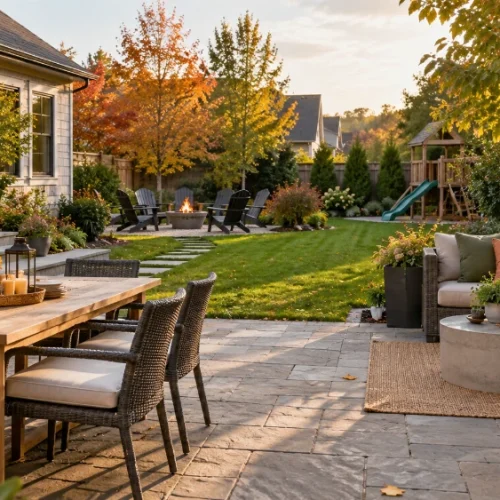
- Concrete pavers with sealed joints
- Porcelain pavers for patios and walkways
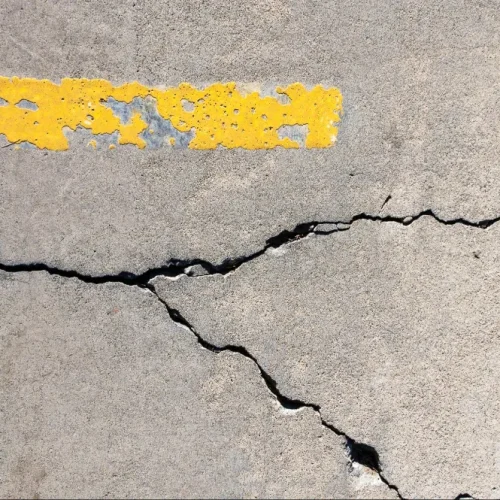
- Poured concrete with proper control joints
- Decomposed granite in dry, low-traffic areas
These materials resist weeds, drain well, and don’t require repainting or resealing every year.
Materials to think twice about:
- Natural wood decking
- Loose stone without edging
- Stamped concrete without proper drainage
They look great early. They work harder later.
Fencing and Boundaries
Boundary materials quietly affect long-term workload.
- Vinyl and aluminum fencing require almost no upkeep
- Masonry walls last decades with minimal care
- Composite fencing resists rot and fading
Wood fencing, while classic, brings staining, warping, and replacement into the picture. Sometimes tradition costs time.
Let Hardscaping Do the Heavy Lifting
If there’s one principle that consistently supports designing a low-maintenance backyard for busy homeowners, it’s this: reduce lawn area.
Grass demands mowing, edging, watering, and fertilizing. Hardscape doesn’t.
That doesn’t mean eliminating green space entirely. It means being intentional.
Use hardscaping to:
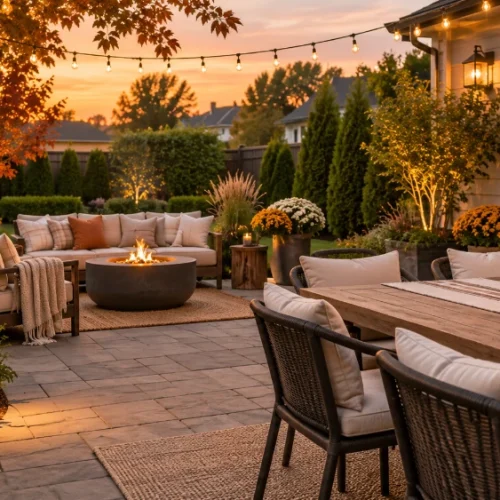
- Create defined seating zones
- Replace unused lawn areas
- Build durable paths that prevent mud and erosion
- Frame planting beds so maintenance stays contained
Patios, walkways, and terraces don’t just add function. They replace chores.
Plant Smarter, Not More
Plants are often where maintenance spirals out of control. The fix isn’t fewer plants. It’s better ones.
Choose Plants That Match Your Climate
Native and climate-adapted plants require:
- Less watering
- Fewer fertilizers
- Minimal pruning once established
They’re also more resilient. That matters long term.
Use Layout to Reduce Work
Design planting beds to work with you, not against you.
- Group plants with similar water needs
- Avoid narrow beds that trap leaves and debris
- Use groundcovers to suppress weeds
- Apply mulch or stone generously to exposed soil
Plants should fill space naturally. If they need constant correction, something is wrong.
Water Management That Runs Quietly
Watering is one of the biggest time drains in outdoor maintenance. Smart systems solve most of it.
Smart Irrigation Systems
Modern irrigation doesn’t guess.
Drip irrigation paired with smart controllers:
- Delivers water directly to roots
- Adjusts automatically for weather
- Reduces waste and runoff
Separate zones for turf, shrubs, and beds prevent overwatering and underperforming plants.
Drainage Is Part of Maintenance
Poor drainage creates erosion, mud, and constant cleanup.
Low-maintenance solutions include:
- Proper grading away from structures
- Permeable pavers
- Dry creek beds that move water discreetly
- French drains where needed
Water should move through the yard without demanding attention.
Automation That Actually Saves Time
Automation only works when it’s reliable. When done right, it quietly removes entire categories of chores.
High-impact automation options:
- Irrigation timers with soil sensors
- Smart outdoor lighting with dusk-to-dawn settings
- Robotic mowers for small turf areas
- Motion-activated lighting for safety
Pools are often viewed as high-maintenance features, but modern design changes that. Many homeowners now integrate pools with self-cleaning systems, automated filtration, and chemical balancing. In areas like Maryland, working with a custom pool builder in Severna Park who understands long-term maintenance planning can make the difference between a relaxing feature and a constant project.
Automation doesn’t complicate life. It simplifies it—when chosen intentionally.
Rethink the Role of the Lawn
Traditional lawns are maintenance-heavy by default. That doesn’t mean grass is off the table. It means it needs a role.
Low-maintenance alternatives include:
- Artificial turf in high-use areas
- Clover blends that grow slower
- Ornamental grasses that don’t need mowing
- Groundcovers like creeping thyme or sedum
Sometimes the best lawn is a smaller one. A lawn you actually use.
Outdoor Features That Don’t Create New Chores
Features should earn their place.
Choose elements that:
- Are easy to clean
- Use durable materials
- Don’t require seasonal teardown
Lower-maintenance options:
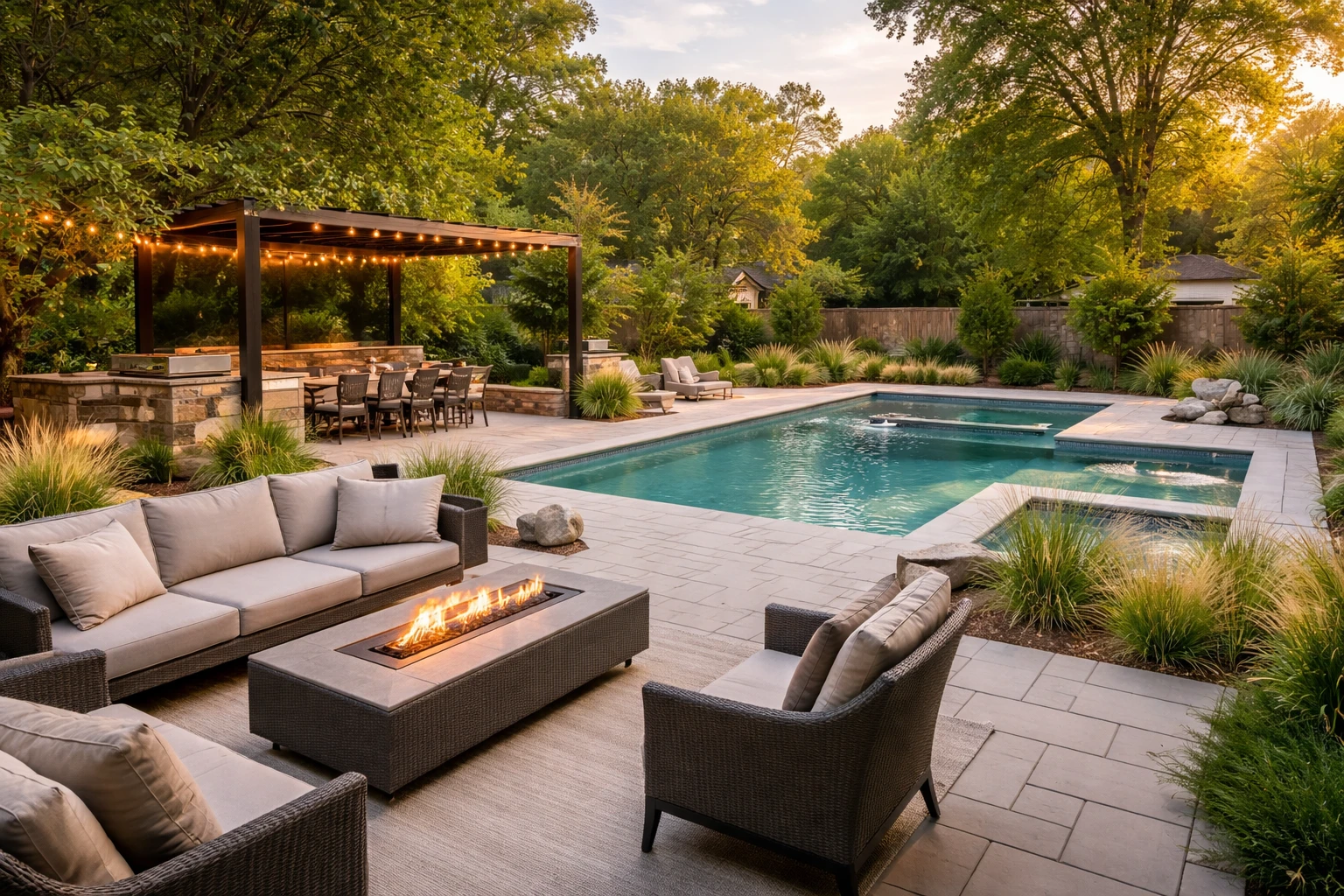
- Gas fire pits over wood-burning
- Built-in seating instead of movable furniture
- Outdoor kitchens with sealed stone surfaces
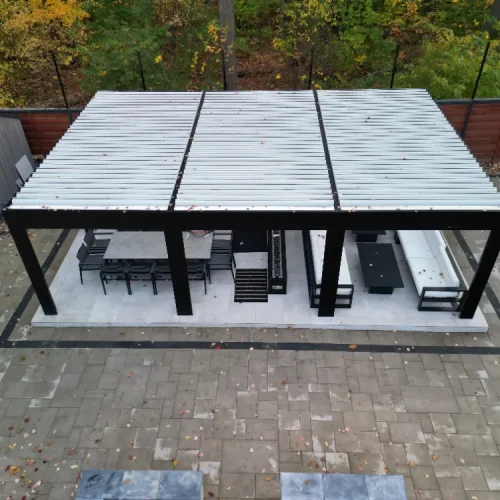
- Pergolas made from aluminum or composite
Avoid features that demand constant adjustment. If it needs babysitting, it doesn’t belong.
Pool Design With Maintenance in Mind
Pools fit naturally into a discussion about long-term maintenance decisions. They’re not inherently high-maintenance. Poorly designed ones are.
Smart pool design focuses on:
- Durable interior finishes
- Automated cleaning systems
- Efficient filtration and pumps
- Hardscaped surroundings to reduce debris
When integrated into a well-planned backyard, a pool can add enjoyment without multiplying weekly work.
Reducing Weekly and Seasonal Upkeep
This is where everything comes together.
A well-designed low-maintenance backyard:
- Doesn’t collect leaves in hidden corners
- Doesn’t turn into mud after rain
- Doesn’t require constant trimming and fixing
- Looks intentional year-round
Most homeowners aim for:
- Light weekly checks
- Monthly touch-ups
- Seasonal refreshes only
That’s realistic. And achievable.
Budgeting for Long-Term Savings
Designing a low-maintenance backyard for busy homeowners often means spending a bit more upfront to save time and money later.
Short-term savings can lead to:
- Frequent repairs
- Replacement materials
- Higher water bills
- More labor over time
Focus spending on:
- Durable surfaces
- Smart irrigation
- Quality installation
- Automation where it matters
Time has value. Design should respect that.
Common Mistakes That Undermine Low-Maintenance Goals
Even well-intentioned projects can miss the mark.
Avoid:
- Overplanting “just to fill space”
- Ignoring drainage entirely
- Choosing trendy materials without considering aging
- Mixing too many materials that require different care routines
Consistency reduces maintenance. Complexity increases it.
Final Thoughts: Build a Backyard That Works for Your Life
Designing a low-maintenance backyard for busy homeowners is really about alignment. Aligning your outdoor space with how you actually live, not how a catalog says you should.
The best backyards don’t shout.
They support.
They give you room to relax instead of another list of tasks. And they hold up through seasons without constant intervention. And they quietly do their job while you enjoy your time.
Design intentionally.
Choose durability over drama.
And build a backyard that gives your weekends back.
FAQs
It means a yard designed to minimize weekly and seasonal upkeep through smart materials, layout, and automation rather than eliminating outdoor features.
Often yes, but the higher upfront cost typically reduces long-term spending on repairs, water, and labor.
Absolutely—native and climate-adapted plants require less water, pruning, and overall care when properly grouped.
Only what you actually use; reducing lawn size significantly cuts mowing, watering, and edging time.
Yes, properly installed hardscapes require minimal cleaning compared to the ongoing care turf demands.
Yes, modern systems adjust automatically based on weather and soil conditions, eliminating manual watering.
They can be when designed with automated cleaning, efficient filtration, and durable surrounding materials.
Untreated wood, loose gravel without edging, and high-maintenance plant varieties often create ongoing work.
Most homeowners spend a few minutes weekly and perform light seasonal upkeep rather than constant care.
Yes, phased upgrades like replacing turf, improving drainage, and adding automation can dramatically reduce upkeep.