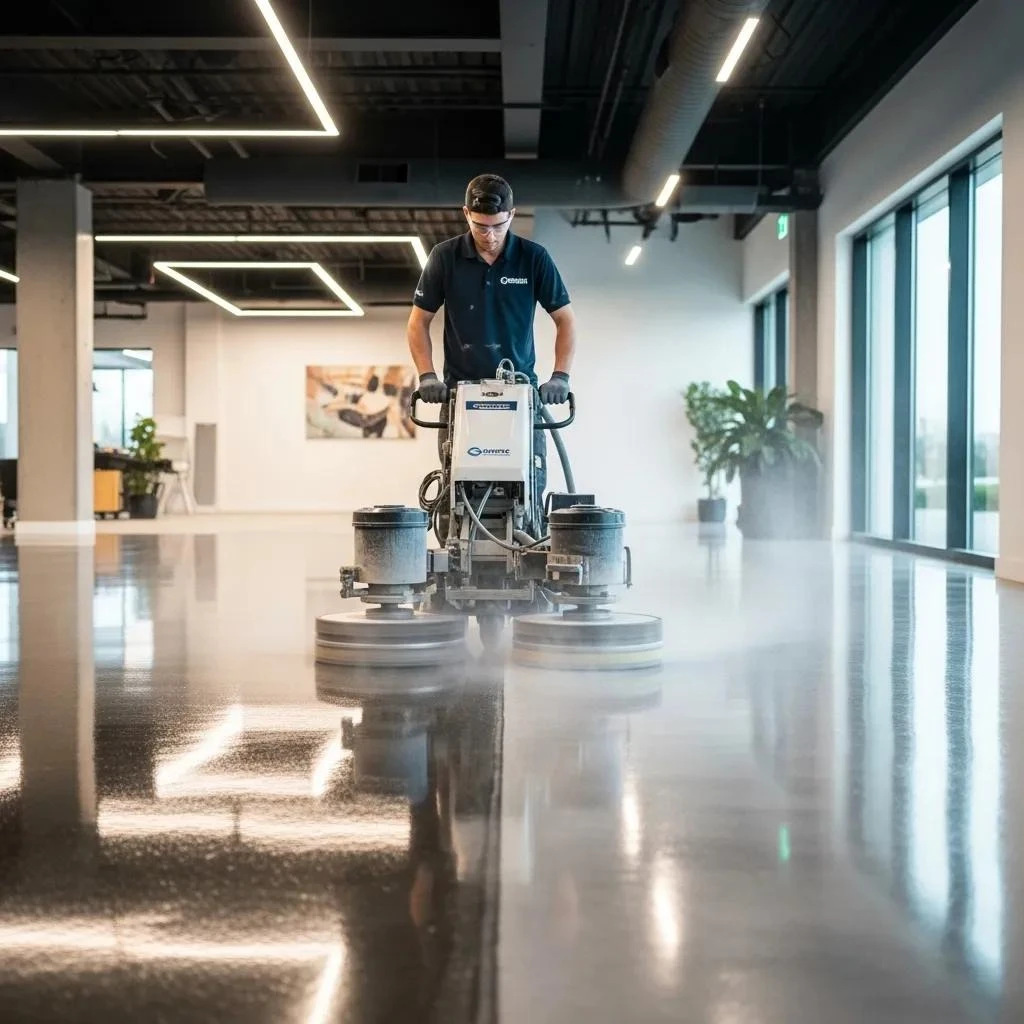
Concrete floor grinding service transforms worn or dull concrete into long‑lasting, attractive floors for homes and businesses. This page breaks down the steps, benefits, and common uses for polishing and grinding – plus what those services mean for upkeep and cost. If you’re dealing with stained, uneven, or tired concrete, these techniques can restore appearance and performance. Read on to learn how the process works, what it costs, and why USA Spray Me is a trusted San Francisco choice for the job.
What are concrete polishing and grinding services?
Polishing and grinding use specialized machinery and abrasives to refine concrete surfaces. Grinding is the prep stage: it levels the slab, removes high spots and coatings, and corrects surface flaws. Polishing follows, using progressively finer diamond pads to bring the concrete to the desired sheen. Together, these steps create a smooth, consistent floor ready for daily use.
Equipment performance and safety matter – newer tools and controls keep the process faster and cleaner for crews and occupants.
Concrete polishing grinders & equipment effectiveness
Research shows respirable crystalline silica exposure drops when grinders are used with local exhaust ventilation (LEV) versus grinders without LEV. LEV systems are an effective control for dust during concrete grinding and polishing.
Respirable crystalline silica dust exposure during concrete finishing (grinding) using hand-held grinders in the construction industry, 2002
How does concrete grinding prepare surfaces for polishing?
Grinding evens the slab and clears away surface issues so polishing can deliver a smooth, consistent finish. The process starts with coarse diamond pads to remove high spots and old coatings, then moves through finer grits as the surface flattens. Grinding also strips stains and debris that would prevent a uniform polish, leaving a clean foundation for the next steps.
Proper technique and safety practices are essential – grinding is a skilled trade that balances surface prep with dust control.
Concrete grinding & polishing: industry practices
Concrete grinding and polishing are usually performed by experienced cement masons or concrete finishers. Controlled methods – including wet grinding or ventilated systems – reduce silica dust and airborne particulates compared with uncontrolled grinding.
What is the process of polished concrete floor restoration?
Restoring a polished concrete floor begins with a site inspection to assess damage and determine repairs. Technicians grind the surface to remove flaws, then progressively polish using finer diamond pads until the chosen sheen is reached. A densifier is applied to harden the concrete, and a sealer or protective coat may be added to extend durability and simplify maintenance. The result is a renewed floor with improved appearance and life span.
What are the benefits of polished concrete floors?
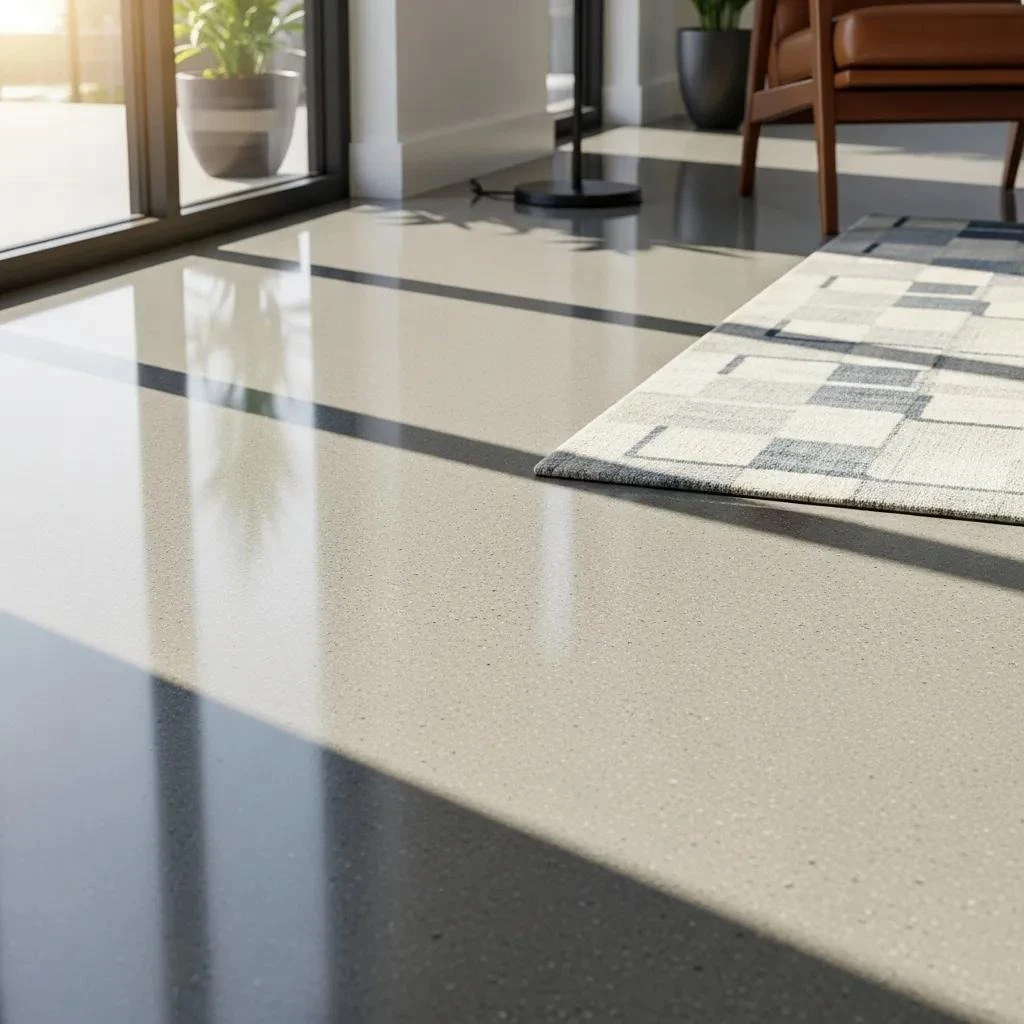
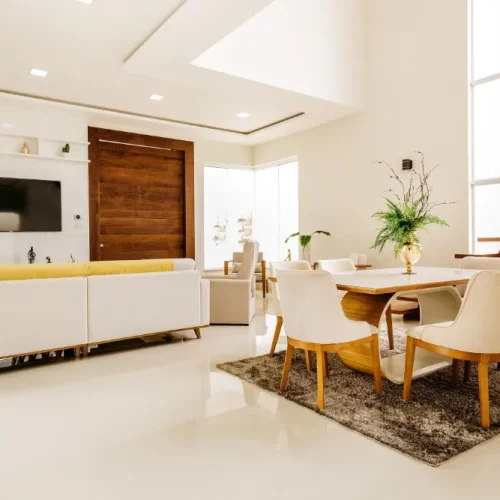
Polished concrete is prized for its durability, low maintenance, and flexible aesthetic options. It stands up to heavy foot traffic, resists wear, and can be finished from satin to high gloss. Because it requires minimal ongoing care and can be customized with stains or aggregates, polished concrete is a cost-effective choice for many spaces.
How do polished concrete floors enhance durability and maintenance?
The polishing and densification process creates a hard, dense surface that resists chipping and abrasion better than untreated concrete. Upkeep is simple: regular sweeping and occasional damp mopping are usually enough. For very busy areas, reapplying a protective polish or sealer every few years helps retain the finish. Overall, polished concrete reduces repair frequency and long-term maintenance costs.
Can polished concrete improve energy efficiency through light reflectivity?
Yes. A smooth, reflective concrete finish increases natural and artificial light bounce, which can reduce lighting needs and related energy costs – especially in commercial or industrial settings. Improved reflectivity also helps brighten interiors without extra fixtures, contributing to a more energy-efficient space.
Which applications are ideal for concrete polishing and grinding?
Polishing and grinding suit a wide range of settings: homes, retail stores, restaurants, warehouses, garages, and industrial facilities. Each environment has different priorities – looks and comfort for residences, or durability and cleanliness for commercial and industrial floors – so the approach is tailored to the use case.
What are the differences between residential and commercial concrete polishing?
Residential polishing emphasizes visual appeal and livability, often including decorative stains or softer sheen levels. Commercial polishing focuses on wear resistance and ease of maintenance for high-traffic zones like showrooms, retail, and offices. Project scope, finish level, and cost vary between residential and commercial work, so we customize the plan to match your goals.
How are industrial floors and garages enhanced by concrete grinding services?
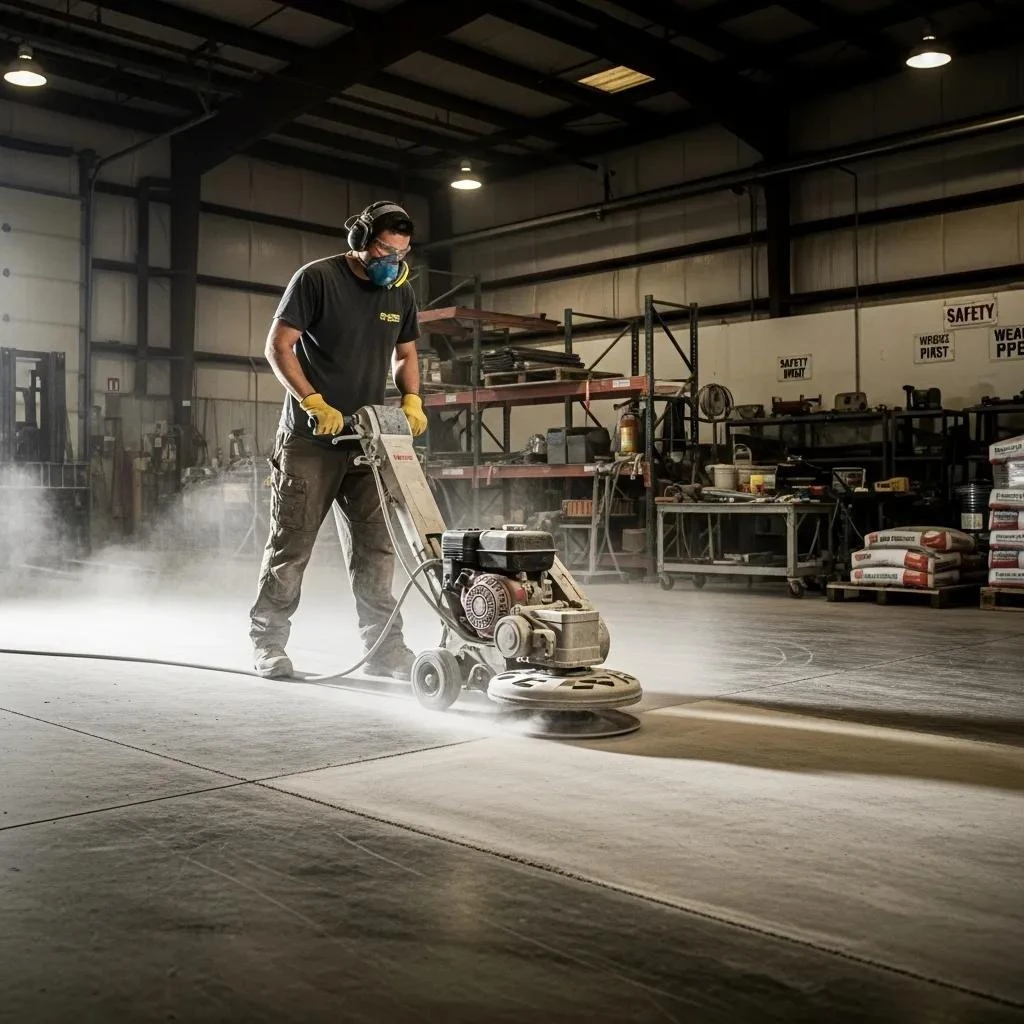
For industrial floors and garages, grinding improves flatness, traction, and cleanliness – important for heavy equipment and frequent use. Grinding removes oil, grease, and surface contaminants, and can be used to add texture for slip resistance. The result is a safer, more durable floor that’s easier to maintain under demanding conditions.
Diamond grinding has a strong track record for restoring surface quality and improving skid resistance, especially in heavy-use settings.
Diamond grinding: cost-effective concrete restoration & skid-resistance
Advances in diamond blades and grinding machines over recent decades have made diamond grinding a practical, cost-effective method to restore surface quality and skid resistance on sound concrete pavement. Guidance from past restoration projects helps determine when grinding is appropriate and how to maximize longevity.
Restoration of Final Surface to Concrete Pavement by Diamond Saw Grinding, 1985
How much does concrete polishing cost per square foot in the Bay Area?
Pricing in the Bay Area depends on project size, chosen finish, and site conditions. Typical ranges are about $3 to $12 per square foot for concrete polishing.
What factors influence the pricing of concrete polishing and grinding?
Price depends on several factors:
- Size of Area: Larger jobs often lower the per‑square‑foot cost due to efficiency.
- Type of Finish: Matte, satin, or high‑gloss finishes require different labor and grit progression, which affects price.
- Complexity of Job: Extensive repairs, patching, or removal of old coatings increases preparation time and cost.
How does polished concrete compare cost-wise to epoxy flooring?
Polished concrete often proves more economical over time. While epoxy can have similar upfront costs, polished concrete typically needs less maintenance and lasts longer without recoating. Its durability and low upkeep can make it a better long‑term value for many property owners.
Why choose USA Spray Me for concrete polishing & grinding in San Francisco?
Picking the right contractor makes a big difference in the final look and durability of your floors. USA Spray Me combines local experience, proven techniques, and attention to detail to deliver reliable results across residential and commercial projects in San Francisco.
What unique value does USA Spray Me bring to concrete floor services?
We bring hands‑on experience, modern equipment, and quality materials to every job. Our crew focuses on clear communication, accurate assessments, and finishes that meet your aesthetic and performance goals. Outside of concrete services, we also offer insulation solutions – including spray polyurethane foam – to help improve building comfort and efficiency.
How can customers request a free inspection and quote?
Requesting a free inspection and quote is simple. Contact us to describe your project and schedule an on‑site assessment. We’ll review the floor condition, recommend the best approach, and provide a clear estimate tailored to your needs.
Frequently Asked Questions
Polished concrete is low maintenance: regular sweeping and occasional damp mopping keep it clean. Avoid harsh, abrasive cleaners that can dull the finish. In high‑traffic areas, applying a maintenance polish or sealer every few years will help preserve shine and protection. Quick spill cleanup prevents staining and keeps the floor looking its best.
Often, yes – provided the existing floor is structurally sound and can be prepared appropriately. That may mean grinding or leveling the current surface before polishing or applying a bonded topping. A professional assessment will determine whether polishing the existing floor is practical and cost‑effective.
Polished concrete can be a sustainable choice: it improves light reflectivity (reducing lighting needs), often uses the existing slab (cutting material waste), and has a long service life that lowers replacement frequency. Because it requires less ongoing maintenance and fewer coatings, it can also reduce chemical use over time.
Polished concrete can be slippery when wet, but the slip risk is manageable. We can add texture or non‑slip treatments during polishing and recommend appropriate maintenance to avoid residue buildup. Your intended use and traffic type guide the level of slip resistance we recommend.
Timeline varies by area size, concrete condition, and finish level. A typical residential project often finishes in one to three days. Larger commercial jobs take longer because of scale and prep needs. After an inspection, we’ll give a realistic timeline for your specific project.
Expect a thorough walkthrough: we’ll evaluate the slab, discuss your finish and performance goals, explain available options, and outline the process, timeline, and costs. This meeting is a chance to ask questions and make sure the plan aligns with your needs and budget.
Conclusion
Concrete polishing and grinding deliver durable, low‑maintenance floors that improve both appearance and performance across residential and commercial spaces. If you’re ready to upgrade your concrete, contact USA Spray Me for a free inspection and quote – we’ll help you choose the right finish and deliver professional results that last.