This post contains affiliate links. As an Amazon Associate, I earn from qualifying purchases, at no extra cost to you. See our disclosure policy.
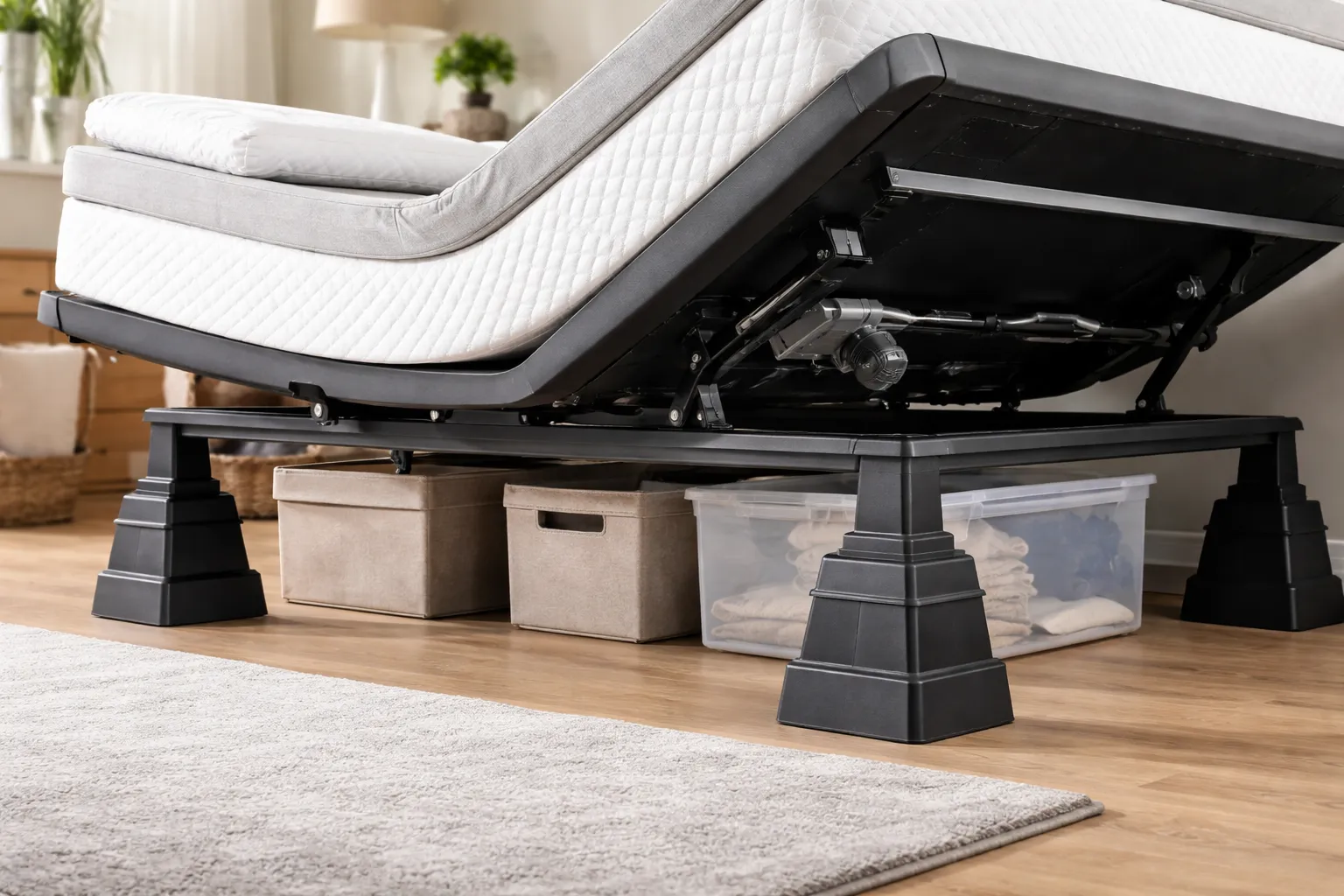
Adjustable beds changed how we sleep. They lift. They tilt. And they adapt. But here’s where things get tricky. Many people still want height. More clearance. Extra storage. Easier access getting in and out of bed. That’s where the question comes in—and it comes up a lot: can you safely use bed risers for adjustable base setups?
Short answer? Sometimes.
Long answer? Only if you understand the mechanics, the risks, and the smarter alternatives. I’ve seen too many people crack frames, strain motors, or void warranties chasing a few extra inches. Let’s walk through this the right way.
Why Adjustable Beds and Height Don’t Always Agree
Adjustable bases are designed to move. Not just up and down—but forward, backward, and at shifting angles. That movement changes everything about how weight is distributed.
A traditional bed frame sits still. Four legs. Flat surface. No motors. No articulation. That’s why bed risers were originally created for simple setups like dorm beds and metal frames.
An adjustable base is different.
When you raise the head or foot, the center of gravity shifts. Add bed risers for adjustable base setups without accounting for that movement, and you’re introducing leverage where stability is required.
That doesn’t mean height is impossible. It just means shortcuts get expensive fast.
What Bed Risers Are Designed to Do
Bed risers are simple tools with a very specific purpose.
They lift a bed higher off the ground. That’s it.
Common Bed Riser Materials
- Heavy-duty molded plastic
- Steel or aluminum
- Solid or laminated wood
Typical Height Options
| Riser Height | Best For |
| 2–3 inches | Minor clearance adjustments |
| 5 inches | Storage bins, light-duty beds |
| 8 inches | Dorm beds, fixed metal frames |
The key phrase here is fixed frames. Bed risers assume the bed will not move once weight is applied. Adjustable bases violate that assumption immediately.
How Adjustable Bases Actually Work (And Why It Matters)
Inside every adjustable base are motors, joints, hinges, and load-bearing arms. These components work together to lift sections of the mattress independently.
When the base moves:
- Weight shifts toward the head or foot
- Pressure increases on individual legs
- Torque increases during transitions
That’s normal. The base is engineered for it.
What it’s not engineered for is unstable elevation points that can flex, slide, or compress under dynamic load. This is where most bed riser failures happen.
Can You Use Bed Risers for Adjustable Base Systems?
This is the question everyone wants answered directly, so let’s do that.
The Honest Answer
Most manufacturers do not recommend using bed risers for adjustable base frames.
And in many cases, doing so will:
- Void your warranty
- Increase motor wear
- Reduce overall stability
- Create tipping or sliding risks
That doesn’t mean every scenario is impossible. But it does mean you need to proceed with caution and clarity—not optimism.
The Biggest Safety Risks You Need to Understand
This isn’t fear-mongering. These are real-world outcomes I’ve seen repeatedly.
1. Stability Loss
When the head of the bed lifts, weight shifts backward. Risers amplify that shift. Even slight movement can become exaggerated over time.
2. Motor Strain
Motors are calibrated for specific leg heights. Raising the base externally changes the leverage ratio, forcing motors to work harder during articulation.
3. Weight Capacity Miscalculations
Most people forget to calculate:
- Mattress weight
- Body weight
- Bedding
- Movement load
Add risers, and suddenly the stress on each leg increases unevenly.
4. Floor Damage
Hardwood and tile floors suffer most. Small riser footprints concentrate pressure, especially when the base moves.
Rare Situations Where Bed Risers Might Work
There are exceptions. They’re uncommon, but they exist.
Situations That May Allow Bed Risers for Adjustable Base Use
- Adjustable bases with removable, threaded legs
- Manufacturer approval for third-party height extensions
- Low-profile risers rated for extreme static and dynamic loads
- No head or foot articulation (zero-movement mode)
Even in these cases, stacking risers or improvising with furniture blocks is a hard no. Always.
Why DIY Solutions Fail Fast
I get the temptation. I really do.
A stack of wood blocks. Extra risers from a couch. “It feels sturdy.”
Until it doesn’t.
DIY risers fail because:
- They aren’t load-rated
- They compress unevenly
- They shift under vibration
- They lack lateral grip
An adjustable base doesn’t forgive mistakes slowly. It does it all at once.
Better Alternatives to Bed Risers for Adjustable Base Setups

This is where smart solutions shine.
1. Adjustable Base Leg Extensions
Many manufacturers sell taller legs designed for their base. These maintain:
- Thread compatibility
- Weight rating
- Stability geometry
This is the safest way to add height.
2. Platform Beds Built for Adjustable Bases
Some platform frames are designed to hold the base inside a recessed structure, adding height without lifting the legs themselves.
3. Taller Mattresses
A thicker mattress can add 2–4 inches without affecting mechanics at all.
Storage Without Using Bed Risers
Let’s talk about the real reason most people want height. Storage.
You still have options.
Smart Storage Alternatives
- Under-bed rolling drawers designed for low clearance
- Vacuum-sealed bags for seasonal items
- Slim-profile bins made for adjustable bases
- Bedside vertical storage cabinets
Sometimes the answer isn’t raising the bed—it’s changing what you store.
How to Increase Bed Height Safely
Height isn’t just about storage. It’s about comfort, accessibility, and aesthetics.
Measure Before You Modify
Ideal bed height allows your feet to rest flat on the floor when seated. For most adults, that’s 20–25 inches from floor to mattress top.
Ways to Adjust Height Without Risk
- Choose a thicker mattress
- Use manufacturer-approved taller legs
- Select a higher-profile adjustable base model
- Adjust room layout instead of bed height
Every inch matters. But how you gain it matters more.
What to Look for When Buying an Adjustable Base
If height flexibility matters to you, shop accordingly.
Features to Prioritize
- Multiple leg height options
- Clear warranty language on modifications
- High dynamic weight capacity
- Wide, non-slip leg bases
Ask the uncomfortable questions before buying. Future-you will thank you.
Common Mistakes That Cause Regret
Let’s call these out clearly.
- Using universal bed risers without checking compatibility
- Ignoring motor clearance under the frame
- Exceeding weight limits quietly
- Prioritizing storage over safety
Every one of these leads to the same outcome. Repairs. Or replacement.
Final Verdict: Should You Use Bed Risers for Adjustable Base Frames?
Here’s my honest recommendation.
If your adjustable base wasn’t designed for risers, don’t force it. Bed risers for adjustable base setups look like an easy win, but they introduce risk where precision matters.
There are smarter ways to get height. Safer ways. Ways that don’t gamble with motors, stability, or warranties.
A good adjustable bed is an investment in sleep and health. Treat it like one.
If you want extra inches, earn them the right way.
FAQs
In most cases, bed risers are not recommended unless the manufacturer explicitly approves them.
Yes, risers can increase motor strain by altering weight distribution during movement.
Most warranties are voided if unapproved modifications like bed risers are used.
They reduce risk slightly but still introduce instability and are rarely approved.
Most want extra storage space or easier access getting in and out of bed.
Using manufacturer-approved leg extensions or a thicker mattress is safest.
No, stacking risers dramatically increases tipping and structural failure risk.
Yes, motors and moving parts require proper clearance to operate safely.
Some models offer multiple leg height options or tall-leg upgrades.
Often yes, as alternative storage avoids mechanical and safety issues.