This post contains affiliate links. As an Amazon Associate, I earn from qualifying purchases, at no extra cost to you. See our disclosure policy.
As the vibrant greens of summer transition into the amber hues of autumn, property managers, golf course superintendents, and municipal directors face a critical window of opportunity. While many view the colder months as a time for dormancy, Water Dredging professionals know that fall is actually the most strategic season for aquatic upkeep.
Neglecting a pond or lake during the transition into winter doesn’t just result in an eyesore; it sets the stage for “Spring Shock”—a cycle of massive algae blooms, foul odors, and equipment failure that can be incredibly costly to remediate. Many property owners ask, “what is dredging?” and how can it help; simply put, it is the process of removing the accumulated “muck” and debris that fuel these springtime issues. By taking proactive steps now, you can safeguard your water feature’s health and ensure a pristine appearance when the first thaw arrives.
Here is how you can effectively winterize your water features and Effectively winterizing your water features is simple with these steps:
1. Address the Foundation: Deep-Cleaning via Hydraulic Dredging
The single most important factor in a pond’s health is its depth and the composition of its floor. Throughout the year, organic debris, lawn runoff, and fish waste settle at the bottom, creating a layer of “muck.”
Why do this in the fall?
When temperatures drop, the rate of decomposition slows down. However, that muck remains a concentrated source of nitrogen and phosphorus. If left in place over winter, these nutrients will sit under the ice or in the cold water, ready to “explode” into a massive algae bloom the moment the sun hits the water in March.
Our expert crews utilize advanced hydraulic dredging technology to vacuum out this organic sediment without draining your pond or destroying your shoreline. This process:
- Restores Water Volume: Ensuring your pond can handle winter snowmelt and spring rains.
- Improves Clarity: Removing the fuel source for invasive aquatic weeds.
- Recycles Waste: The nutrient-rich slurry we remove can often be repurposed as high-quality topsoil for other areas of your property.
2. Strategic Debris Management and Shoreline Buffers
In many regions, the biggest threat to water quality during the fall is the “leaf drop.” While a few leaves are natural, the volume produced by surrounding trees can quickly overwhelm a pond’s ecosystem. As leaves decay, they consume dissolved oxygen—oxygen that your fish and beneficial bacteria need to survive the winter.
To mitigate this, we recommend a dual-pronged approach:
- Active Removal: Skim the surface regularly to prevent leaves from sinking and turning into muck.
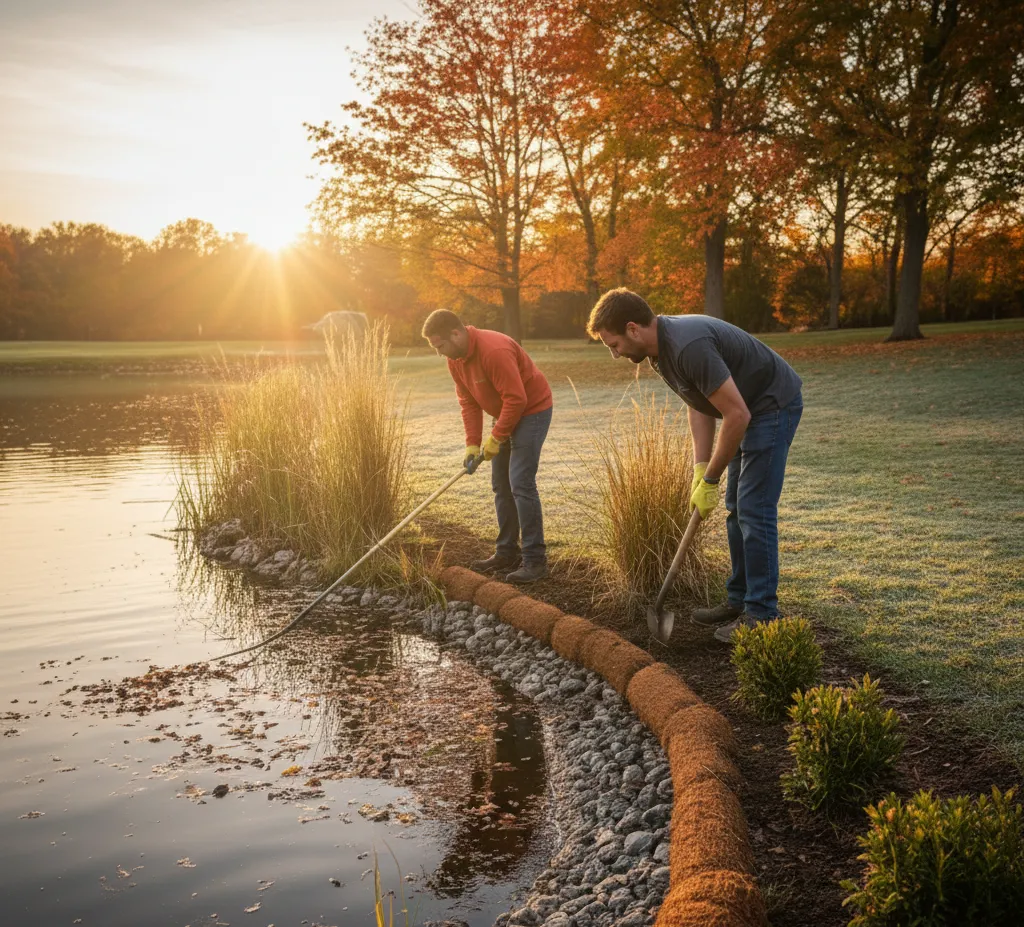
- Vegetation Buffers: If you find yourself constantly battling debris, consider the “Long-Term Fix.” Planting a 3-to-4-foot buffer of native grasses and plants around the perimeter acts as a natural filter, trapping leaves and windblown trash before they ever reach the water.
3. Fortifying the Shoreline Against Erosion
Winter weather—particularly the cycle of freezing and thawing—is incredibly harsh on pond banks. Saturated soil can expand and contract, leading to significant erosion and bank collapse by springtime.
Autumn offers the ideal climate for shoreline restoration. If you are researching “how do I stop pond bank erosion?” before the spring rains, fall is the time to install native plantings or rip-rap that will stabilize the soil through the freeze-thaw cycle.
4. Mechanical Audits: Protecting Your Investment
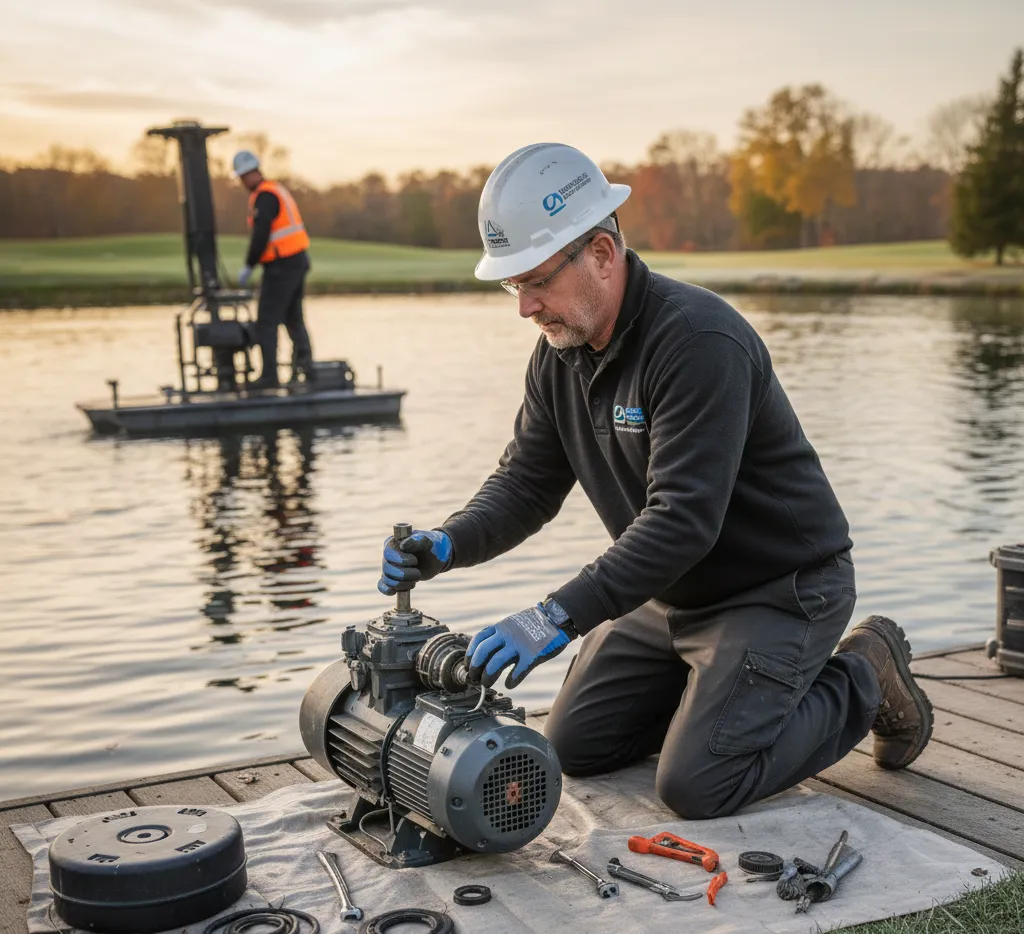
Fountains, aerators, and pump systems are the “heart” of your water feature. Ice and freezing temperatures are their greatest enemies. Before the first hard frost, a comprehensive mechanical audit is non-negotiable.
- Seal and Gasket Checks: Fountain seals generally have a lifespan of 2 to 3 years. We recommend replacing them during the fall to prevent water from entering the motor housing during the winter.
- De-icing and Storage: In northern climates, floating fountains should be removed, cleaned, and stored indoors. If you utilize an aerator to keep a hole open in the ice for fish, ensure the compressor is serviced and the lines are clear of condensation.
- Parts Inventory: Global supply chains can still be unpredictable. We advise our clients to stock up on essential wear-and-tear parts (like air filters and vanes) now to avoid long shipping delays during a winter emergency.
5. Managing the Aquatic Ecosystem
If your pond is used for fishing or aesthetic enjoyment, fall is the “Golden Hour” for fish stocking. For those looking to add cold-water species like trout, the cooling water temperatures provide the highest survival rates.
However, it is vital to adjust your feeding schedule. As the water temperature drops, the metabolism of warm-water species (like bass or bluegill) slows significantly. Overfeeding in late fall leads to wasted food sinking to the bottom, which only adds to the muck layer we worked so hard to remove.
Final Thoughts: Don’t Wait for the Thaw
Preventative measures are paramount in aquatic management; the truth of the adage, “an ounce of prevention is worth a pound of cure,” has never been clearer. A pond that is properly cleared, dredged, and serviced in the fall will be a source of neighborhood pride come spring. Ignoring a pond, however, is a liability. If this all seems like too much work for you or if you have a remote rental property, then investing in a reputable Water Dredging Company now will pay significant dividends down the road.
FAQs
Fall allows you to remove debris and nutrients before they fuel algae blooms in spring, while cooler temperatures make maintenance more effective and less disruptive.
Spring shock refers to sudden algae blooms, foul odors, and equipment strain caused by nutrients and debris left untreated over winter.
Dredging removes accumulated muck and organic sediment from the pond bottom, improving water depth, clarity, and overall ecosystem health.
Yes, modern hydraulic dredging removes sediment while keeping water in place and minimizing shoreline disturbance.
Decaying leaves consume oxygen and add nutrients to the water, which can stress fish and contribute to muck buildup.
Native grasses and plants trap leaves, runoff, and debris before they enter the pond, acting as a natural filtration system.
Freeze-thaw cycles expand and contract saturated soil, weakening banks and leading to erosion or collapse by spring.
Cold temperatures and ice can damage seals, pumps, and motors, so fall servicing prevents costly repairs and downtime.
Yes, cooler water temperatures reduce stress and increase survival rates, especially for cold-water species like trout.
Neglecting fall maintenance often leads to higher spring cleanup costs, poor water quality, and long-term damage to the pond ecosystem.