A swimming pool is more than just a place to cool off it is a space where families unwind, friends gather, and memories are created. Like any part of a home, a pool needs proper care to stay in good condition. Over time, constant use, weather exposure, and aging materials can cause different problems to appear. If these issues are ignored, they can turn into serious damage and expensive repairs. Understanding the most common pool problems helps homeowners take timely action and keep their pool safe, functional, and enjoyable for years.
Pools operate as complex systems made up of structural components, plumbing, electrical elements, and mechanical equipment. When one part begins to fail, it often places stress on others. This is why recognizing early warning signs is just as important as knowing which problems are most common.
Pool Water Leaks and Loss of Water
One of the most common problems pool owners face is water leakage. If the water level drops faster than normal, it is often a sign that something is wrong. Leaks may develop due to cracks in the pool shell, damaged underground pipes, or worn-out fittings and seals. Even a small leak can weaken the pool structure and waste a large amount of water over time. This is why professional pool repair is important, as early detection can prevent major damage and reduce repair costs.
In addition to visible water loss, leaks can also cause surrounding soil erosion, which may lead to deck sinking or structural instability. Many leaks are hidden and difficult to locate without proper equipment, making professional inspection essential.
Cracks in Pool Surfaces and Structural Damage
Cracks in the pool surface are another frequent issue, especially in concrete or plaster pools. These cracks can be caused by temperature changes, soil movement, or poor construction techniques. While hairline cracks may seem harmless at first, they can expand and allow water to seep into the structure. Addressing surface cracks through timely pool repair helps protect the pool’s foundation and ensures swimmer safety.
Surface cracks can also trap algae and bacteria, making the pool harder to clean and maintain. Left untreated, they may lead to larger structural failures that require extensive renovation instead of simple repairs.
Pool Pump and Filter System Problems
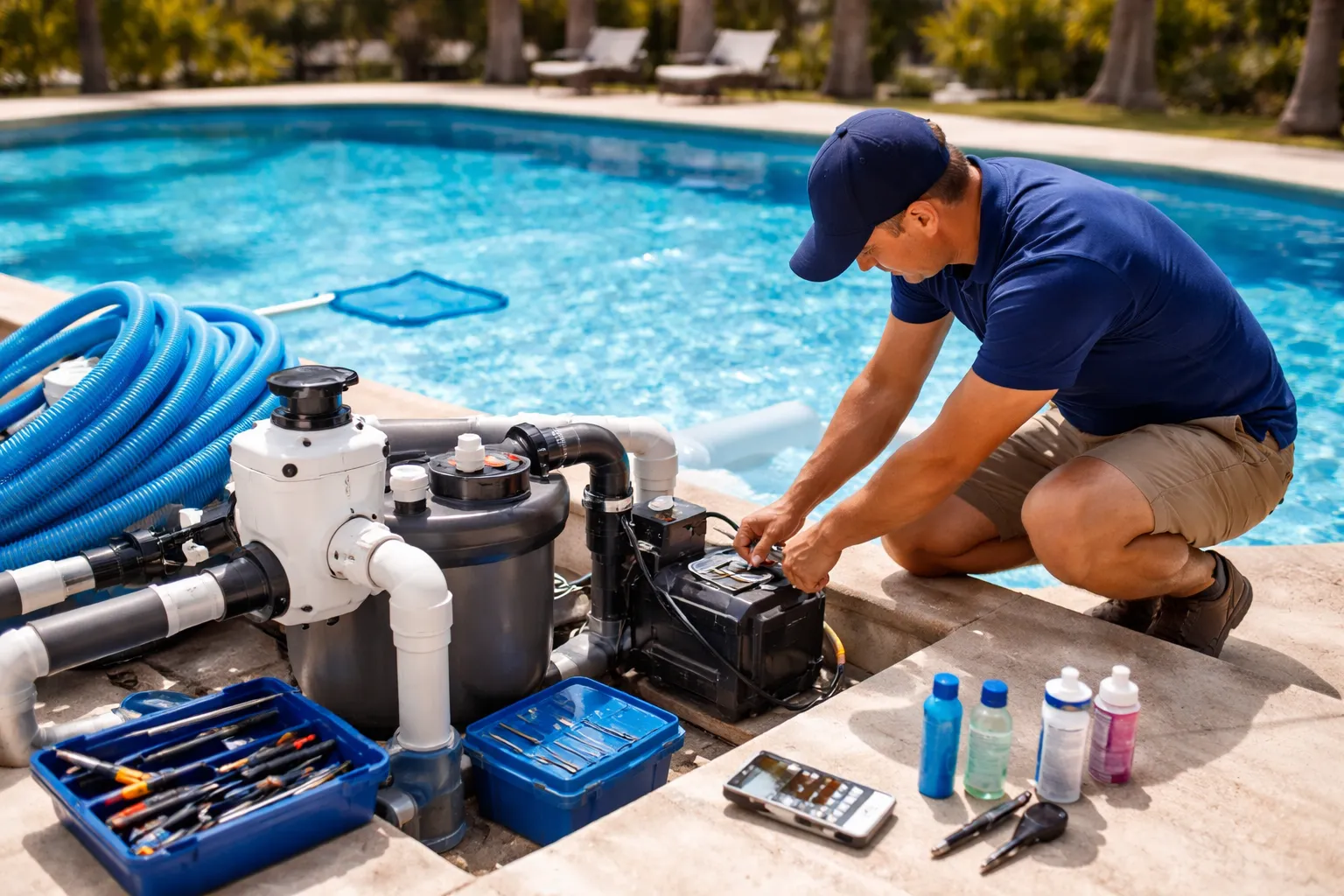
Pool pump and filter issues are also very common. The pump and filter system is responsible for circulating and cleaning the water. When these components stop working properly, water can quickly become cloudy, dirty, and unsafe. Signs of trouble include weak water flow, strange noises, or poor filtration. Regular inspection and proper pool repair keep the system running smoothly and maintain clean water.
A failing pump can also increase energy costs, as inefficient equipment often runs longer than necessary. Timely repairs or part replacements help extend the lifespan of pool equipment and improve overall efficiency.
Broken, Loose, or Missing Pool Tiles
Broken or loose pool tiles are another issue many homeowners encounter. This often happens due to water pressure, chemical imbalance, or low-quality installation. Damaged tiles can make the pool look unattractive and may cause injuries if swimmers come into contact with sharp edges. Replacing or repairing tiles is an essential part of professional pool repair and helps maintain both safety and appearance.
Tile damage may also indicate underlying moisture problems behind the pool walls. Addressing the root cause prevents repeated tile failures and protects the pool structure.
Pool Heater Malfunctions and Heating Issues
Pool heaters can also develop problems, particularly after long-term use. Common issues include uneven heating, failure to heat the water, or error messages on the control panel. These problems may result from electrical faults, gas supply issues, or worn components. Because heaters involve technical systems, expert pool repair services are the safest option.
A malfunctioning heater can shorten the swimming season and increase utility bills. Professional diagnosis ensures the heater operates safely and efficiently without risking further damage.
Poor Pool Water Chemistry and Circulation Problems
Another overlooked issue is poor water chemistry balance. When chemical levels are incorrect, algae growth, skin irritation, and cloudy water can occur. While this may seem like a simple maintenance problem, it often points to filtration or circulation issues that need professional attention. Pool repair specialists can identify and fix the underlying cause.
Imbalanced water chemistry can also damage pool surfaces, equipment, and plumbing over time. Correcting circulation and filtration problems helps maintain stable chemical levels and protects the entire system.
Pool Electrical and Lighting Issues
Electrical and lighting issues are also common in modern pools. Flickering lights or malfunctioning systems can be dangerous and should always be handled by trained professionals.
Water and electricity are a dangerous combination, making professional pool repair essential for any electrical concern. Proper repairs ensure safety compliance and reliable operation of lighting and automation systems.
Why Timely Pool Repair Matters
In conclusion, pool problems are a normal part of ownership, but ignoring them can lead to costly repairs. Regular inspections and timely pool repair help protect your investment and keep your pool enjoyable.
Addressing issues early not only saves money but also extends the lifespan of your pool. Professional pool repair services provide peace of mind by ensuring your pool remains safe, efficient, and ready to enjoy year after year.
FAQs
The most common pool repair issues include leaks, surface cracks, pump or filter failures, tile damage, heater problems, and electrical issues.
If your pool water level drops faster than normal and evaporation is ruled out, a leak in the shell, plumbing, or fittings may be present.
Even small cracks can grow over time and allow water to damage the pool structure, making early pool repair important.
Pump problems are often caused by wear and tear, clogged filters, electrical issues, or poor circulation.
Cloudy water can result from chemical imbalance, but it may also indicate filtration or circulation problems that require professional pool repair.
Tile damage is commonly caused by water pressure changes, improper installation, or unbalanced pool chemistry.
A heater should be inspected if it fails to heat evenly, stops working, or displays error codes during operation.
Yes, electrical and lighting issues in pools are serious safety risks and should always be handled by licensed professionals.
Most pools benefit from a professional inspection at least once a year to catch repair issues early.
Yes, addressing problems early helps prevent structural damage and costly emergency repairs later.