This post contains affiliate links. As an Amazon Associate, I earn from qualifying purchases, at no extra cost to you. See our disclosure policy.
For generations, the playbook for selling a home has been consistent: Paint the front door, plant fresh flowers, declutter the living room, and maybe bake some cookies before the open house. We call this “Curb Appeal”—the art of making a property look irresistible at first glance.
But in the 2026 real estate market, the “first glance” rarely happens at the curb. It happens in the complex, algorithmic brain of an Artificial Intelligence.
As we settle into a “normalized” post-pandemic housing market—where inventory levels are rising and days-on-market are ticking upward—the rules of engagement have changed. Physical staging is still crucial, but it has been superseded by a new, invisible requirement: Digital Discoverability.
In this article, we will explore why the most beautiful home on the block might be invisible to modern buyers, and how sellers and agents can use new AI strategies to ensure their property gets found in a crowded digital world.
The 2026 Market: A “Sea of Sameness”
To understand why marketing strategies must change, we first have to look at the numbers. The 2026 U.S. housing market is defined by a “strategic equilibrium.” After years of volatility, experts forecast a modest price appreciation of 2% to 4% and a significant rebound in inventory, with active listings in many metros returning to or exceeding 2020 levels.
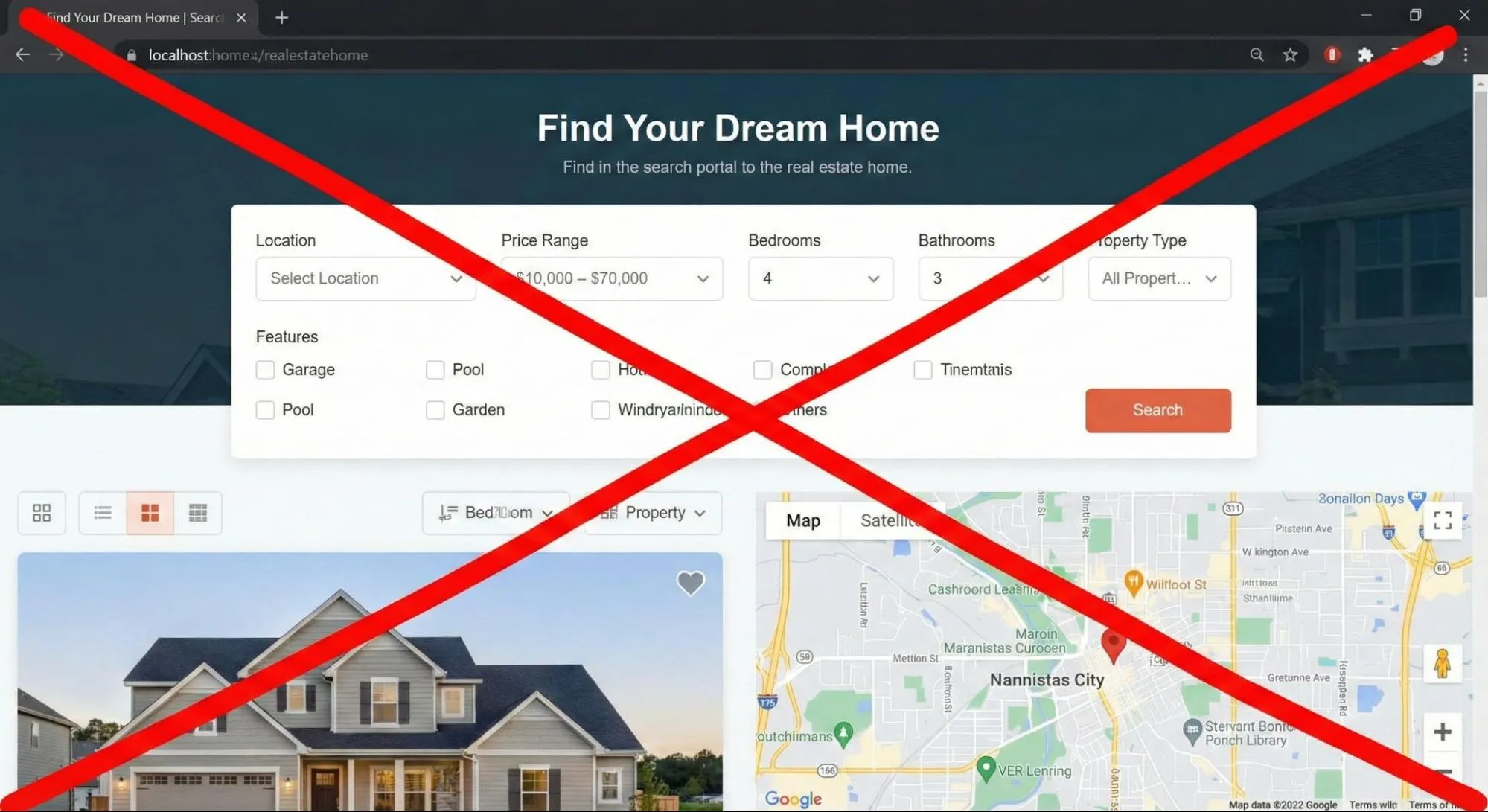
While this is good news for buyers, it creates a massive challenge for sellers. With nearly 30,000 active listings in major metro markets, buyers are suffering from “portal fatigue.” They open Zillow or Realtor.com, filter for “3 Bed, 2 Bath,” and are bombarded with hundreds of results that look virtually identical.
In this environment, “being listed” is not the same as “being seen.” A home with stunning mid-century modern architecture might be buried on page 14 of the search results simply because it doesn’t fit the rigid square-footage filters of a legacy search engine. This is the Discoverability Gap, and it is the primary reason why well-priced, beautiful homes are sitting on the market for an average of 57 days.
The Shift: From “Keywords” to “Conversations”
The way we search for information has fundamentally changed. Ten years ago, a homebuyer would type “Homes for sale Dallas 75201” into a search bar. Today, influenced by tools like ChatGPT, Gemini, and advanced search AI, that same buyer is asking:
“Where can I find a low-maintenance, hurricane-safe community in a beach-accessible area that is good for retirees?”
This is not a keyword search; it is an intent-driven conversation. The buyer isn’t just looking for a structure; they are looking for a lifestyle solution. Research shows that these “long-tail” queries (specific, detailed questions) represent the highest-intent buyers in the market. A buyer asking for a “solar-powered home with an ADU for aging parents” is far more ready to transact than someone typing “house for sale.”
The Problem for Sellers
The problem is that traditional Multiple Listing Services (MLS) are not built for conversation. They are built for checkboxes (Beds: 3, Baths: 2). If your home has incredible “niche” value—say, it’s perfect for multi-generational living or has high-ground elevation for climate safety—that data is often buried in the paragraph text where standard search filters can’t find it.
To the AI search engine, your unique home looks exactly like the generic tract house next door. This is where “Digital Staging” comes in.
Physical Staging vs. Digital Discoverability
Most sellers understand (before or after that advice comes from their agent) Physical Staging: arranging furniture to show off the flow of a room. Fewer understand Digital Discoverability: structuring the data of a listing so that AI tools recognize it as the “answer” to a buyer’s question.
Think of it this way:
- Physical Staging convinces the buyer to offer after they walk in the door.
- Digital Discoverability ensures the buyer finds the door in the first place.
In 2026, agents need to move beyond standard SEO (Search Engine Optimization) and embrace AEO (Answers Engine Optimization). This means creating listing content that explicitly answers the “who, what, and why” of the property.
Actionable Strategies for Sellers and Agents
If you are planning to sell your home this year, or if you are an agent looking to differentiate yourself, here is how you build a “Discoverability” strategy.
1. Audit Your Listing for “The Why”
Review your property description. Does it only list features (“Granite countertops, new roof”), or does it describe the life those features enable?
- Weak: “Backyard has a fence and a shed.”
- Strong: “Secure, pet-friendly backyard ideal for large dogs, with ample storage for kayaking and outdoor gear.”
The second description signals to AI that this home is a match for queries like “dog friendly homes with outdoor storage.”
2. Build “Collection” Pages
One of the most powerful tools in modern real estate technology is the Collection Page. Instead of letting a listing float alone in the MLS database, savvy brokerages group properties into curated collections based on high-intent searches. Examples include:
- “Hurricane-Safe Condos in Coastal Communities”
- “North Dallas Homes Near Hiking Trails”
- “Urban Lofts with Dedicated Home Offices”
By grouping listings this way, you create a “landing pad” for specific search queries. When a buyer asks Google for a “safe coastal condo,” a dedicated collection page has a much higher chance of ranking than a single property listing.
3. Leverage AI Tools like Deli
This is where technology bridges the gap. Innovative startups like Deli are helping agents automate this discoverability process. Deli acts as a layer between the raw inventory and the AI search engines. It indexes properties based on the “why” behind the buy—identifying niche attributes like “climate resilience,” “work-from-home readiness,” or “investment potential.”
By using a platform like Deli, agents can ensure their listings are “digitally staged” to appear in long-tail, conversational search results. It’s the difference between hoping a buyer finds you and ensuring the AI recommends you.
Here is an example of an AEO specific Collection Page for the Florida real estate market:
St. Augustine Waterfront Homes with Boat Access in Navigable Waters
How to Choose the Right “Discoverability Focused” Agent in 2026
If you are a homeowner preparing to sell, the interview process for finding an agent needs to change. Don’t just look at their “Just Sold” postcards. Ask them about their data strategy.
Three questions to ask a potential listing agent:
- “How do you handle ‘long-tail’ buyer searches?” If they look confused, they may still be relying on outdated “spray and pray” marketing methods.
- “Do you use ‘Collection Pages’ to market lifestyle niches?” Ask them if they group inventory to target specific buyer personas (e.g., retirees, investors, first-time families).
- “Are you using AI discoverability tools?” Specifically, ask if they are using platforms like Deli to ensure your home is visible to the new generation of AI-powered search engines.
The Future is Specific
The era of generic mass marketing is fading. The 2026 real estate market is all about specificity. Buyers know exactly what they want, and they are using powerful AI tools to find it. For sellers, the goal is no longer just to be “on the market”—it is to be the definitive answer to a buyer’s question.
Whether you are improving your physical curb appeal with a fresh coat of paint or improving your digital curb appeal with long-tail metadata, the principle remains the same: You have to stand out to sell. By embracing these new buying and selling strategies, you can ensure your property doesn’t just sit on a server…it gets discovered, loved, and sold.
FAQs
Digital discoverability is how easily a home appears in AI-driven and conversational searches, based on intent, lifestyle, and use cases rather than basic MLS filters.
Curb appeal attracts buyers once they see the home, while digital discoverability ensures buyers and AI tools find the listing in the first place.
With higher inventory and longer days on market, listings must stand out in crowded search results or risk being overlooked entirely.
The discoverability gap occurs when unique home features are invisible to AI search engines because they are buried in unstructured listing descriptions.
Instead of short keywords, buyers now ask detailed, conversational questions focused on lifestyle needs, safety, and long-term usability.
AEO, or Answers Engine Optimization, structures listings to directly answer buyer questions so AI tools can surface them as relevant solutions.
A collection page groups homes by lifestyle or intent, helping listings rank higher for specific, high-intent buyer searches.
Not well, because MLS systems prioritize fixed data fields and often fail to capture nuanced, lifestyle-driven attributes.
Sellers should reframe descriptions around “why” the home fits specific buyers and work with agents using AI-focused marketing tools.
They should choose agents who understand long-tail searches, use curated collection pages, and leverage AI platforms to enhance listing visibility