This post contains affiliate links. As an Amazon Associate, I earn from qualifying purchases, at no extra cost to you. See our disclosure policy.
Many homeowners love the idea of a lawn that resembles a golf course. Short, dense, smooth grass with clean lines creates a polished look that stands out in any neighborhood. Zoysia grass makes this style possible because it handles low mowing heights, spreads densely, and stays attractive through much of the year. What many people overlook is that this type of lawn depends just as much on what lies beneath the grass as the grass itself.
Professional lawn leveling plays a critical role in achieving and maintaining a reel-mowed, golf-course style Zoysia lawn. Without a flat and properly graded surface, even the best grass and the best mower cannot deliver consistent results. The relationship between leveling, reel mowing, and turf health shapes how the lawn looks, how it performs, and how easy it is to maintain.
This article explains why leveling matters so much, how it affects reel mowing, and why uneven ground makes a true golf course look nearly impossible.
Why Reel Mowing Demands a Flat Lawn
Reel mowers cut grass differently from rotary mowers. Instead of spinning blades, a reel mower uses a series of blades that pass against a fixed bar, much like scissors. This produces a cleaner cut and allows grass to be maintained at much lower heights. Golf courses rely on reel mowers because they create uniform turf with a crisp appearance.
This cutting method also comes with a requirement. Reel mowers need a smooth surface. Even small dips or high spots cause problems. When the mower passes over uneven ground, the blades may scalp the turf in raised areas and miss grass in low spots. The result is patchy color, uneven height, and visible stress.
A flat lawn allows the reel mower to stay consistent across the entire surface. The mower glides instead of bouncing. Each blade meets the grass at the same height, producing the uniform look people associate with professionally maintained turf.
The Connection Between Leveling and Low Cutting Heights
Zoysia handles low mowing heights better than many grasses, but that tolerance depends on even soil. When grass grows on uneven ground, mowing low exposes weak points. High spots lose too much leaf surface, while low spots remain tall and shaded. This imbalance stresses the grass and interrupts healthy growth patterns.
Professional leveling creates a surface that supports consistent mowing heights. When the soil sits evenly, Zoysia can be maintained shorter without damage. The grass spreads horizontally, thickens naturally, and forms that tight, carpet-like appearance.
Without leveling, homeowners often raise the mower height to avoid scalping. This defeats the goal of a golf-course look and leads to uneven texture across the lawn.
How Uneven Lawns Damage Reel Mowers
Reel mowers rely on precision. Contact with rocks, soil ridges, or sudden drops increases wear and reduces cutting quality. Uneven lawns force reel mower blades to strike the ground, dull faster, and require frequent adjustment.
A leveled lawn protects the mower as much as the grass. When the surface stays smooth, blades maintain their alignment and sharpness longer. Maintenance becomes easier and results stay more consistent. Many homeowners blame the mower when results fall short, but the real issue often lies in the soil beneath the turf.
Why Lawn Leveling Improves Turf Density
Density defines a true golf-course style lawn. Thick turf reflects light evenly, resists weeds, and feels soft underfoot. Zoysia naturally grows dense, but uneven soil interferes with that pattern.
Low spots collect water and shade. High spots dry out faster and experience more stress. These variations prevent uniform growth. Leveling eliminates these extremes and allows the grass to grow evenly across the entire yard.
When Zoysia grows at the same height and under the same conditions, it spreads laterally and fills in gaps more efficiently. The lawn becomes smoother, thicker, and more resilient.
Drainage and Its Role in Reel-Mowed Lawns
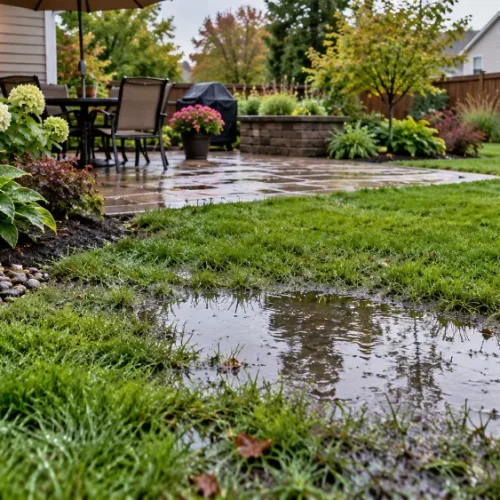
Drainage often goes unnoticed until it causes problems. Water pooling in low spots weakens turf and invites disease. Reel mowing exposes these weak areas because stressed grass cannot recover as quickly after cutting.
Professional leveling addresses drainage by guiding water movement across the lawn. Instead of pooling, water flows evenly and soaks into the soil at a controlled rate. This creates a healthier root environment and supports consistent turf recovery after mowing.
Good drainage matters even more at lower mowing heights because the grass has less leaf surface to store energy. Healthy roots become essential.
The Importance of Soil Firmness Under Zoysia
A reel-mowed lawn needs firm soil. Soft or unstable ground shifts under the mower and disrupts the cutting height. Professional leveling includes soil preparation that firms the surface without compacting it excessively.
This balance allows the mower to ride smoothly while still supporting root growth. When the soil holds its shape, mowing stays predictable and turf stress remains minimal.
Improper leveling often leaves loose pockets that settle later, creating new low spots. These changes undo mowing progress and require repeated correction.
Why Golf-Course Lawns Start With Grading, Not Grass
Golf courses invest heavily in grading before turf installation. They shape the surface precisely because they know turf performance depends on it. Residential lawns aiming for the same visual quality benefit from the same approach.
Grading removes high spots, fills low areas, and creates clean transitions near sidewalks and driveways. This work happens before grass installation or during major renovation phases. Once turf establishes, correcting these issues becomes far more difficult.
Zoysia responds exceptionally well to this preparation. With a flat base, it handles close mowing, spreads evenly, and recovers quickly.
Leveling and Seasonal Turf Performance
Seasonal changes highlight lawn imperfections. During active growth, Zoysia can mask small irregularities. During slower growth periods, uneven surfaces become more obvious.
Reel mowing during cooler months or during recovery periods magnifies surface flaws. Leveling ensures the lawn maintains its appearance even when growth slows. A well-leveled lawn transitions through seasons more smoothly and keeps its structure year-round.
Why DIY Leveling Often Falls Short
Many homeowners attempt to level lawns themselves using sand or soil mixes. While small corrections help, large-scale leveling requires experience and planning. Uneven distribution, incorrect materials, or improper compaction often make problems worse.
Professional leveling addresses the entire lawn system. It considers slope, soil composition, water flow, and future mowing practices. This approach produces lasting results rather than temporary fixes. DIY methods work best for maintenance, not foundational correction.
The Long-Term Payoff of Professional Leveling
A leveled lawn costs less time and effort to maintain. Mowing becomes easier. Turf stays healthier. Repairs decrease. The lawn holds its appearance with fewer adjustments.
Reel mowing transforms Zoysia into a standout feature, but only when the surface supports it. Professional leveling provides that support. It turns grass into turf and mowing into a presentation.
Why Leveling Defines the Difference Between Good and Exceptional
Many lawns look fine from a distance. Few look exceptional up close. The difference usually lies in surface quality. Flat lawns reflect light evenly. Lines stay crisp. The grass feels uniform underfoot.
Professional leveling elevates Zoysia lawns from standard to standout. It unlocks the full potential of reel mowing and delivers the clean, smooth finish people admire on golf courses.
For homeowners chasing that look, leveling is not optional. It is the foundation that makes everything else work.
FAQs
Lawn leveling creates a smooth surface that allows reel mowers to cut evenly without scalping high spots or missing low areas.
You can, but uneven ground often leads to poor results, turf damage, and inconsistent mowing heights.
The lawn should be smooth enough that the mower does not bounce or scalp, even at low cutting heights.
Yes, leveling removes high spots that cause reel mowers to cut too low and damage the grass.
Yes, even soil conditions help Zoysia spread evenly and form a thicker, more uniform turf.
Leveling improves water flow and prevents pooling, which reduces turf stress and disease risk.
Yes, uneven surfaces increase blade contact with soil, causing faster wear and reduced cutting quality.
Most well-leveled lawns only need minor touch-ups every few years, depending on soil settling and use.
DIY leveling can help with small imperfections, but professional leveling delivers longer-lasting, uniform results.
Leveling is best done during active growing seasons so the grass can recover and spread quickly.