The Money-Saving Secret Hiding in Plain Sight
Your windows are bleeding money, and you’re probably watching it happen through crystal-clear, untinted glass. Every month, those pristine windows invite in heat that makes your AC work overtime, fade your furniture faster than a teenager’s interest in family dinner, and turn your office into a greenhouse by 2 PM.
Window tinting isn’t just for cars anymore – it’s become the smart person’s solution to a dozen problems you didn’t know were connected. The building window cleaning systems market, valued at over $2.07 billion in 2024, increasingly includes tinting services because property owners are catching on to this efficiency hack.
Consider getting window tinting NYC when you realize your energy bills look like phone numbers. Studies show window tinting can reduce cooling costs by up to 30%. That’s not a typo – thirty percent. For an average office building, we’re talking thousands of dollars annually. For homes? Enough to fund that vacation you keep postponing.
The math is embarrassingly simple. Tinted windows block heat before it enters, rather than trying to remove it after. It’s like closing the barn door before the horse escapes, except the horse is your money and the barn is your bank account.
Privacy Without Becoming a Hermit
Remember that awkward moment when you realized your neighbors can see your entire evening Netflix binge setup? Or when the office across the street has a perfect view of your confidential meetings? Privacy shouldn’t require living like a mole person.
Window tinting offers privacy levels from “subtle suggestion” to “witness protection program.” The beauty? You can see out while others can’t see in – during daylight hours, at least. It’s one-way visibility that doesn’t scream “I have something to hide.”
Privacy benefits that nobody talks about:
- Reduced anxiety from feeling watched
- Freedom to leave valuables visible without advertising to thieves
- Natural light without the fishbowl effect
- Professional appearance without fortress vibes
Office productivity actually increases when employees don’t feel like zoo exhibits. In fact, with 75% of the US population working in service-related jobs by 2021, creating comfortable work environments has become crucial for talent retention. Tinted windows contribute to that comfort without requiring structural changes.
The residential side gets even more interesting. Homeowners aged 35-55 comprise roughly 60% of residential service customers, and they’re not just buying tinting for privacy – they’re buying peace of mind. No more rushing to close blinds at dusk. No more choosing between natural light and personal space.
UV Protection – Your Furniture Will Thank You
That beautiful leather couch you spent too much on? The sun is slowly murdering it. Those hardwood floors that cost more than your car? UV rays are their kryptonite. Your skin? Let’s just say dermatologists love south-facing offices without tinting.
Window tinting blocks up to 99% of harmful UV rays. Not 50%, not 75% – ninety-nine percent. That’s like SPF 1000 for your entire room. The same rays that fade your furniture also increase skin cancer risk. Working near untinted windows is essentially slow-motion sun exposure.
Here’s what UV damage really costs:
- Furniture replacement (earlier than necessary)
- Flooring refinishing or replacement
- Artwork and photograph fading
- Increased health risks for occupants
- HVAC systems working harder due to heat gain
Museums and galleries figured this out decades ago. Ever wonder why exhibition spaces feel different? It’s not just the pretentious atmosphere – it’s UV-filtered lighting and windows. Your home or office deserves the same protection, minus the “please don’t touch” signs.
Helmut Jahn noted that “Transparency is not the same as looking straight through a building; it’s not just a physical idea, it’s also an intellectual one.” Tinted windows embody this perfectly – maintaining transparency while adding a layer of intelligent protection.
The Productivity Plot Twist Nobody Expected
Glare on computer screens isn’t just annoying – it’s literally exhausting. Your eyes work harder, you squint more, headaches increase, and by 3 PM you’re ready to throw your monitor out the window. Ironically, it’s the untinted window causing the problem.
Studies link natural light to improved mood and productivity, but there’s a catch – too much direct light creates more problems than it solves. Window tinting provides the Goldilocks solution: just right. Employees in properly tinted offices report fewer headaches, less eye strain, and better afternoon energy levels.
The productivity math adds up fast:
- Reduced sick days from headache-related issues
- Increased afternoon productivity (no more 2 PM slump)
- Better screen visibility means faster work
- Comfortable temperatures improve focus
- Reduced glare decreases errors
One company reported a 15% increase in afternoon productivity after tinting their south-facing windows. That’s like getting an extra hour of work from every employee, every day. The installation paid for itself in three months through productivity gains alone.
The commercial cleaning sector, expected to grow at 6.05% CAGR by 2028, increasingly includes tinting as businesses recognize these benefits. It’s not just about cleaning windows anymore – it’s about optimizing them.
Types of Tinting – From Subtle to Statement
Not all window tints are created equal, and thank goodness for that. Your needs, budget, and tolerance for looking like a DEA safe house all factor into the decision.
Dyed window film: The economy option. Blocks light, provides privacy, but less effective at heat rejection. Perfect for privacy on a budget, less perfect for energy savings.
Metalized film: Contains tiny metallic particles that reflect heat and strengthen windows. Downside? Can interfere with cell signals. Great for offices that want employees to focus, terrible for businesses relying on wireless connectivity.
Carbon film: The middle ground champion. Doesn’t fade, blocks heat effectively, won’t interfere with electronics. Looks good, works better, costs more than basic but less than premium.
Ceramic film: The Tesla of window tints. Maximum heat rejection, zero signal interference, virtually invisible. Costs like premium sounds – expensive – but delivers on every promise.
Crystalline film: For those who want benefits without the look. Almost completely clear but still blocks heat and UV. Perfect for historical buildings or people who think tinted windows make houses look like sunglasses.
The key? Matching tint type to actual needs, not assumed ones. That premium ceramic might be overkill for a north-facing window but perfect for a western exposure that turns into Satan’s terrarium every afternoon.
Installation Realities and ROI Revelations
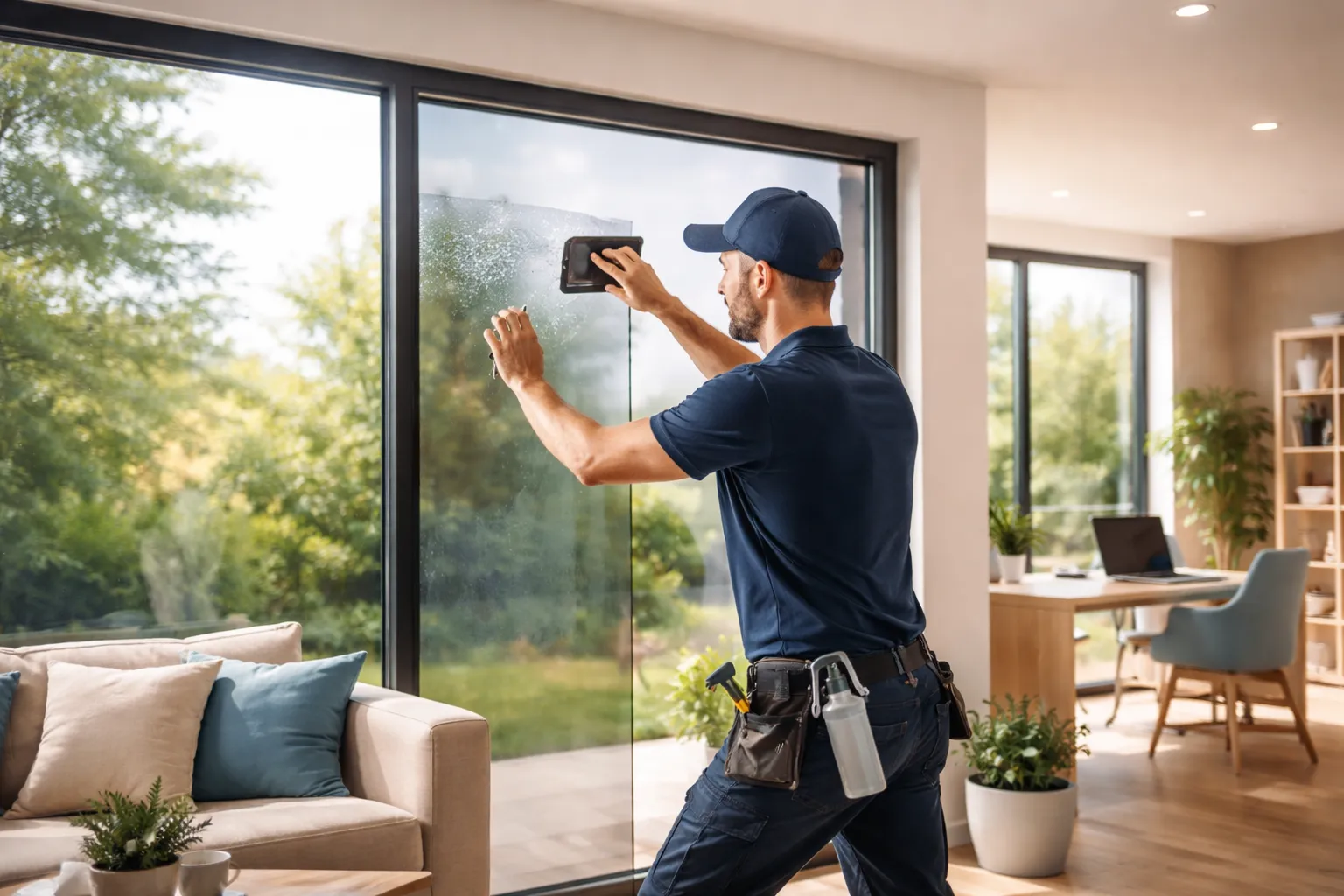
Let’s address the elephant behind the tinted glass – installation isn’t a weekend DIY project unless you enjoy bubbles, creases, and windows that look like abstract art. Professional installation costs more upfront but saves money, time, and marriages.
Professional installation typically runs $5-10 per square foot, depending on film type and window accessibility. Sounds steep until you calculate the alternative costs. Energy savings alone often justify the expense within 2-3 years. Add in furniture protection, productivity gains, and reduced HVAC wear? The ROI timeline shrinks to months, not years.
Installation timeline truth:
- Average home: 1-2 days
- Small office: 2-3 days
- Large commercial building: 1-2 weeks
- Cure time: 30-90 days for full adhesion
The disruption is minimal compared to other improvements. No construction dust, no lengthy closures, no need to relocate. In the window cleaning industry, where the average worker is 48 years old with decades of experience, many have added tinting to their services because the skills translate well.
Warren Buffet said, “Price is what you pay, value is what you get.” Window tinting embodies this perfectly. The price is upfront and obvious. The value reveals itself in lower bills, longer-lasting interiors, and daily comfort improvements.
Maintenance is surprisingly simple. Clean like normal windows after the cure period. Quality films last 10-15 years, some with lifetime warranties. When you amortize the cost over a decade, it’s pennies per day for benefits you notice hourly.
The commercial and residential real estate markets increasingly recognize tinted windows as value-adds. Properties with professional tinting command higher rents and selling prices. It’s an improvement visible from the street that signals energy efficiency and thoughtful ownership.
Making the decision to tint isn’t just about solving today’s problems – it’s about preventing tomorrow’s. Whether you’re protecting a home full of memories or an office full of employees, window tinting delivers benefits that compound over time. The question isn’t whether to tint, but why you haven’t already.
FAQs
Window tinting blocks solar heat before it enters the building, reducing the workload on HVAC systems and lowering cooling costs by up to 30%.
No, it also helps regulate indoor temperatures year-round by reducing heat gain in summer and minimizing heat loss in winter.
Modern films are designed to preserve natural light while reducing glare, so spaces remain bright without the harsh sunlight.
Yes, most films provide daytime one-way visibility, allowing you to see outside while preventing others from seeing in.
High-quality window films can block up to 99% of harmful UV rays, protecting furniture, flooring, and occupants’ skin.
Some metalized films can affect signals, but carbon and ceramic films do not interfere with wireless connectivity.
Professionally installed films typically last 10–15 years and often come with manufacturer warranties.
Yes, professional installation ensures proper adhesion, a clean finish, and full performance, avoiding bubbles and premature failure.
Absolutely—tinted windows significantly reduce glare on monitors, easing eye strain and improving employee comfort and productivity.
Yes, tinted windows are viewed as an energy-efficient upgrade and can improve both rental appeal and resale value.