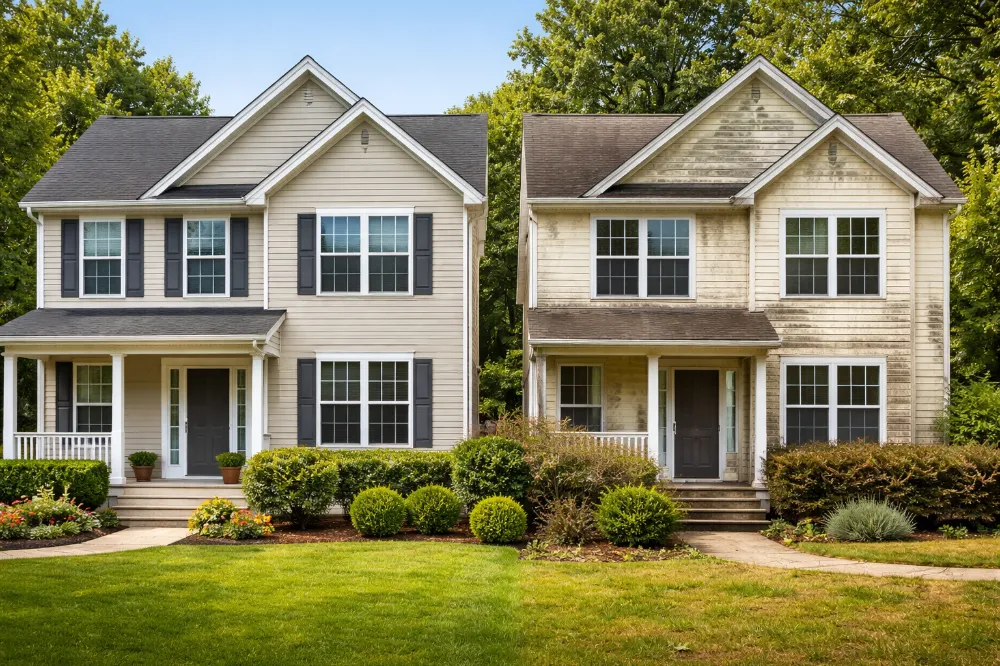
Walk down almost any residential street and you’ll notice something curious. The houses may have been built at the same time, by the same builder, with similar layouts and materials yet some look noticeably older than others. One home appears clean and well-kept, while the one next door seems weathered, faded, or tired.
This contrast isn’t random. Homes age visually at different speeds due to a combination of environmental exposure, material choices, maintenance habits, and subtle factors many homeowners never consider. Understanding why this happens can help you protect your own property’s appearance and value and prevent premature aging that has nothing to do with the home’s actual condition. Below, we’ll explore the key reasons some homes look older than others on the same street and what homeowners can do to slow that visual aging process.
Sun Exposure: The Uneven Effects of UV Radiation
One of the biggest contributors to uneven aging is something homeowners can’t control entirely: the sun. Homes that receive direct sunlight for most of the day tend to age faster on the exterior than those that enjoy partial shade. Ultraviolet (UV) rays break down materials over time, causing fading, chalking, and surface degradation.
How sun exposure affects homes:
- Paint fades faster, especially darker colors
- Vinyl siding loses its sheen and may appear dull or brittle
- Wood dries out, leading to cracking or splintering
- Roofing materials degrade unevenly, creating patchy discoloration
Even on the same street, the direction a home faces can dramatically change its exposure. A house facing west may receive intense afternoon sun year-round, while a neighboring home angled differently stays protected for much of the day. Over time, that difference alone can make one house look a decade older than another.
Shade Patterns: Protection That Isn’t Always Even
While shade often protects a home from sun damage, it introduces a different set of aging factors. Homes partially shaded by trees, neighboring buildings, or roof overhangs tend to experience uneven wear. Some sections stay cooler and damp longer, while others dry quickly. This inconsistency leads to visible contrasts on siding, trim, and roofing.
Shade-related aging issues include:
- Increased moisture retention
- Growth of algae, mildew, or moss
- Uneven color changes across walls
- Streaking or blotchy discoloration
Ironically, a house with too much shade can look older than a fully sun-exposed one if organic growth is allowed to take hold. The goal isn’t full sun or full shade it’s balanced exposure combined with regular maintenance.
Siding Material: Not All Exteriors Age the Same
Siding choice plays a major role in how quickly a home looks worn. Different materials respond differently to weather, pollution, and biological growth. Even homes built at the same time can age visually at different rates if their siding materials vary.
Common siding materials and how they age:
- Vinyl siding: Resistant to rot but prone to chalking and algae staining
- Wood siding: Natural and attractive, but vulnerable to moisture, insects, and UV damage
- Fiber cement: Durable and stable, but still susceptible to surface staining
- Brick: Long-lasting, though mortar joints and shading differences can reveal age
Some materials hide dirt well. Others showcase every streak, shadow, and stain. Over time, these differences create a noticeable contrast between neighboring homes even if both are structurally sound.
Moisture Exposure: The Silent Aging Accelerator
Moisture is one of the most underestimated causes of visual aging.
Homes located at the bottom of slight slopes, near drainage paths, or close to bodies of water often experience higher humidity and slower drying times. Even subtle differences in grading or gutter performance can affect how long moisture stays on a home’s exterior.
Signs moisture is aging a home faster:
- Green or black staining on siding
- Dark streaks beneath gutters or windows
- Mold or mildew near foundation lines
- Peeling paint or warped trim
Moisture doesn’t just damage materials it invites biological growth that immediately makes a home look older and neglected, even if the structure itself is perfectly fine.
Nearby Trees: Beauty with a Trade-Off
Trees add charm, shade, and curb appeal but they also influence how a home ages.
Homes surrounded by mature trees often accumulate more organic debris, including leaves, pollen, sap, and bird droppings. Over time, this debris breaks down on exterior surfaces and creates staining that doesn’t wash away with rain alone.
Tree-related aging factors include:
- Algae growth from constant shade and moisture
- Tannin stains from leaves and wood
- Sap residue that traps dirt
- Roof discoloration beneath overhanging branches
Two houses on the same street may be identical, but if one sits beneath a canopy of trees while the other remains open, the difference in appearance after a few years can be dramatic.
Dirt Buildup and Organic Staining: Why Homes Look “Old” Before They Are
One of the most common reasons a home looks older than its neighbors has nothing to do with damage it’s dirt and organic staining. Dust, pollen, vehicle emissions, and airborne pollutants slowly cling to siding and trim. Add moisture, shade, and time, and those particles become a breeding ground for algae and mildew. This results in dull colors, streaking, and dark patches that visually age a home fast.
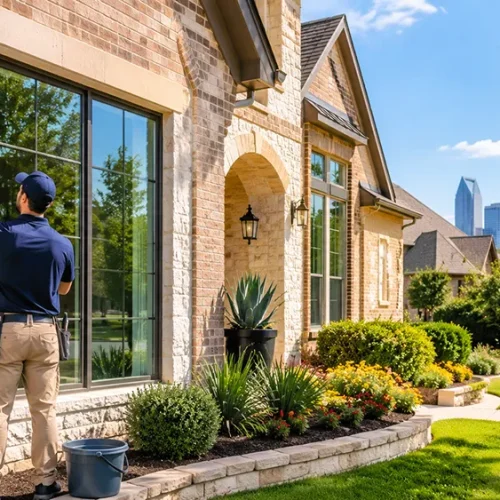
What makes this especially misleading is that many homeowners mistake these stains for permanent wear. In reality, much of what looks like aging is simply buildup that hasn’t been removed. Periodic exterior cleaning helps strip away years of accumulated grime and organic growth, instantly restoring brightness and color. Many homeowners are surprised by how new their house looks again after scheduling professional house washing near Indianapolis, especially when staining has been allowed to accumulate gradually over time.
Maintenance Frequency: Small Delays Add Up
Two homes can start identical and end up looking very different based on one simple factor: consistency. Homeowners who stay ahead of exterior maintenance cleaning, minor repairs, touch-ups prevent small issues from becoming visual eyesores. Others wait until problems become obvious, by which point aging appears more advanced.
Maintenance habits that slow visual aging:
- Regular exterior cleaning
- Prompt gutter maintenance
- Sealing gaps and joints
- Trimming vegetation away from siding
Neglect doesn’t always cause structural damage right away, but it almost always accelerates how old a home looks.
Airflow and Drying Time: The Hidden Factor
Homes with good airflow dry faster after rain, morning dew, or snow melt. Homes tucked into corners, surrounded by fencing, or blocked by landscaping stay damp longer.
Longer drying times lead to:
- More algae growth
- Increased staining
- Faster breakdown of surface finishes
Even a few hours of extra daily moisture exposure adds up over the years, quietly aging one home faster than another only a few feet away.
Color Choices and Contrast
Exterior color plays a surprising role in perceived age. Light-colored homes show dirt and algae more quickly, while darker homes reveal fading and chalking faster. High-contrast trim can emphasize staining, while muted palettes may hide it longer. This doesn’t mean certain colors are bad choices it just means maintenance schedules should align with color selection.
Why Visual Aging Matters More Than You Think
A home that looks older than its neighbors often:
- Feels less welcoming
- Stands out negatively on the street
- Appears poorly maintained, even when it isn’t
- Loses curb appeal and perceived value
The good news is that visual aging is often reversible. Unlike structural issues, many exterior aging signs are surface-level and manageable with awareness and routine care.
Final Thoughts
When homes on the same street age differently, it’s rarely about neglect or bad construction. It’s about exposure, environment, materials, and maintenance choices stacking up over time. Sunlight, shade, moisture, trees, dirt, and airflow all play roles in how fast a home’s exterior changes. Add in organic staining and delayed cleaning, and a house can look far older than it really is.
Understanding these factors helps homeowners make smarter decisions protecting not just their investment, but the pride that comes from a home that looks as good as it feels. Visual aging doesn’t happen overnight. But with the right approach, it doesn’t have to happen at all.
FAQs
Environmental exposure, materials, and maintenance habits cause homes to weather at different rates.
Yes, UV rays fade paint and siding, making sun-facing homes appear more worn over time.
Excess shade traps moisture, encouraging algae and mildew that visually age a home.
Vinyl and wood often show staining or fading sooner than brick or fiber cement.
Moisture leads to staining, mold, and discoloration that make exteriors look neglected.
Yes, trees drop debris and create shade that can accelerate staining and organic growth.
No, most dirt and organic staining are surface-level and removable with proper cleaning.
Uneven sun, shade, and airflow cause certain areas to age faster than others.
Consistent cleaning and minor upkeep prevent buildup that makes homes look older.
Not at all many homes look aged simply due to exterior buildup, not actual damage.