This post contains affiliate links. As an Amazon Associate, I earn from qualifying purchases, at no extra cost to you. See our disclosure policy.
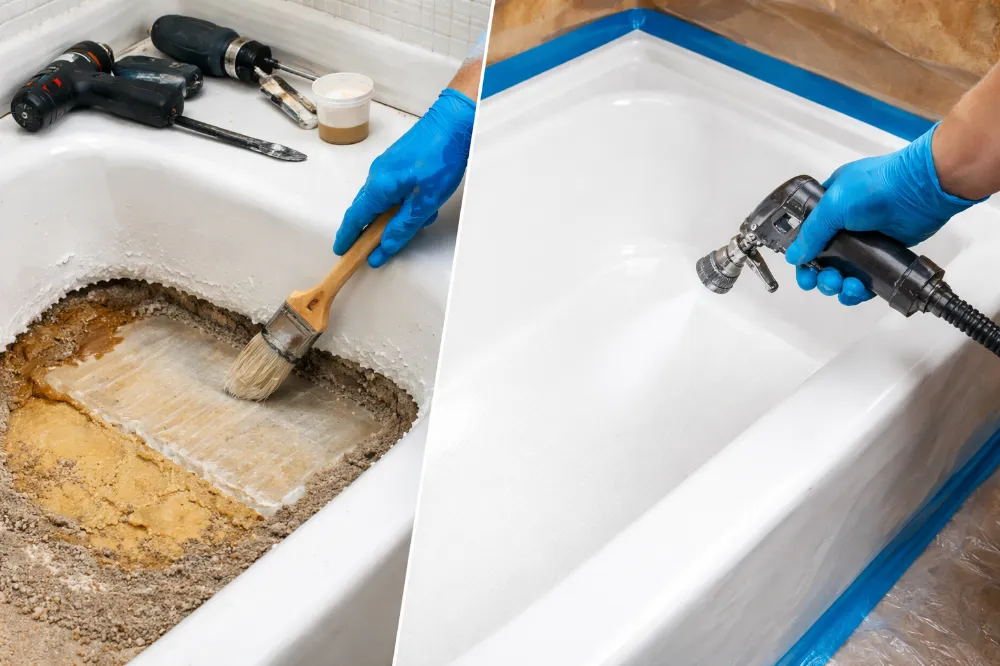
A bathtub should feel solid every time you step into it. When the floor flexes, dips, or creaks, the experience becomes uncomfortable and concerning. Many homeowners worry that a weak tub floor means a full replacement is unavoidable. In reality, reinforcement combined with refinishing often restores strength and comfort without removing the tub. This approach addresses the real problem beneath the surface and finishes it with a clean, durable layer that protects the repair.
Weak tub floors happen for clear reasons. Materials age. Moisture finds its way where it should not. Support underneath breaks down or shifts. Daily use places stress on the same spots over and over. The good news is that these issues usually affect the structure under the surface, not the entire tub. Reinforcement rebuilds that structure. Refinishing seals it, smooths it, and returns the tub to a condition that feels safe and reliable again. This article explains why tub floors weaken, how reinforcement works, how refinishing completes the fix, and what homeowners can expect from the process.
Why Tub Floors Lose Strength
Most weak tub floors develop slowly. Early signs often go unnoticed. A slight bounce underfoot or a faint sound may not seem like a big deal at first. Over time, that movement grows. Once flexing starts, the tub floor experiences repeated stress that leads to cracks, soft spots, and surface damage. Fiberglass and acrylic tubs face this issue more often than heavier materials. These tubs rely on support underneath to spread weight evenly. When that support compresses, shifts, or absorbs moisture, the floor begins to sag. Water exposure speeds up the process, especially near the drain where moisture collects.
Improper installation also plays a role. Some tubs sit on minimal support from the start. Others lose support after years of settling. Even small gaps beneath the tub allow movement that weakens the structure over time. A weak tub floor does not mean the tub has failed. It means the support system needs attention.
How Reinforcement Fixes The Real Problem
Reinforcement focuses on stopping movement. The goal is to create a firm, stable base that supports the tub floor across its entire surface. This starts with identifying where the flex occurs and why it happens. A refinisher checks for soft areas, cracks, hollow sounds, and uneven support. Once these areas are located, reinforcement materials fill and strengthen the weak zones. These materials harden into a solid base that resists compression and spreads weight evenly.
Cracks often appear alongside weak floors. These cracks form because the surface bends too much. Reinforcement addresses the bending first. After that, the repairs seal and rebuild the damaged areas so the floor regains its original shape and strength. In fiberglass tubs, reinforcement may include adding layers of fiberglass material to rebuild stiffness. This process turns a flexible floor into a rigid one. Acrylic tubs benefit from reinforcement that supports their natural flexibility without allowing excessive movement. Once reinforcement is complete, the tub floor feels firm underfoot. That stability allows refinishing to succeed.
Why Refinishing Matters After Reinforcement
Reinforcement repairs the structure, but refinishing restores the surface. After reinforcement, the tub needs a protective layer that seals repairs and creates a smooth, even finish. Refinishing covers repaired areas so they blend seamlessly with the rest of the tub. Without refinishing, patched sections may remain visible or uneven. A refinished surface hides these repairs and creates a consistent look across the entire tub.
Refinishing also protects the reinforced floor from moisture and daily wear. The new surface seals the tub and reduces the chance of water reaching the reinforcement underneath. This protection helps the repair last longer and keeps the floor feeling solid. A refinished tub looks clean, smooth, and refreshed. More importantly, it feels strong again.
Common Signs That Reinforcement And Refinishing Make Sense
Homeowners often wonder whether reinforcement will solve their problem or if replacement is the only option. Certain signs point toward reinforcement as the right solution.
You may need reinforcement if you notice:
- Flexing or bouncing when stepping into the tub
- Soft or spongy areas on the tub floor
- Cracking near the drain or center of the tub
- Creaking sounds during use
- Water is collecting in low spots
- Past surface repairs that did not hold
These signs suggest a structural issue beneath the surface. Reinforcement addresses that issue directly, and refinishing completes the repair.
How Reinforcement Works With Different Tub Materials
Each tub material responds differently to stress. Reinforcement methods adjust to these differences to achieve the best result.
Fiberglass Tubs
Fiberglass tubs often develop soft floors because the material thins over time. Reinforcement fills weak areas and rebuilds stiffness. Refinishing then smooths the surface and protects it from future wear.
Acrylic Tubs
Acrylic tubs flex more naturally. Reinforcement supports the base so the tub flexes evenly instead of concentrating stress in one area. Refinishing restores appearance and seals the surface.
Steel Or Cast Iron Tubs
These tubs rarely flex, but rust or damage near the bottom can weaken the surface. Reinforcement repairs damaged areas, and refinishing restores the protective coating.
Cultured Marble Tubs
These tubs may crack where the material thins. Reinforcement strengthens those areas so refinishing can create a smooth, durable surface.
Each approach focuses on restoring strength first, then appearance.
Why Reinforcement Saves Tubs That Seem Beyond Repair
Many homeowners assume a weak tub floor means demolition. Replacement often brings unexpected challenges. Removing the tub may require tile removal, plumbing changes, wall repairs, and floor work. Reinforcement and refinishing avoid these complications.
Reinforcement strengthens the tub without disturbing the surrounding bathroom. Refinishing restores the look without replacing fixtures. This approach keeps the bathroom intact while solving the core problem. This method works especially well for tubs installed in tight spaces or surrounded by tile. Reinforcement allows the tub to remain in place while regaining strength and appearance.
What To Expect After Reinforcement And Refinishing
After reinforcement, the tub floor should feel solid and stable. No bounce. No flex. Walking into the tub feels confident again. Refinishing adds a smooth, even surface that looks new. The finish resists moisture and everyday use. With proper care, the reinforced and refinished tub provides years of reliable service.
Homeowners often notice that the tub feels stronger than it did even when it was new. This happens because reinforcement adds support that original installations sometimes lacked.
Simple Habits That Protect A Reinforced Tub Floor
After repair, a few habits help preserve the results:
- Keep the drain area clean and dry when possible
- Use mild cleaners that do not scratch the surface
- Avoid dropping heavy objects on the tub floor
- Run ventilation to reduce moisture buildup
- Address small leaks promptly
These steps reduce stress on the surface and help the reinforcement last.
Why Reinforcement And Refinishing Restore Peace Of Mind
A weak tub floor creates constant worry. Every step feels uncertain. Reinforcement removes that concern by rebuilding the support underneath. Refinishing restores comfort and appearance on top. Together, these solutions turn an unstable tub into a strong, refreshed fixture that feels safe to use. Homeowners gain confidence without dealing with demolition, long downtime, or complex construction.
Reinforcement and refinishing solve the problem at its source. They restore strength, protect against future damage, and return the tub to a condition that supports daily life comfortably and reliably.
FAQs
Weak tub floors usually result from failing support underneath, moisture damage, material aging, or improper installation.
No. In many cases, reinforcement combined with refinishing restores strength without removing or replacing the tub.
Reinforcement stabilizes the tub by filling and strengthening weak areas underneath, eliminating flex and movement.
Refinishing seals the repairs, creates a smooth surface, and protects the reinforced structure from moisture and wear.
Fiberglass and acrylic tubs benefit the most, though steel, cast iron, and cultured marble tubs can also be repaired.
Common signs include flexing underfoot, soft spots, cracks near the drain, creaking sounds, and water pooling.
No. Refinishing blends the repaired areas seamlessly, leaving a smooth and uniform surface.
With proper care, a reinforced and refinished tub can last many years and often feels stronger than before.
No. The process is completed with the tub in place, avoiding demolition or surrounding damage.
Use mild cleaners, avoid heavy impacts, keep moisture under control, and address leaks quickly to protect the repair.