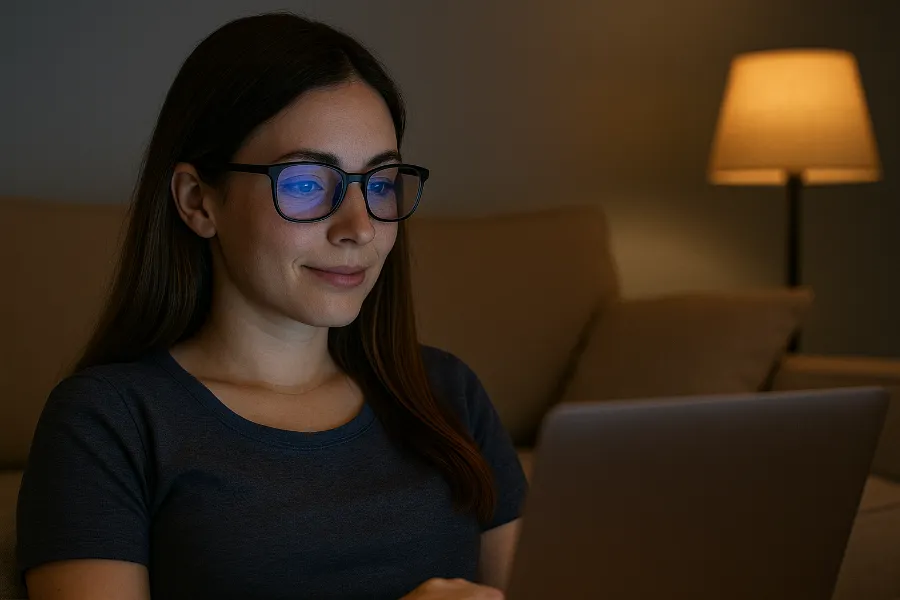
Blue light has become such a normal part of nighttime life that most of us don’t even question it anymore. The glow from your phone while you scroll before bed, the brightness of your laptop during a late-night work session, even the LED bulbs in your room everything beams that cool, crisp wavelength that quietly tells your brain, “Stay awake.” According to the National Institute of General Medical Sciences, blue light plays a significant role in regulating the body’s circadian rhythm, which is essentially the internal clock that controls sleep and wake cycles . When you understand that artificial blue light interferes with melatonin the hormone your body relies on to signal that it’s time to wind down it becomes clear why falling asleep feels harder in the digital age. And that’s exactly where blue light glasses begin to serve a real purpose.
Falling Asleep Becomes Noticeably Easier
The biggest shift I noticed after wearing blue light glasses wasn’t instant, but it began within a few days. Suddenly, I wasn’t lying awake staring at the ceiling even though my body felt exhausted. Instead, I felt naturally sleepy at a more reasonable hour. It wasn’t forced or dramatic just a clean, gentle wave of tiredness that actually made sense. When blue light is filtered out, melatonin has a chance to do its job. It’s almost like your brain is finally allowed to enter nighttime mode again. For people who never feel tired until very late, this simple habit can feel like rediscovering a forgotten internal switch.
Your Eyes Feel Less Tired and Overworked
There’s a very specific kind of discomfort that comes from staring at screens late at night. The dry, gritty sensation. The subtle burning. The heaviness in your eyelids. I lived with this for years without questioning it, assuming it was simply what adulthood felt like. But after using blue light glasses consistently, those symptoms softened dramatically. Screens no longer felt like bright flashlights shining straight into my eyes. The harsh whites turned warmer, more muted, and easier to digest visually. Blue light glasses don’t fix every eye issue, but they reduce the strain that makes nighttime screen use feel unnecessarily draining.
Nighttime Work and Studying Feel More Manageable
Let’s be real life doesn’t stop when the sun goes down. Work emails pop up, deadlines sneak in, and sometimes the only quiet time you have is at night. Before wearing blue light glasses, nighttime work felt heavier, like pushing my brain through fog. Now, those late sessions feel smoother. My eyes stay comfortable longer, and my focus feels less fragmented. It’s not that the glasses magically give you energy they simply remove the overstimulation that normally comes from bright screens at night. When your senses aren’t being bombarded, your mind can stay present without that extra layer of discomfort.
They Become a Subtle Signal That It’s Time to Slow Down
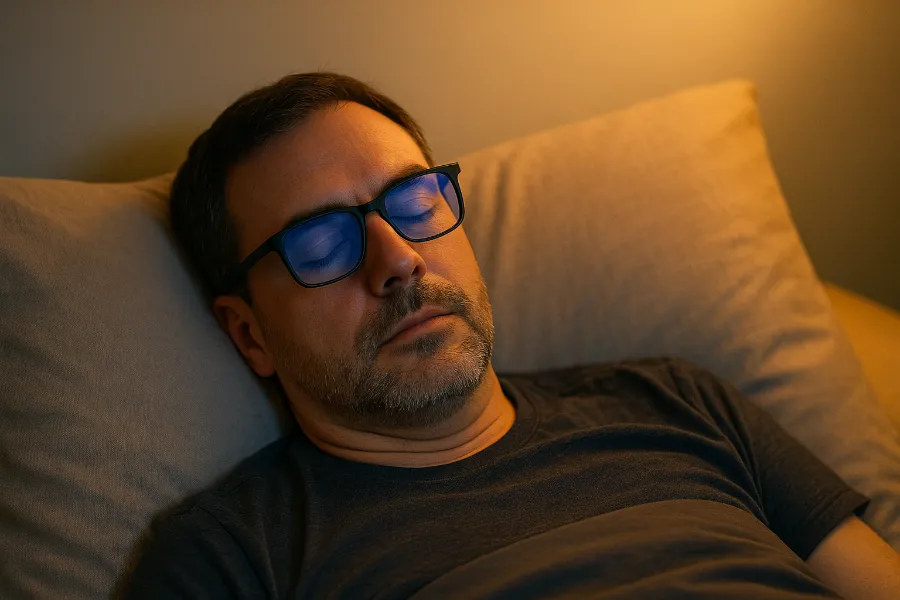
What surprised me the most was how blue light glasses became a part of my evening routine. The moment I put them on, something in my mind shifted. It became a small ritual that said, “Start unwinding.” Even if I was still on my phone or watching something, I felt calmer. It’s a psychological signal as much as a physical one. This simple habit creates a separation between daytime and nighttime something our brains crave, especially in a world where work, entertainment, and socializing all happen on glowing screens.
Screens Feel More Comfortable and Gentle on Your Senses
Nighttime screens have a way of feeling overly intense. The contrast between darkness and bright digital light can jolt your senses awake, even when you’re ready to rest. Blue light glasses soften this harshness. The brightness feels more balanced, the colors gentler, and the overall viewing much easier on the nervous system. Watching a show, reading online, or even chatting with friends feels more like a quiet late-night activity rather than a stimulation spike. That sensory comfort is one of the most underrated benefits.
They Help Reset and Protect Your Sleep Schedule
Sleep cycles don’t just get disrupted they shift over time. Every night you push your bedtime later because of screen use, your body adapts by delaying melatonin release. This is why some people eventually feel naturally awake at midnight even when they’re exhausted. Blue light glasses help break that pattern. By filtering out the wavelengths that signal wakefulness, your sleep schedule has a chance to regulate itself again. This isn’t a harsh reset it’s a gentle recalibration that works with your biology instead of against it.
Mornings Feel Less Heavy and Foggy
One of the best changes I noticed happened the next morning. Before using blue light glasses, I used to wake up with that thick, foggy grogginess that felt impossible to shake off. But once I protected my nighttime melatonin production, I woke up more refreshed. The mornings felt lighter, cleaner, and less like I was dragging my brain out of a swamp. Deep, uninterrupted sleep makes waking up feel natural instead of forced. It’s such a simple shift, but it transforms how you start your day.
Night Owls Get a Gentle Reset
Not everyone who stays up late is a true night owl by nature. Sometimes the body gets nudged into that pattern because of long-term blue light exposure. When I started using blue light glasses, I noticed my natural bedtime slowly drifted earlier not because I forced it, but because my body finally had the right cues again. This is especially helpful for people who want better sleep but dislike strict routines. The glasses support the adjustment without feeling restrictive or uncomfortable.
You Can Keep Your Nighttime Screen Habits Without Feeling Guilty
Let’s face it most people aren’t giving up their nighttime screen habits anytime soon. Phones, laptops, and TVs are part of how we unwind. What blue light glasses offer is a way to keep those habits without compromising your sleep or eye comfort. You don’t need a complete lifestyle overhaul. You don’t need to stop using your devices. You just need one small filter between you and the harshest wavelengths. It’s a practical, guilt-free compromise that fits into real life.
A Long-Term Gift to Your Eyes and Sleep Health
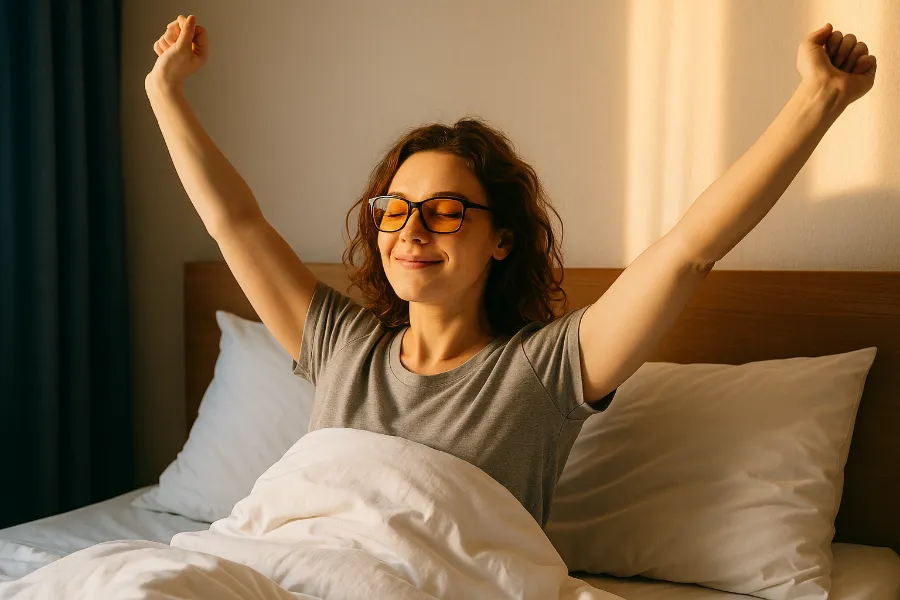
Over months and years, small habits matter. Reducing nightly eye strain, supporting melatonin release, softening screen brightness, and keeping your circadian timing stable all add up to long-term benefits. Blue light glasses aren’t meant to treat medical conditions, but they help prevent unnecessary stress on your eyes and sleep cycle. They’re a protective step simple, subtle, and surprisingly effective. Even Wikipedia’s entry on melatonin explains how light exposure affects this essential hormone and how nighttime artificial light disrupts its natural production. Understanding the science behind it only reinforces that blue light glasses are more than a trend they’re a practical tool for anyone living in a screen-filled world.
Final Thoughts: A Small Habit That Makes a Big Difference
What I love about blue light glasses is that the benefit isn’t really dramatic it’s comforting. It’s subtle. It creeps in slowly until one day you realize your nights feel calmer, your eyes feel better, and your sleep feels deeper. They don’t demand effort. They don’t force you to change your habits. They simply ease the strain that most of us have accepted as normal. And for something as effortless as putting on a pair of glasses, the ripple effect into your evenings and mornings is honestly worth it. If you’ve been feeling overstimulated at night or disconnected from your natural sleep rhythm, blue light glasses might be the quiet, easy fix you didn’t realize you were missing.
FAQs
Yes. By reducing blue light exposure at night, they help your body produce melatonin more naturally, making it easier to fall asleep.
You can wear them anytime, but they’re especially helpful at night when artificial blue light interferes with your sleep cycle.
Yes. They help minimize digital eye strain by softening harsh screen brightness and reducing visual fatigue.
Using both together offers even better protection and creates a more comfortable screen-viewing experience.
Absolutely. Many brands offer prescription versions or add-on blue light filters to existing lenses.
Wearing them for the last 2–3 hours before sleep provides the best results for melatonin support.
For many people, yes. Reduced screen glare and eye strain often lead to fewer tension-related headaches.
Most blue light glasses add a slight warm tint, but premium lenses usually filter blue light without noticeably altering colors.
Yes. They’re completely safe and simply filter specific wavelengths without harming your eyes.
They can support better sleep habits, but they may not fully solve sleep issues caused by stress or anxiety.