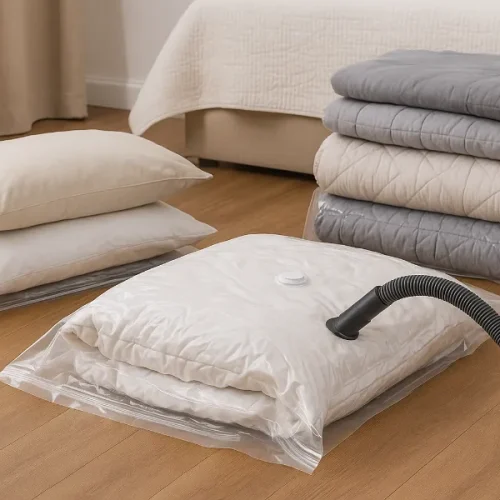
Moving a big bed seems harmless enough until you’re actually doing it. One minute you’re holding a mattress upright like everything is under control, and the next you’re stuck at a hallway corner wondering if the laws of physics personally hate you. Anyone who’s ever tried to maneuver a queen or king bed through a tight hallway knows the instant mental shift from “this’ll be quick” to “this was a mistake.” The real challenge isn’t the weight it’s the shape. Beds are big, rigid, wide, and unforgiving. Hallways, especially in older homes, were never designed for today’s oversized mattresses. Some hallways shrink halfway through, some doorways jut out at weird angles, and some corners turn so sharply it feels like they were intentionally built to make moving furniture a personal test.
This whole process becomes even more interesting once you realize it’s essentially a geometric puzzle. There’s actual math behind why certain angles don’t work and others magically do. Concepts like orthogonal projection—which explains how objects behave when rotated in tight spaces—can help you understand why your headboard refuses to clear that one corner (https://en.wikipedia.org/wiki/Orthogonal_projection). But whether or not you love geometry, once you get into the hallway with a large bed, you’re in a real-life classroom where the walls are the chalkboard and your mattress is the problem set.
The One Thing Everyone Skips but Shouldn’t
Before lifting anything, before twisting anything, before fighting the hallway in any way—you need to measure. It’s the simplest step and the one most people ignore. We tend to assume: “It went in, so obviously it will come back out.” But homes change. Flooring gets thicker. Carpet gets added. Trim gets replaced. Or the movers who brought the bed in used some magical angle you’ll never be able to replicate alone.
You want to measure the bed in every orientation height, width, depth, and diagonal. A bed’s diagonal length often determines whether it can angle through a doorway. Then measure the hallway from both ends, the doorway heights, the doorway widths, the corner pivot spaces, the narrowest spot in the hall, and even the ceiling height if you expect to tilt the bed upward. It sounds tedious until you hit the point where your bed is wedged tightly in a doorway and you have to backtrack. Measuring is your insurance policy against stress, wall damage, and the haunting moment when a bed gets stuck and refuses to move forward or backward.
Breaking the Bed Down Before It Breaks You
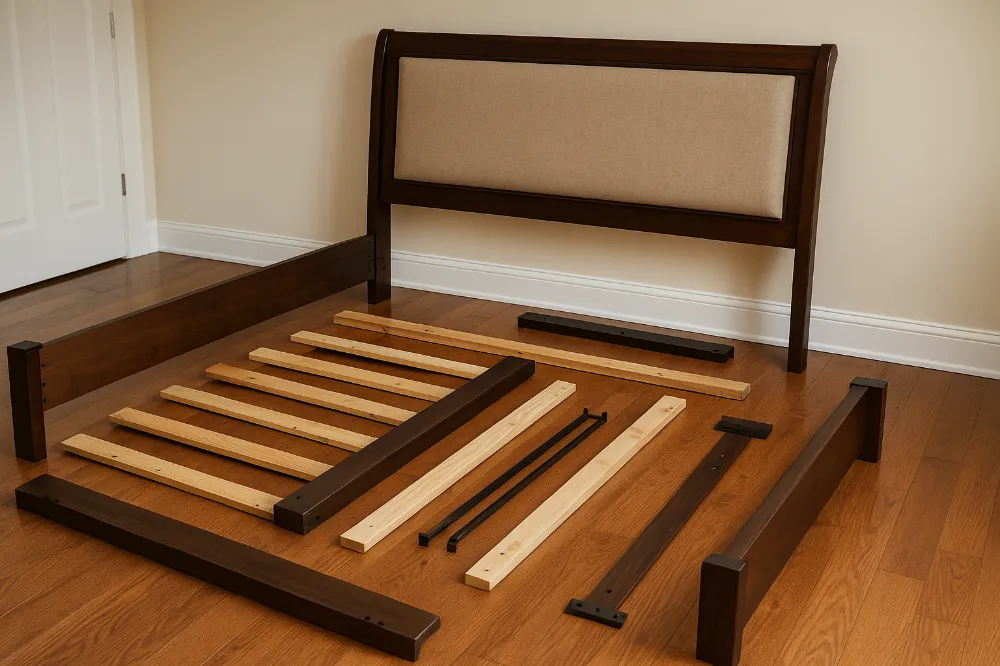
Disassembly is the unsung hero of furniture moving. People often think removing the headboard is enough—but most beds need a deeper breakdown to move through tight spaces smoothly. What looks like a solid, one-piece structure is usually a collection of rails, brackets, slats, legs, and supports cleverly tucked together.
Many modern beds hide screws under flaps or inside decorative joints. Wooden frames often use dowel and tension-fit joinery that looks permanent but isn’t. Upholstered beds usually have hidden zippered panels that reveal screws or bolts. Taking a few extra minutes to break the bed down can save you from twenty minutes of awkward angling and accidental wall scraping. Take pictures as you dismantle. Label your hardware. Put everything in its own bag. You’ll thank yourself later—especially if your bed is one of those stylish “floating” platform beds with forty-seven identical screws that somehow don’t fit where you thought they did.
How to Protect Both Your Bed and Your Walls
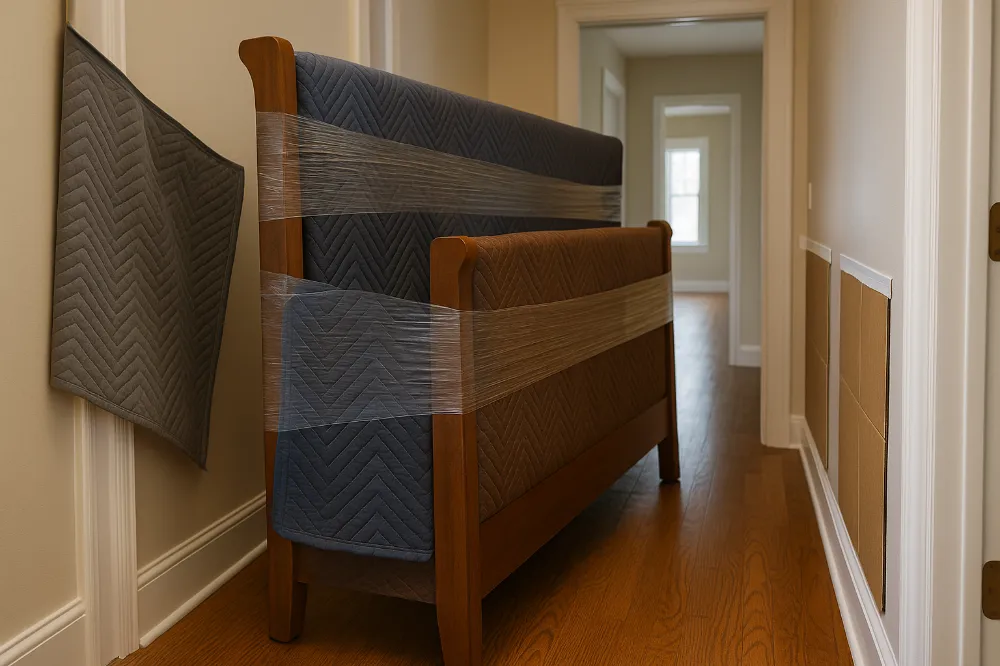
A mattress scraping against drywall can leave marks you’ll never fully unsee. A wooden headboard bumping an unprotected corner can strip paint instantly. That’s why padding isn’t just optional it’s essential.
Moving blankets wrapped around the bed frame keep the wood from catching on door trims or corners. Stretch wrap keeps upholstery safe from snags. Painter’s tape along sharp wall edges adds a buffer that prevents accidental scuffs. Even cardboard taped along doorway edges can save you from dings and dents that take forever to fix. And beyond protection, padding also lets you slide furniture more smoothly. A padded surface glides instead of grabs, giving you more control in tight spots.
My Go-To Trick for Maneuvering Mattresses in Tight Spots
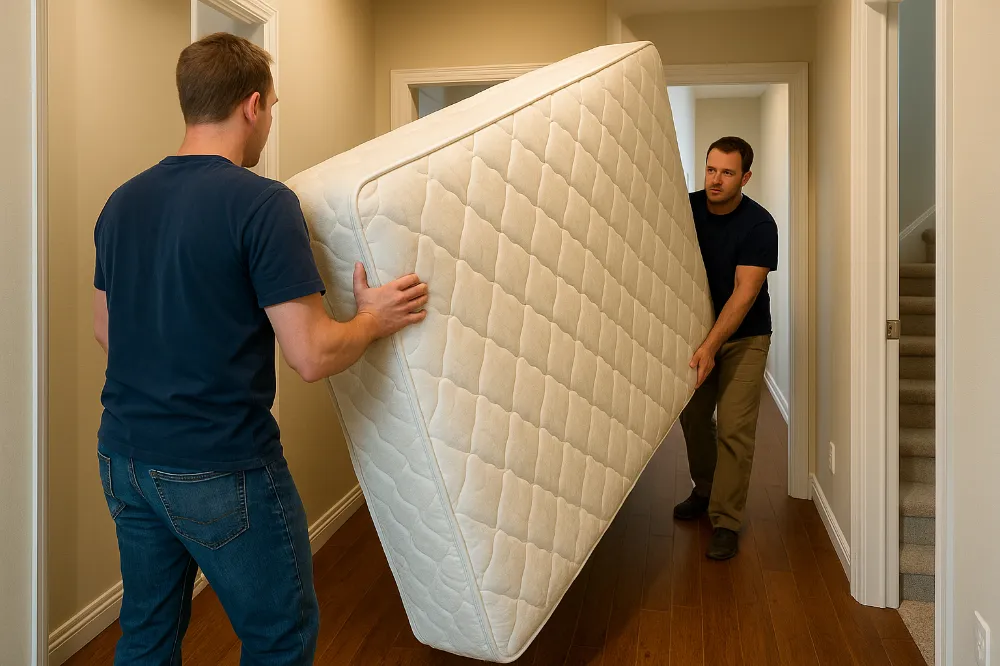
Mattresses bend, but they don’t behave. Foam mattresses curl willingly, while traditional coil mattresses fold like stubborn relatives who refuse to cooperate. After lots of trial and error, one method works consistently well for tight hallways: the “tilt and twist.”
You stand the mattress upright on its long edge. Then tilt the top corner into the doorway. As it starts to slip in, you compress the center slightly with your forearm or hip and rotate the mattress inward. It’s less about force and more about guiding it like a giant, floppy sail. If you’re dealing with a hallway that’s extra narrow, put the mattress in a plastic bag or use mattress straps. The bag reduces friction and the straps give you leverage especially useful for tall or heavy beds.
Why Upright Moving Makes Hallways Feel Bigger
Horizontal furniture takes up width. Vertical furniture takes up height. That one realization changes everything in tight hallways. When you stand a frame or mattress upright, suddenly the hallway doesn’t feel so claustrophobic.
This trick works beautifully for long hallways that are narrow but have decent ceiling height. You and a partner simply guide the piece along its narrowest edge. One person stabilizes, the other guides, and the hallway suddenly feels like it doubled in space. This method also prevents dragging, which spares your floors and your lower back.
The Tiny Adjustment That Creates Extra Doorway Space
If you’re off by even half an inch, a bed won’t fit. But you can magically gain that half-inch by removing the door from its hinges. It’s such a small hack, yet it makes a huge difference. Pop the hinge pin out, lift the door, and set it aside safely. Suddenly, you have just enough extra clearance to angle a frame through. Movers do this all the time, and once you try it, you’ll wonder why you ever struggled before.
The Corner-Turning Technique Movers Swear By
Have you ever watched a professional mover turn a giant piece around a tight corner, and somehow it just slips through like the hallway grew three inches on command? That magic move is the “Z-pattern.”
Instead of trying to swing the bed around the corner in a big arc, movers use small directional shifts forward a bit, angle the top, pull the bottom through, and repeat. It’s a slow dance with the hallway, but every micro-movement creates new pivot space until the bed finally clears the turn. It looks effortless once you see it, but it’s the product of muscle memory and an understanding of how large objects rotate within limited geometry.
Clearing the Hallway So You’re Not Fighting Obstacles
You’d be shocked at how something as small as a rug, shoe rack, or floor plant can completely disrupt your ability to angle a bed. A clean hallway is non-negotiable. Move everything pictures, baskets, side tables, even light floor decor. You want absolute freedom to pivot and twist as needed.
The Headboard Problem Nobody Warns You About
Headboards are the divas of moving day. They’re bulky, uniquely shaped, and always seem to have that one decorative flare that gets stuck in a doorway. Wingback headboards, tufted headboards, and sleigh-style pieces are notorious for this.
Sometimes the best solution is to tilt the headboard diagonally, using the ceiling height to your advantage. Other times, sliding it on a padded blanket gives you more control than trying to lift it. And in some cases, removing legs, finials, or decorative attachments is the only way it’s getting through. If nothing works, you’ll need to break the headboard down even if the original manufacturer never intended it to be disassembled. Most parts can be unscrewed with care.
A Gentle Tool That Makes Frame Separation Easy
Rubber mallets are incredibly useful for stubborn bed frames. Many wooden frames look solid but are actually held together by press-fit joints. A few strategic taps can loosen connections without damaging the wood. It’s a lifesaver when you’re trying to separate rails or remove decorative end pieces that won’t budge by hand.
Why Lifting Toward the Ceiling Works Surprisingly Well
One of the most underrated tricks is simply tilting the frame upward. Many people try to keep furniture flat or horizontal, but lifting the top edge toward the ceiling can create a diagonal angle that opens a new pathway. Suddenly, the narrow doorway feels wide enough. The frame clears the trim. The hallway makes sense again. It’s like unlocking a second dimension during the move.
Sliding Tricks That Make Heavy Frames Feel Light
Dragging a frame sounds wrong—but with padding underneath, it becomes a smart technique. Use moving blankets or sliders to reduce friction and give you more control. A low position means the frame takes up less horizontal space, making tight turns easier. It’s especially helpful for metal frames, slatted platform bases, or wooden pieces with wide legs.
The Upright Spin That Saves the Day
This move looks dramatic the first time you try it. You stand the frame completely upright, lift slightly off the floor, and rotate it like a giant coin flipping in slow motion. This motion helps the bed clear corners that seem impossible at first glance. Professional movers rely on this technique when everything else fails. With two people one guiding the top, the other steering the base you can maneuver almost any frame through almost any hallway.
When the Bed Just Won’t Fit and What to Take Apart
There are some rooms where no angle is enough, no twist works, and no amount of creativity will make that frame fit. That’s when temporary deconstruction becomes your best friend.
Remove the slats, center support beams, brackets, decorative trims, upholstery panels anything that adds width or blocks your angle. Even taking off two inches of frame height can make all the difference. These pieces reattach easily afterward, and it’s far better than forcing something and causing irreversible damage.
Why Modular Frames Are a Lifesaver in Small Homes
If you’ve struggled with moving a bed once, you’ll probably struggle again the next time you move. That’s why modular frames or “mattress-in-a-box” frames are becoming so popular. They arrive in small, manageable pieces and assemble into full-sized beds without bulky headboards or oversized rails. These frames are engineered for tight halls, old staircases, and small apartments. If you move often or live in a compact space, upgrading is absolutely worth it.
When It’s Worth Calling the Pros
As much as we like to think we can handle everything ourselves, some moves are just too tricky. Tight staircases, sharp turns in old homes, cramped apartment entryways these are the kinds of jobs that professional movers navigate daily.
They follow lifting and carrying safety practices recommended by OSHA (https://www.osha.gov). They also have techniques, tools, and experience that make the whole process smoother and faster.
Your back, your walls, and your bed will thank you.
Final Thoughts on Conquering Narrow Hallways
Moving a large bed through a narrow hallway feels like a challenge designed specifically to test your patience—but it’s absolutely manageable with the right strategies. When you understand how angles work, when to tilt upward, when to break a frame down, and how to use the hallway’s limited geometry to your advantage, suddenly the impossible becomes totally doable.
And the best part? Once you’ve successfully navigated your first big bed through a tiny hallway, every future furniture move feels a little less intimidating.
FAQs
Measure the bed’s height, width, and diagonal length, then compare these to the hallway and doorway clearances to ensure it can rotate or tilt through.
Use the “tilt and twist” method—stand it upright, angle the top corner forward, and gently twist it through the doorway or hallway.
Yes, breaking down headboards, rails, slats, and legs makes maneuvering easier and reduces the risk of damaging walls or the frame.
Try tilting it vertically or diagonally, remove detachable legs or brackets, or slide it on a padded blanket for more control.
Absolutely removing a door from its hinges adds valuable clearance, often enough for large bed frames to pass through.
Stop pushing, reverse slightly, compress the center of the mattress, and try a different angle or reposition the top corner.
Moving blankets, sliders, straps, and rubber mallets help protect surfaces, reduce friction, and break down frame components safely.
The vertical lift-and-spin technique reduces horizontal width, helping large items clear tight corners and narrow doorways.
Remove any detachable parts slats, center beams, trim or take the frame apart at its joints if possible.
Yes, modular and boxed-style bed frames are designed to fit through tight hallways and are much easier to assemble and move.