There is a specific kind of magic in the moment you first turn the key to your new home. The rooms echo, the light hits the floorboards differently, and the space feels full of potential. For a DIY enthusiast, this is not just an empty house; it is a blank canvas waiting for your personal touch. The silence of an empty hallway before the chaos of boxes arrives is a rare moment of peace that you should savour.
However, the pressure to unpack immediately can be overwhelming. The instinct is often to rip open boxes and fill every corner as quickly as possible to feel “settled” and back to normal. Yet, experienced renovators know that the period between receiving the keys and fully moving in is the golden hour for home improvement. It is the only time your workspace will be completely clear of furniture, rugs, and daily clutter, allowing you to move freely and work efficiently. By adopting a “clean slate” strategy, you can tackle messy, loud, or space-intensive projects with ease. Here is how to prioritise your time and energy to get the most out of those first few empty days.
1. Logistics and Utilities First
Before you pick up a paintbrush or a power drill, you need to ensure the house is functional. It is difficult to sand floors if you do not have electricity, and it is impossible to clean if you do not have running water. Managing the transition requires a delicate balance of logistical planning and creative vision to ensure you have the resources you need when you need them.
You likely spent weeks organising the transport of your belongings. Once you have booked your removalist in Melbourne and confirmed the date, try to schedule a buffer period of two or three days before the furniture actually arrives. If that is not possible, have the removalists stack boxes in a garage or a single designated room, leaving the main living areas clear for work. This separation allows you to contain the chaos of moving while you focus on the structure of the home.
While you are managing the physical move, do not neglect the administrative side. According to the Australian Government’s MoneySmart moving house checklist, it is crucial to organise the connection of electricity and gas well in advance of your move-in date. Having your power on means you can work late into the evening and keep your power tools charged, which is essential when you are racing against a deadline. Additionally, ensure your internet connection is scheduled, as you may need to look up tutorials or order supplies online while you work.
2. Add Architectural Character
One of the biggest challenges with modern homes, or even stripped-back older ones, is a lack of character. Empty rectangular rooms can feel sterile and devoid of personality. Adding architectural details is significantly easier when you do not have to navigate around sofas, bookcases, or television units. You can swing long pieces of timber without fear of knocking over a lamp.
This is the perfect time to install wall treatments that require measuring, cutting, and nailing. You might consider adding crown moulding, skirting boards, or wall panelling. These elements ground a room and give it a sense of history and permanence that paint alone cannot achieve. It elevates the space from a simple box to a designed environment.
For example, installing wainscoting or panelling can completely change the visual weight of a room. If you are looking for inspiration on how to break up large vertical spaces, browsing through different half wall ideas can show you how styles like board and batten or shiplap can elevate a plain hallway or dining room. Doing this while the room is empty allows you to cut long pieces of timber right in the space where they will be installed, saving you from constantly running back and forth to the garage or outside workspace.
3. The “Everything” Paint Job
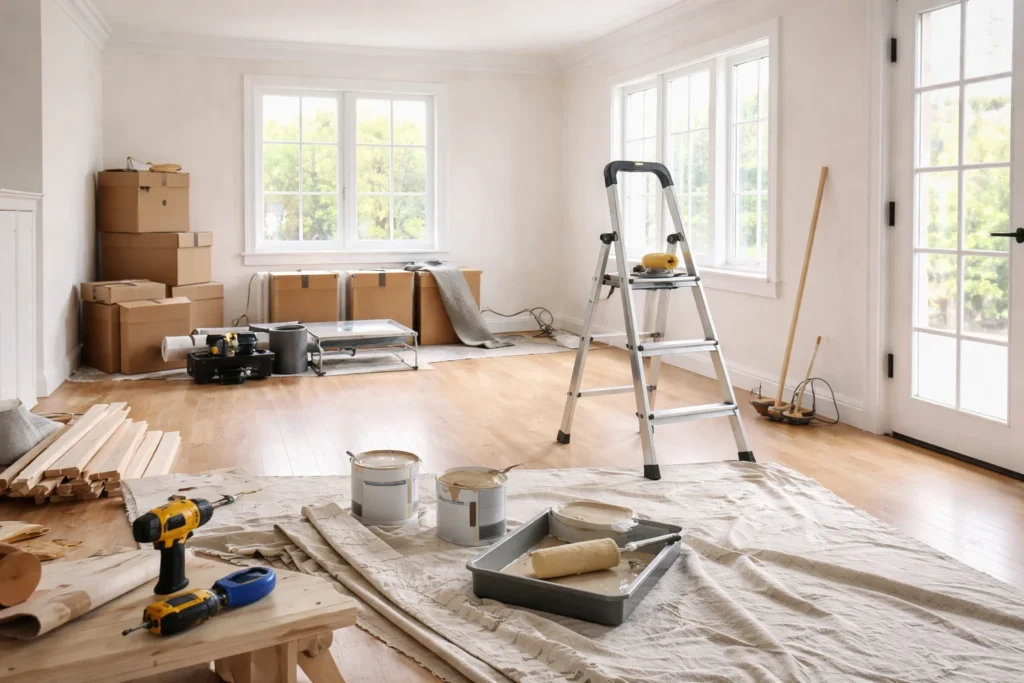
Painting is the most obvious pre-move project, but its importance cannot be overstated. Painting an empty room is approximately three times faster than painting a furnished one. You do not have to move heavy furniture into the centre of the room, you do not have to drape plastic sheeting over everything, and you do not have to worry about splatter on your vintage armchair or brand new sofa.
Consider tackling these specific painting tasks while the slate is clean:
- Ceilings: Rolling a ceiling releases a fine mist of paint. Doing this in an empty room means you do not need to cover the floors if you plan to refinish or replace them anyway. It saves hours of prep time.
- Trims and Doors: Intricate work on door frames is much easier when you can access them from all angles without obstruction. You can lay doors flat to paint them if you have removed them, ensuring a smoother finish.
- Closet Interiors: This is the one area you will never paint once you move in. Once your clothes are hanging, you will likely never take it all out again just to freshen up the walls. A bright white closet makes seeing your wardrobe much easier.
4. Flooring Updates
Floors are the foundation of your home’s design, and they are the hardest thing to change once you are settled. If you plan to refinish hardwood floors, the sanding process creates an incredible amount of dust. Even with “dust-free” systems, fine particles settle everywhere. Doing this before your furniture arrives prevents that dust from embedding itself in your upholstery, curtains, and electronics.
If you are replacing carpet or laying down new floating floors, the job is a breeze in an empty room. You can lay boxes of planks out to acclimatise to the room’s temperature and humidity, then work across the floor without constantly shifting heavy items. If your budget does not allow for a full replacement immediately, a professional deep clean of existing carpets is a must before you bring in your own rugs and furniture. This removes the previous owner’s history from the home and gives you a fresh base.
5. Security and Privacy Updates
Finally, use the empty house phase to secure your new sanctuary. It is much easier to access windows and doors to install locks, screens, or treatments when there are no obstacles blocking your ladder or drill.
- Change the Locks: You never know who has a key from the previous ownership. Installing new deadbolts or smart locks gives you immediate peace of mind.
- Install Blinds or Curtains: Privacy is essential from the first night you sleep there. Installing curtain rods often requires a ladder and space to manoeuvre, which is difficult with furniture against the walls.
- Check Smoke Alarms: It is easier to reach high ceilings to replace batteries or units before tall furniture is placed underneath. Ensure every room is compliant with local safety standards.
Creating Your Canvas
Moving house is undeniably stressful. There are boxes to unpack, utilities to manage, and a new neighbourhood to navigate. However, viewing your new home as a project rather than just a destination changes your mindset. It shifts the focus from the chore of unpacking to the joy of creation.
By taking a few days to prepare the “canvas” of your home, scrubbing the floors, adding those architectural details, and applying a fresh coat of paint you are not just maintaining a property. You are claiming it. When you finally unpack that first box, you won’t just be putting things into a house; you will be settling into a home you have already started to love.
FAQs
Because empty rooms give you full access to walls, floors, and ceilings, making projects faster, cleaner, and far less stressful.
Ideally, allow two to three days as a buffer to complete essential DIY projects before you unpack.
Logistics and utilities should come first so you have electricity, water, and internet to support your work.
Yes, painting an empty room is significantly quicker since you won’t need to move or cover furniture.
Absolutely. Floor sanding and refinishing create dust and require open space, making it much easier before unpacking.
Yes, installing moulding or wall panelling is far easier without obstacles and instantly adds character to a space.
Yes, changing locks before unpacking ensures your security and peace of mind from day one.
Painting walls and ceilings, updating trims, and installing new hardware offer high visual impact for relatively low cost.
Yes, a professional deep clean removes lingering odours and dust, giving you a fresh start.
Focus first on messy, loud, or space-intensive tasks that would be difficult once furniture is in place.