A hotel-like bedroom isn’t about copying a showroom—it’s about creating a space that feels calm, intentional, and easy to maintain. These updates focus on comfort, lighting, and simple styling moves that change the mood fast (without picking up a hammer).
1. Make the bed the “feature wall”
High-end hotel rooms put the bed in charge: centred, visually anchored, and styled like the room’s main event.
If your bed is off-centre, start by re-centering the headboard on the wall (even if the nightstands shift a bit) so the room immediately feels more intentional.
2. Layer bedding like a hotel (not just “a duvet”)
Hotel beds feel luxe because they’re layered—crisp sheets, a full duvet, and an extra throw or cover for texture.
If you want the fastest visual upgrade, go bigger and fluffier on top, then add a simple folded throw at the foot for that “turned-down” look.
3. Use a calm, neutral palette (then add one accent)
Many hotel-inspired guides lean on soft neutrals because they make a room feel cleaner, brighter, and more restful.
To keep it from feeling bland, add one controlled accent (a single colour in cushions, art, or a throw) rather than lots of competing patterns.
4. Add a plush rug that starts at the bed
A deep pile or soft rug is one of the most “hotel” sensory upgrades because it changes what you feel the moment you step out of bed.
Even if you can’t do wall-to-wall, a rug that extends past both sides of the bed makes the room feel more finished and less “floating furniture.”
5. Upgrade lighting with layers (not brighter bulbs)
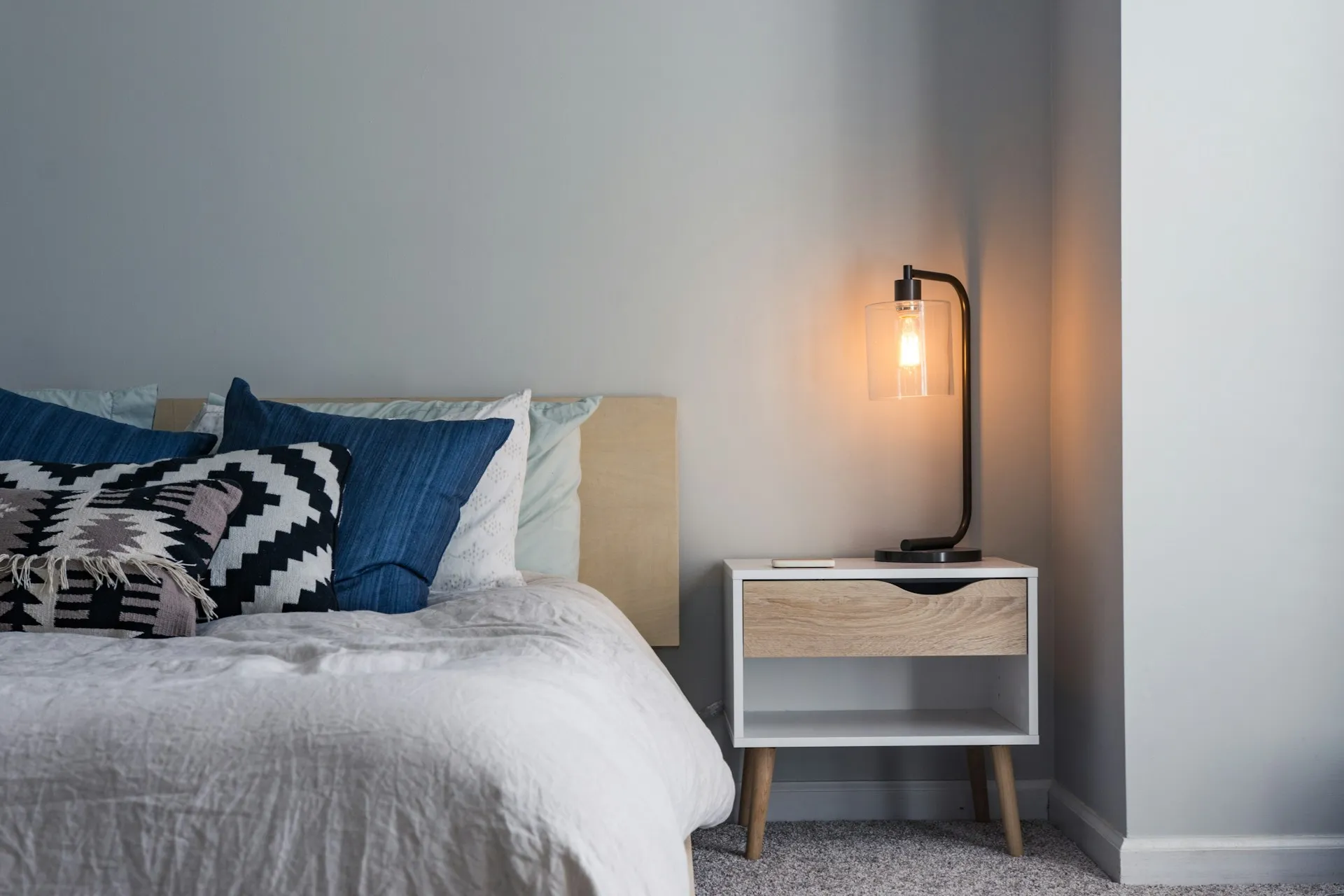
Hotel vibes come from layered lighting—ambient + task + mood—so the room can shift from functional to relaxing.
If possible, add a second light source (like a lamp or sconce-style option) so you’re not relying on a single overhead fixture.
6. Style a proper “landing zone” on each side of the bed
A nightstand keeps essentials within reach and helps the room stay tidy, which is why hotels rarely skip them.
For a simple upgrade, add a tray to corral small items (hand cream, jewellery, earplugs) so the surface looks curated, not chaotic.
If you need a new one, choose a bedside table that’s close to mattress height for a more intentional look and better daily function.
7. Match (or visually balance) your nightstands
Perfectly matching sets aren’t mandatory, but hotel rooms usually feel symmetrical because both sides of the bed get equal visual weight.
If you don’t have matching nightstands, “match” the shape and height (or match the lamps) so the room reads as balanced.
8. Declutter like housekeeping is coming tomorrow
The hotel effect relies on clear surfaces and contained storage—less visual noise, fewer loose items.
Try a simple rule: nothing lives on the floor except furniture, and nothing lives on the dresser unless it’s in a tray or box.
9. Bring in a signature scent (subtle, not overpowering)
Luxury-hotel style guides often call out scent as a key detail—diffusers or fragrance reeds can make the room feel freshly “done.”
Keep it light and consistent (think spa-like, not perfume cloud) so it signals calm the moment you walk in.
10. Add one “hospitality” detail guests would notice
Small touches—like a water carafe on the nightstand—are a classic hotel cue that instantly makes the space feel looked-after.
Other easy wins: a robe hook behind the door, a fabric basket for extra blankets, or matching hangers if your closet is visible.
11. Shop cohesively (so the room reads like a suite)
Part of the hotel look is coordination: fewer random pieces, more consistency in finishes and silhouettes.
If you’re filling gaps (nightstands, dressers, benches), browsing a single curated destination can make it easier to keep the style consistent—start with a local bedroom store selection and filter by finish and size.
Conclusion
To make a bedroom feel like a hotel without renovating, focus on three upgrades that hotels consistently get right: layered bedding, layered lighting, and a clutter-free layout.
Once those foundations are in place, small “hospitality” details—like a subtle signature scent and a tidy bedside surface—do the rest of the work.
FAQ
Hotel-style comfort usually comes from layering (sheets + duvet + throw) and using crisp-feeling fabrics like percale-style bedding, plus plenty of pillows.
Soft neutrals are commonly recommended for hotel-inspired rooms because they read clean, calm, and broadly “luxury” without being loud.
The Brick notes a nightstand is typically shorter and may have drawers, while a bedside table is often taller and may use a shelf or cabinet.
A nightstand isn’t strictly necessary, but it’s convenient for keeping essentials (lamp, clock, book, medication) within reach, and it helps the room look more finished.